Mike T. Carson – författare
2 215 kr
Skickas inom 10-15 vardagar
605 kr
Skickas inom 10-15 vardagar
702 kr
Läs direkt efter köp
What can we learn about the ancient landscapes of our world, and how can those lessons improve our future in the landscapes that we all inhabit? Those questions are addressed in this book, through a practical framework of concepts and methods, combined with detailed case studies around the world.
The chapters explore the range of physical and social attributes that have shaped and re-shaped our landscapes through time. International authors contributed the latest results of investigating ancient landscapes (or "palaeolandscapes") in diverse settings of tropical forests, deserts, river deltas, remote islands, coastal zones, and continental interiors. The case studies embrace a broadly accommodating approach of combining archaeological evidence with other avenues of research in earth sciences, biology, and social relations. Individually and in concert, the chapters offer new perspectives on what the world’s palaeolandscapes looked like, how people lived in these places, and how communities have engaged with long-term change in their natural and cultural environments through successive centuries and millennia. The lessons are paramount for building responsible strategies and policies today and into the future, noting that many of these issues from the past have gained more urgency today.
This book reaches across archaeology, ecology, geography, and other studies of human-environment relations that will appeal to general readers. Specialists and students in these fields will find extra value in the primary datasets and in the new ideas and perspectives. Furthermore, this book provides unique examples from the past, toward understanding the workings of sustainable landscape systems.
702 kr
Läs direkt efter köp
What can we learn about the ancient landscapes of our world, and how can those lessons improve our future in the landscapes that we all inhabit? Those questions are addressed in this book, through a practical framework of concepts and methods, combined with detailed case studies around the world.
The chapters explore the range of physical and social attributes that have shaped and re-shaped our landscapes through time. International authors contributed the latest results of investigating ancient landscapes (or "palaeolandscapes") in diverse settings of tropical forests, deserts, river deltas, remote islands, coastal zones, and continental interiors. The case studies embrace a broadly accommodating approach of combining archaeological evidence with other avenues of research in earth sciences, biology, and social relations. Individually and in concert, the chapters offer new perspectives on what the world’s palaeolandscapes looked like, how people lived in these places, and how communities have engaged with long-term change in their natural and cultural environments through successive centuries and millennia. The lessons are paramount for building responsible strategies and policies today and into the future, noting that many of these issues from the past have gained more urgency today.
This book reaches across archaeology, ecology, geography, and other studies of human-environment relations that will appeal to general readers. Specialists and students in these fields will find extra value in the primary datasets and in the new ideas and perspectives. Furthermore, this book provides unique examples from the past, toward understanding the workings of sustainable landscape systems.
685 kr
Läs direkt efter köp
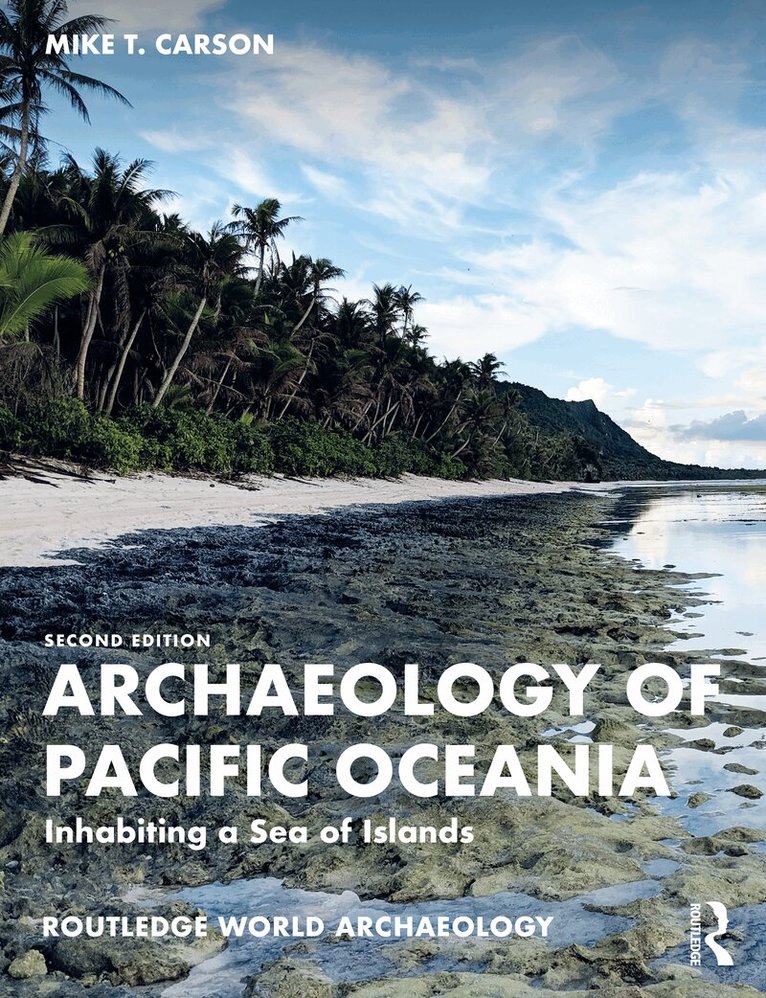
Archaeology of Pacific Oceania, now in its second edition, offers a state-of-the-art and fully detailed chronological narrative of how Pacific Oceania came to be inhabited over a long time scale, posing fundamental questions both for Pacific Oceania and for global archaeology.
The Pacific Ocean covers 165 million sq. km, nearly one-third of the world’s total surface area, yet its thousands of islands and their diverse cultural histories are scarcely known to the other two-thirds of the world. This book asks how and why did this vast sea of islands come to be inhabited over the last several millennia, transcending significant change in ecology, demography, and society? What were the roles of overseas contacts in the development of social networks, economic trade, and population dynamics? What can any or all of the thousands of islands offer as ideal model systems for comprehending globally significant issues of human-environment relations and coping with changing circumstances of natural and cultural history? What do the island archaeology records reveal about coastal setting as part of the larger human experience? How does Pacific Oceanic archaeology relate with a larger Asia-Pacific context or with the scope of world archaeology? The new second edition of Archaeology of Pacific Oceania addresses these questions and more, providing an updated synthesis of this important region.
Archaeology of Pacific Oceania is for scholars of Asia-Pacific archaeology and anthropology and will support students investigating the archaeology of Pacific Oceania.
685 kr
Läs direkt efter köp
Archaeology of Pacific Oceania, now in its second edition, offers a state-of-the-art and fully detailed chronological narrative of how Pacific Oceania came to be inhabited over a long time scale, posing fundamental questions both for Pacific Oceania and for global archaeology.
The Pacific Ocean covers 165 million sq. km, nearly one-third of the world’s total surface area, yet its thousands of islands and their diverse cultural histories are scarcely known to the other two-thirds of the world. This book asks how and why did this vast sea of islands come to be inhabited over the last several millennia, transcending significant change in ecology, demography, and society? What were the roles of overseas contacts in the development of social networks, economic trade, and population dynamics? What can any or all of the thousands of islands offer as ideal model systems for comprehending globally significant issues of human-environment relations and coping with changing circumstances of natural and cultural history? What do the island archaeology records reveal about coastal setting as part of the larger human experience? How does Pacific Oceanic archaeology relate with a larger Asia-Pacific context or with the scope of world archaeology? The new second edition of Archaeology of Pacific Oceania addresses these questions and more, providing an updated synthesis of this important region.
Archaeology of Pacific Oceania is for scholars of Asia-Pacific archaeology and anthropology and will support students investigating the archaeology of Pacific Oceania.
591 kr
Skickas inom 10-15 vardagar
2 215 kr
Skickas inom 10-15 vardagar
613 kr
Skickas inom 5-8 vardagar
523 kr
Skickas
531 kr
Skickas
First Settlement of Remote Oceania
Earliest Sites in the Mariana Islands
561 kr
Skickas inom 10-15 vardagar
708 kr
Läs direkt efter köp
This book offers the only synthesis of early-period Marianas archaeology, marking the first human settlement of Remote Oceania about 1500 B.C. In these remote islands of the northwest Pacific Ocean, archaeological discoveries now can define the oldest site contexts, dating, and artifacts of a Neolithic (late stone-age) people. This ancient settlement was accomplished by the world’s longest open-ocean voyage in human history at its time, more than 2000 km from any contemporary populated area. This work brings the isolated Mariana Islands into the forefront of scientific research of how people first settled Remote Oceania, further important for understanding long-distance human migration in general. Given this significance, the early Marianas sites deserve close attention that has been awkwardly missing until now. The author draws on his years of intensive field research to define the earliest Marianas sites in scientific detail but accessible for broad readership. It covers three major topics: 1) situating the ancient sites in their original environmental contexts; 2) inventory of the early-period sites and their dating; and 3) the full range of pottery, stone tools, shell ornaments, and other artifacts. The work concludes with discussing the impacts of the findings on Asia-Pacific archaeology and on human global migration studies.
561 kr
Skickas inom 10-15 vardagar
708 kr
Läs direkt efter köp
Landscapes have been fundamentalto the human experience world-wide and throughout time, yet how did we as humanbeings evolve or co-evolve with our landscapes? By answering this question, we can understand our place in the complex,ever-changing world that we inhabit.
Thisbook guides readers on a journey through the concurrent processes of change inan integrated natural-cultural history of a landscape. While outlining the general principles forglobal application, a richly illustrated case is offered through the MarianaIslands in the northwest tropical Pacific and furthermore situated in a largerAsia-Pacific context for a full comprehension of landscape evolution atvariable scales. The author examines whathappened during the first time when human beings encountered the world’s RemoteOceanic environment in the Mariana Islands about 3500 years ago, followed by acontinuous sequence of changing sea level, climate, water resources, forestcomposition, human population growth, and social dynamics. This book provides a high-resolution andlong-term view of the complexities of landscape evolution that affect all of ustoday.
561 kr
Skickas inom 10-15 vardagar
1 570 kr
Tillfälligt slut
469 kr
Tillfälligt slut