Mikkel Høghøj – författare
Visar alla böcker från författaren Mikkel Høghøj. Handla med fri frakt och snabb leverans.
3 produkter
3 produkter
Inbunden, Engelska, 2025
2 244 kr
Skickas inom 10-15 vardagar
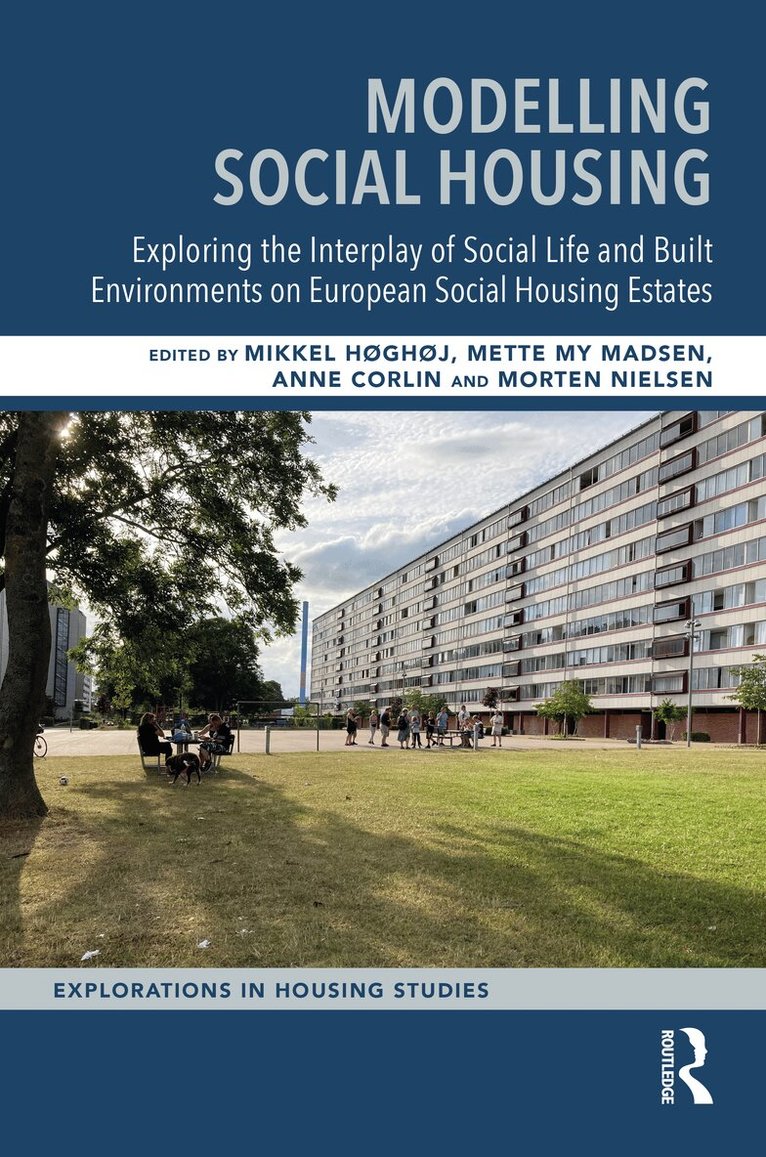
Modelling Social Housing delves into the intricate relationship between everyday social life and the architectural landscapes of social housing across European cities.Focusing on social housing across multiple temporal and socio-cultural European urban settings, this book traces how the confluence of distributed knowledges, technological resources, and architectural histories may have considerable effects across different scales, ranging from everyday interactions to welfare planning and economic policies. To capture these intricate socio-spatial relations, this book introduces the concept of ‘social urban modelling’ as a novel analytical approach to social housing research. Spanning historical trajectories, contemporary challenges, and future potentials, this book brings together scholars from diverse fields including architecture, history, anthropology, sociology, geography, and art history. Through examinations of architectural designs, urban planning assemblages, contemporary redevelopment projects, and everyday appropriations by residents, this book unveils the intricate layers of social housing dynamics in European cities. From the adoption of Mediterranean and Islamic architectural typologies in mid-twentieth century Denmark to the innovative bureaucratic structures of the London County Council in post-war Britain, each chapter provides new insights into the spatial and social transformations of European social housing. Through empirical cases from across Europe, we ask: How might resident-driven initiatives reshape urban landscapes? What are the implications of densification processes on social housing estates? And how do private investors influence the social fabric of these communities?With its timely interdisciplinary exploration of the modelling capacities of social housing estates, this book will provide an indispensable resource for scholars, practitioners, and policymakers engaged in housing studies, urban development, and architectural history.
Inbunden, Engelska, 2024
1 458 kr
Skickas inom 10-15 vardagar
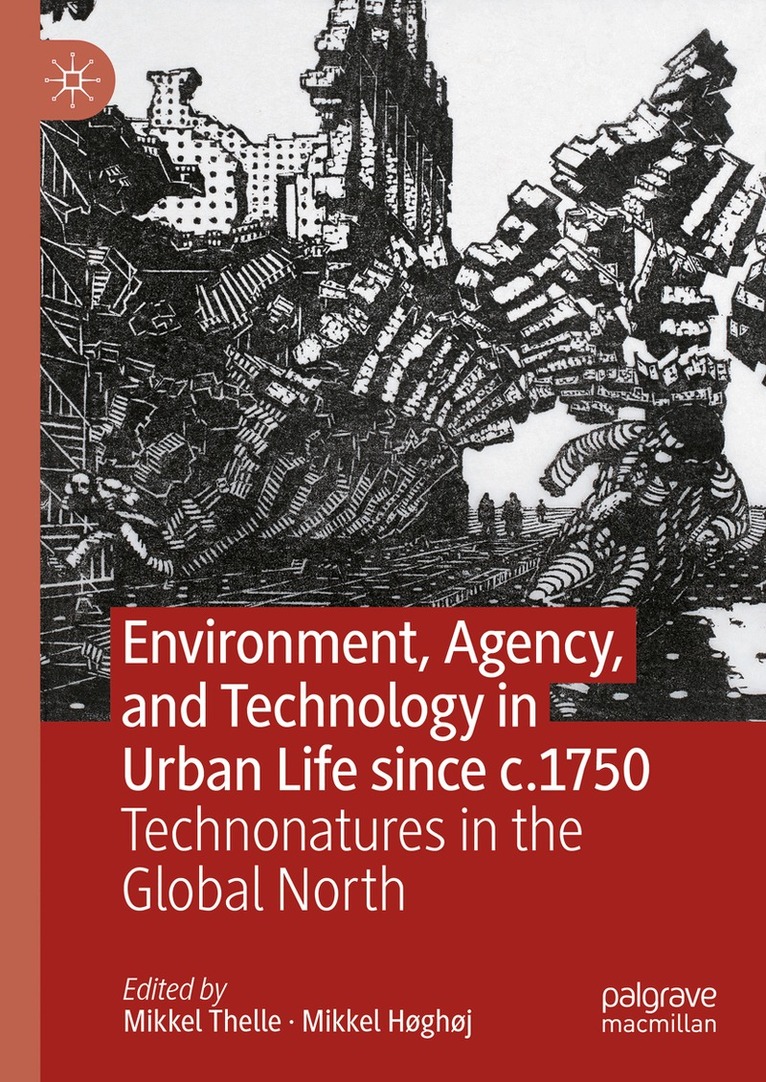
This book explores the historical relationship between ‘technonatures’ and urban transformations in the Global North. In recent years, various interdisciplinary movements such as Urban Political Ecology, STS and New Materialism have affected urban history and generated new scholarly insights into the formation of cities and urban life based on notions of hybridity, entanglement and metabolism. While scholars have increasingly attempted to grasp the socio-natural and technical complexity of cities, studies dealing with urban transformation within urban history have, however, mostly concentrated on political actors or broader social and economic changes. Seeking to introduce the concept of technonatures to the field of urban environmental history, this book instead takes its empirical and analytical starting point in the technonatural fabric of cities. Focusing on urban rivers, dumps, railways, flood walls and housing, the chapters of the book thus examines how different entanglementsof environment, technology and agency have shaped cities and processes of urbanization in the Global North from the seventeenth century onwards. By foregrounding the transformative role of urban natures, materialities and technologies in shaping the politics of urban life and cities more broadly, the book aspires to probe the potentiality of technonatures as a conceptual and analytical strategy for urban environmental historians.
Häftad, Engelska, 2025
1 458 kr
Skickas inom 10-15 vardagar
This book explores the historical relationship between ‘technonatures’ and urban transformations in the Global North. In recent years, various interdisciplinary movements such as Urban Political Ecology, STS and New Materialism have affected urban history and generated new scholarly insights into the formation of cities and urban life based on notions of hybridity, entanglement and metabolism. While scholars have increasingly attempted to grasp the socio-natural and technical complexity of cities, studies dealing with urban transformation within urban history have, however, mostly concentrated on political actors or broader social and economic changes. Seeking to introduce the concept of technonatures to the field of urban environmental history, this book instead takes its empirical and analytical starting point in the technonatural fabric of cities. Focusing on urban rivers, dumps, railways, flood walls and housing, the chapters of the book thus examines how different entanglementsof environment, technology and agency have shaped cities and processes of urbanization in the Global North from the seventeenth century onwards. By foregrounding the transformative role of urban natures, materialities and technologies in shaping the politics of urban life and cities more broadly, the book aspires to probe the potentiality of technonatures as a conceptual and analytical strategy for urban environmental historians.