Miklos Muller – författare
Visar alla böcker från författaren Miklos Muller. Handla med fri frakt och snabb leverans.
5 produkter
Biochemistry and Molecular Biology of Parasites
E-bok, 1995
739 kr
Lägg i varukorg
The study of parasitic organisms at the molecular level has yielded fascinating new insights of great medical, social, and economical importance, and has pointed the way for the treatment and prevention of the diseases they cause. Biochemistry and Molecular Biology of Parasites presents an …
Biochemistry and Molecular Biology of Parasites
Inbunden, 1995
572 kr
Lägg i varukorg
The study of parasitic organisms at the molecular level has yielded fascinating new insights of great medical, social, and economical importance, and has pointed the way for the treatment and prevention of the diseases they cause. Biochemistry and Molecular Biology of Parasites presents an …
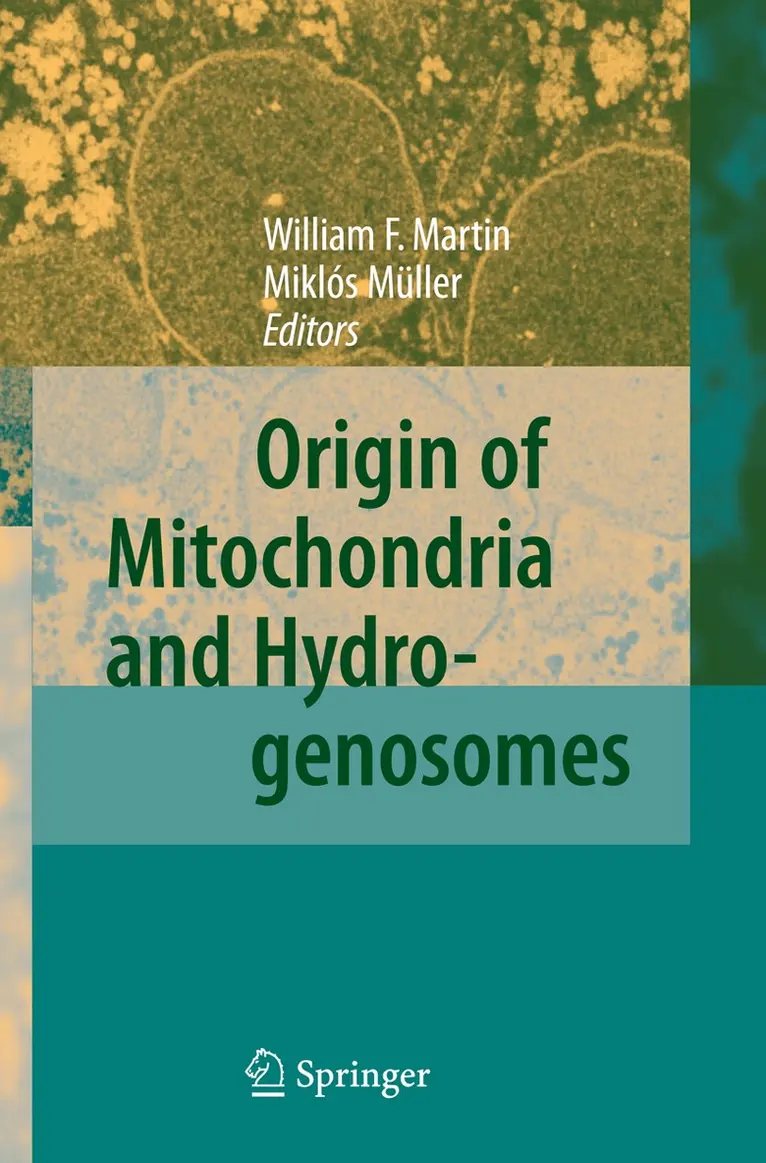
Origin of Mitochondria and Hydrogenosomes
Av William F. Martin, Miklós Müller
Inbunden, 2006
1636 kr
Lägg i varukorg
The evolutionary origins of hydrogenosomes have been the subject of considerable debate. From early days it was apparent that hydrogenosomes had evolved on multiple occasions in different eukaryotes, but from which progenitor organelle or endosymbiont was unresolved. It is already apparent from the …
Origin of Mitochondria and Hydrogenosomes
Av Miklos Muller, William F. Martin
E-bok, 2007
2111 kr
Lägg i varukorg
The evolutionary origins of hydrogenosomes have been the subject of considerable debate. From early days it was apparent that hydrogenosomes had evolved on multiple occasions in different eukaryotes, but from which progenitor organelle or endosymbiont was unresolved. It is already apparent from the …
Origin of Mitochondria and Hydrogenosomes
Av William F. Martin, Miklós Müller
Häftad, 2010
1636 kr
Lägg i varukorg
The evolutionary origins of hydrogenosomes have been the subject of considerable debate. From early days it was apparent that hydrogenosomes had evolved on multiple occasions in different eukaryotes, but from which progenitor organelle or endosymbiont was unresolved. It is already apparent from the …