Milena Büchs – författare
Visar alla böcker från författaren Milena Büchs. Handla med fri frakt och snabb leverans.
6 produkter
6 produkter
Inbunden, Engelska, 2007
924 kr
Skickas inom 10-15 vardagar
Büchs analyses the goals and instruments of the Open Method of Coordination, discusses approaches which theorize its functioning, examines its policy content and develops a framework for its evaluation. Through the examination of a case study the author demonstrates how policy actors apply the OMC in employment in Germany and the United Kingdom.
E-bok
PDF, Engelska, 20071 179 kr
Läs direkt efter köp
Büchs analyses the goals and instruments of the Open Method of Coordination, discusses approaches which theorize its functioning, examines its policy content and develops a framework for its evaluation. Through the examination of a case study the author demonstrates how policy actors apply the OMC in employment in Germany and the United Kingdom.
Häftad, Engelska, 2007
919 kr
Skickas inom 10-15 vardagar
Büchs analyses the goals and instruments of the Open Method of Coordination, discusses approaches which theorize its functioning, examines its policy content and develops a framework for its evaluation. Through the examination of a case study the author demonstrates how policy actors apply the OMC in employment in Germany and the United Kingdom.
Inbunden, Engelska, 2017
711 kr
Skickas inom 10-15 vardagar
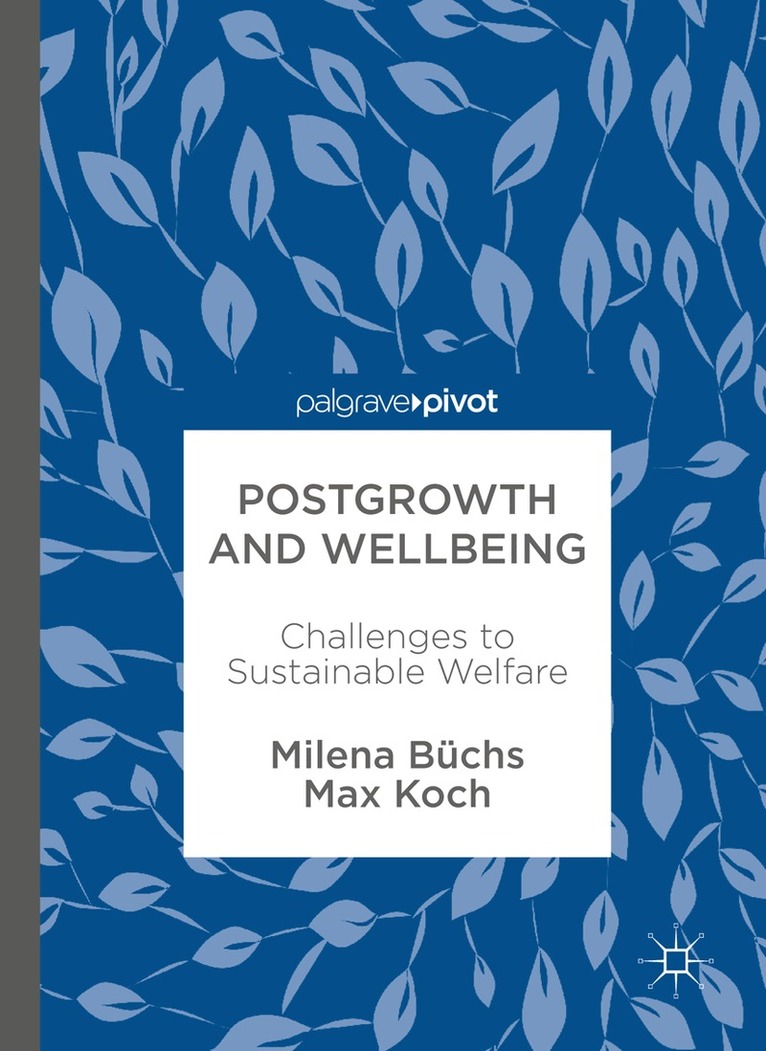
This book presents a detailed and critical discussion about how human wellbeing can be maintained and improved in a postgrowth era. It highlights the close links between economic growth, market capitalism, and the welfare state demonstrating that, in many ways, wellbeing outcomes currently depend on the growth paradigm. Here the authors argue that notions of basic human needs deserve greater emphasis in debates on postgrowth because they are more compatible with limits to growth. Drawing on theories of social practices, the book explores structural barriers to transitions to a postgrowth society, and ends with suggestions for policies and institutions that could support wellbeing in the context of postgrowth. This thought-provoking work makes a valuable contribution to debates surrounding climate change, sustainability, welfare states and inequality and will appeal to students and scholars of social policy, sociology, political science, economics, political ecology and humangeography.
E-bok
Engelska, 2017870 kr
Läs direkt efter köp
This book presents a detailed and critical discussion about how human wellbeing can be maintained and improved in a postgrowth era. It highlights the close links between economic growth, market capitalism, and the welfare state demonstrating that, in many ways, wellbeing outcomes currently depend on the growth paradigm. Here the authors argue that notions of basic human needs deserve greater emphasis in debates on postgrowth because they are more compatible with limits to growth. Drawing on theories of social practices, the book explores structural barriers to transitions to a postgrowth society, and ends with suggestions for policies and institutions that could support wellbeing in the context of postgrowth. This thought-provoking work makes a valuable contribution to debates surrounding climate change, sustainability, welfare states and inequality and will appeal to students and scholars of social policy, sociology, political science, economics, political ecology and humangeography.
Häftad, Engelska, 2018
711 kr
Skickas inom 10-15 vardagar
This book presents a detailed and critical discussion about how human wellbeing can be maintained and improved in a postgrowth era. It highlights the close links between economic growth, market capitalism, and the welfare state demonstrating that, in many ways, wellbeing outcomes currently depend on the growth paradigm. Here the authors argue that notions of basic human needs deserve greater emphasis in debates on postgrowth because they are more compatible with limits to growth. Drawing on theories of social practices, the book explores structural barriers to transitions to a postgrowth society, and ends with suggestions for policies and institutions that could support wellbeing in the context of postgrowth. This thought-provoking work makes a valuable contribution to debates surrounding climate change, sustainability, welfare states and inequality and will appeal to students and scholars of social policy, sociology, political science, economics, political ecology and humangeography.