Two women, virtual strangers, sit hand-in-hand across a narrow table, both intent on the same thing-achieving the perfect manicure. Encounters like this occur thousands of times across the United States in nail salons increasingly owned and operated by Asian immigrants. This study looks closely for the first time at these intimate encounters, focusing on New York City, where such nail salons have become ubiquitous. Drawing from rich and compelling interviews, Miliann Kang takes us inside the nail industry, asking such questions as: Why have nail salons become so popular? Why do so many Asian women, and Korean women in particular, provide these services? Kang discovers multiple motivations for the manicure-from the pampering of white middle class women to the artistic self-expression of working class African American women to the mass consumption of body-related services. Contrary to notions of beauty service establishments as spaces for building community among women, The Managed Hand finds that while tentative and fragile solidarities can emerge across the manicure table, they generally give way to even more powerful divisions of race, class, and immigration.
Two women, virtual strangers, sit hand-in-hand across a narrow table, both intent on the same thing - achieving the perfect manicure. Encounters like this occur thousands of times across the United States in nail salons increasingly owned and operated by Asian immigrants. This study looks closely for the first time at these intimate encounters, focusing on New York City, where such nail salons have become ubiquitous. Drawing from rich and compelling interviews, Miliann Kang takes us inside the nail industry, asking such questions as: Why have nail salons become so popular? Why do so many Asian women, and Korean women in particular, provide these services? Kang discovers multiple motivations for the manicure-from the pampering of white middle class women to the artistic self-expression of working class African American women to the mass consumption of body-related services. Contrary to notions of beauty service establishments as spaces for building community among women, "The Managed Hand" finds that while tentative and fragile solidarities can emerge across the manicure table, they generally give way to even more powerful divisions of race, class, and immigration.
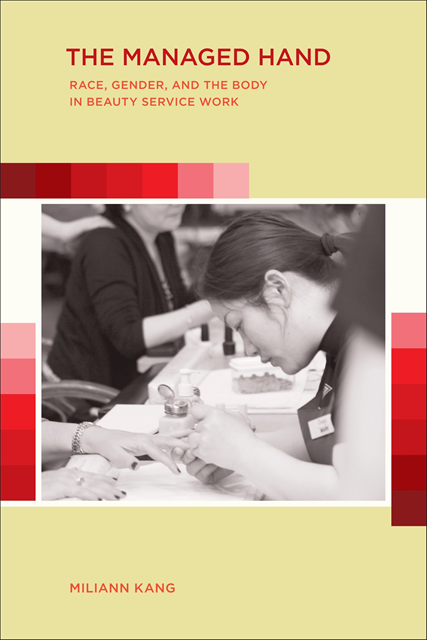
Two women, virtual strangers, sit hand-in-hand across a narrow table, both intent on the same thing - achieving the perfect manicure. Encounters like this occur thousands of times across the United States in nail salons increasingly owned and operated by Asian immigrants. This study looks closely for the first time at these intimate encounters, focusing on New York City, where such nail salons have become ubiquitous. Drawing from rich and compelling interviews, Miliann Kang takes us inside the nail industry, asking such questions as: Why have nail salons become so popular? Why do so many Asian women, and Korean women in particular, provide these services? Kang discovers multiple motivations for the manicure - from the pampering of white middle class women to the artistic self-expression of working class African American women to the mass consumption of body-related services. Contrary to notions of beauty service establishments as spaces for building community among women, "The Managed Hand" finds that while tentative and fragile solidarities can emerge across the manicure table, they generally give way to even more powerful divisions of race, class, and immigration.
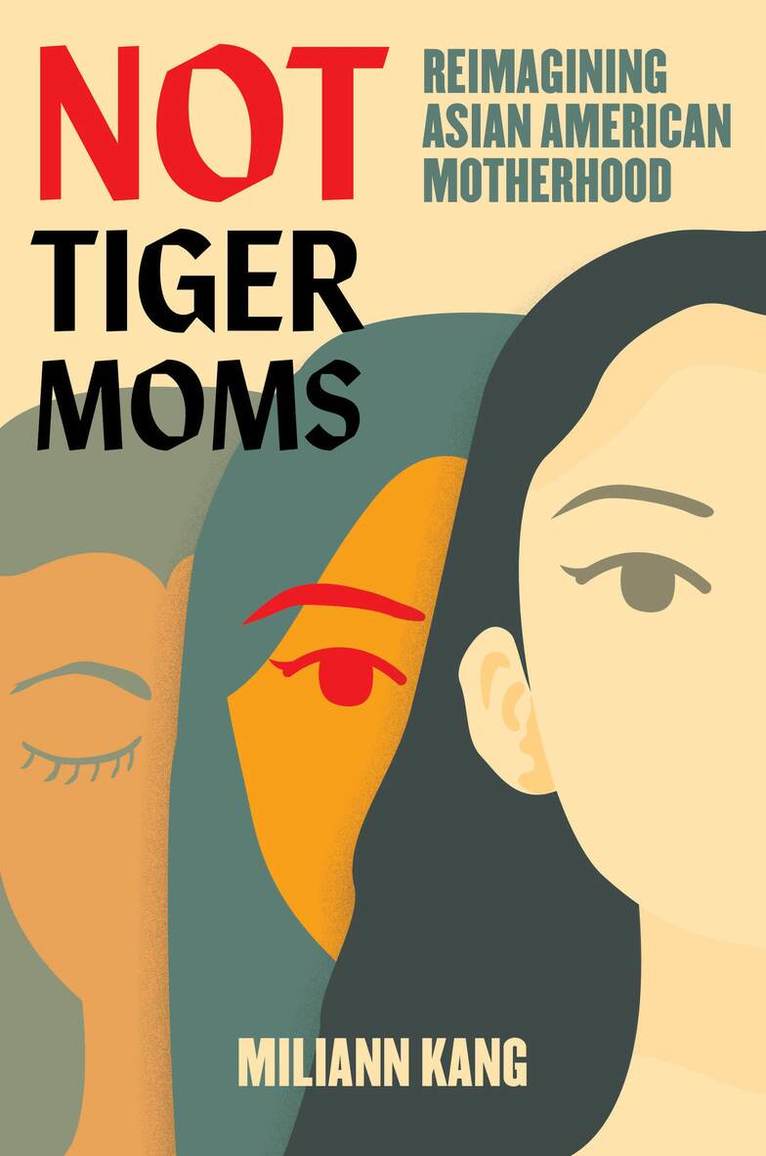
Reframing the cultural narrative of Asian American motherhood—through these mothers' own voices and experiences.The high stakes of motherhood today go beyond who qualifies as a good or bad mother, to who belongs and who is other. For Asian American mothers, these judgments have often been shaped by the enduring stereotype of the strict, academically driven "tiger mother."In Not Tiger Moms, Miliann Kang explores the racist, xenophobic roots of this trope and how it undermines Asian American mothers, silencing their voices and inhibiting their connections to their children, to each other, and to other mothers, including their own. Through deeply personal and candid interviews, Asian American mothers who were born or grew up predominantly in the United States share stories that upend perceptions of them as both model minority reproducers and foreign threats. Instead, they chart new pathways to and through motherhood, imagining more expansive possibilities not only for Asian American mothers, but for all mothers.
Reframing the cultural narrative of Asian American motherhood-through these mothers' own voices and experiences.The high stakes of motherhood today go beyond who qualifies as a good or bad mother, to who belongs and who is other. For Asian American mothers, these judgments have often been shaped by the enduring stereotype of the strict, academically driven "e;tiger mother."e;In Not Tiger Moms, Miliann Kang explores the racist, xenophobic roots of this trope and how it undermines Asian American mothers, silencing their voices and inhibiting their connections to their children, to each other, and to other mothers, including their own.Through deeply personal and candid interviews, Asian American mothers who were born or grew up predominantly in the United States share stories that upend perceptions of them as both model minority reproducers and foreign threats. Instead, they chart new pathways to and through motherhood, imagining more expansive possibilities not only for Asian American mothers, but for all mothers.