Milli Lake - Böcker
Visar alla böcker från författaren Milli Lake. Handla med fri frakt och snabb leverans.
4 produkter
4 produkter
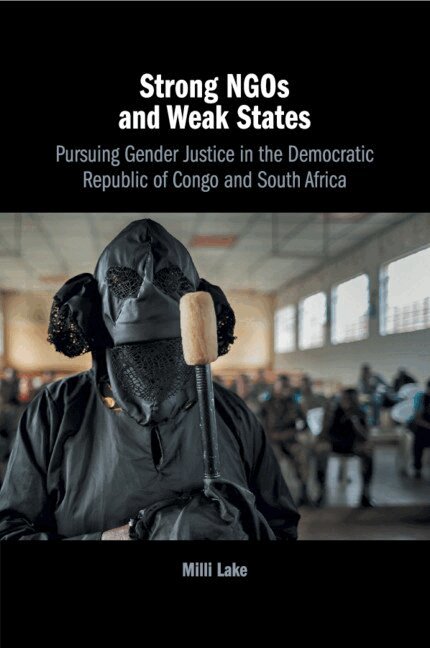
Strong NGOs and Weak States
Pursuing Gender Justice in the Democratic Republic of Congo and South Africa
Häftad, Engelska, 2019
394 kr
Skickas inom 7-10 vardagar
Over the past decade, the Democratic Republic of the Congo (DR Congo) and South Africa have attracted global attention for high rates of sexual and gender-based violence. Why is it that courts in eastern DR Congo prioritize gender crimes despite considerable logistical challenges, while courts in South Africa, home to a far stronger legal infrastructure and human rights record, have struggled to provide justice to victims of similar crimes? Lake shows that state fragility in DR Congo has created openings for human rights nongovernmental organizations (NGOs) to influence legal processes in ways that have proved impossible in countries like South Africa, where the state is stronger. Yet exploiting opportunities presented by state fragility to pursue narrow human rights goals invites a host of new challenges. Strong NGOs and Weak States documents the promises and pitfalls of human rights and rule of law advocacy undertaken by NGOs in strong and weak states alike.
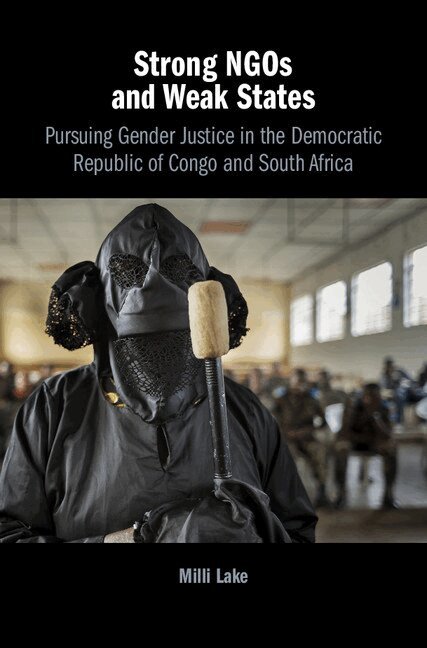
Strong NGOs and Weak States
Pursuing Gender Justice in the Democratic Republic of Congo and South Africa
Inbunden, Engelska, 2018
1 097 kr
Skickas inom 7-10 vardagar
Over the past decade, the Democratic Republic of the Congo (DR Congo) and South Africa have attracted global attention for high rates of sexual and gender-based violence. Why is it that courts in eastern DR Congo prioritize gender crimes despite considerable logistical challenges, while courts in South Africa, home to a far stronger legal infrastructure and human rights record, have struggled to provide justice to victims of similar crimes? Lake shows that state fragility in DR Congo has created openings for human rights nongovernmental organizations (NGOs) to influence legal processes in ways that have proved impossible in countries like South Africa, where the state is stronger. Yet exploiting opportunities presented by state fragility to pursue narrow human rights goals invites a host of new challenges. Strong NGOs and Weak States documents the promises and pitfalls of human rights and rule of law advocacy undertaken by NGOs in strong and weak states alike.
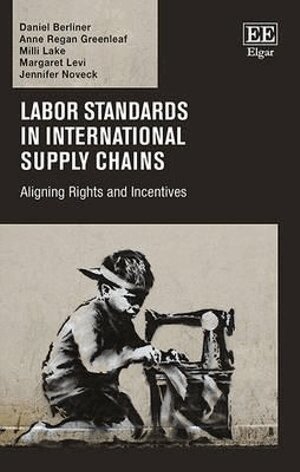
Labor Standards in International Supply Chains
Aligning Rights and Incentives
Inbunden, Engelska, 2015
1 514 kr
Skickas inom 7-10 vardagar
The authors examine developments in labor standards in global supply chains over the past thirty years, analyzing factors that create challenges and opportunities for improving working conditions. They illustrate the complex dynamics within and among key groups, including brands, suppliers, governments, workers and consumers.Using extended examples from China, Honduras, Bangladesh and the United States, as well as new quantitative evidence, the authors analyze stakeholders and mechanisms that create or obstruct opportunities for improving labor rights. They evaluate key clusters of actors and their interests in order to comprehensively map the complex interactions and relationships that make up global supply chains. Original data and analyses, including four in-depth case studies, present a systematic evaluation of the points of leverage for changing labor standards in sectors including apparel, footwear, and electronics.This exciting new contribution to a burgeoning field of study will benefit scholars of labor rights and human rights, as well as students with an interest in labor and working conditions. It also presents critical information for political scientists, NGOs, and practitioners looking to effect change in working conditions and learn more about key players in the global economy.
437 kr
Skickas inom 7-10 vardagar
The authors examine developments in labor standards in global supply chains over the past thirty years, analyzing factors that create challenges and opportunities for improving working conditions. They illustrate the complex dynamics within and among key groups, including brands, suppliers, governments, workers and consumers.Using extended examples from China, Honduras, Bangladesh and the United States, as well as new quantitative evidence, the authors analyze stakeholders and mechanisms that create or obstruct opportunities for improving labor rights. They evaluate key clusters of actors and their interests in order to comprehensively map the complex interactions and relationships that make up global supply chains. Original data and analyses, including four in-depth case studies, present a systematic evaluation of the points of leverage for changing labor standards in sectors including apparel, footwear, and electronics.This exciting new contribution to a burgeoning field of study will benefit scholars of labor rights and human rights, as well as students with an interest in labor and working conditions. It also presents critical information for political scientists, NGOs, and practitioners looking to effect change in working conditions and learn more about key players in the global economy.