Milton C. Shaw – författare
Visar alla böcker från författaren Milton C. Shaw. Handla med fri frakt och snabb leverans.
4 produkter
4 produkter
Inbunden, Engelska, 2004
3 356 kr
Skickas inom 7-10 vardagar
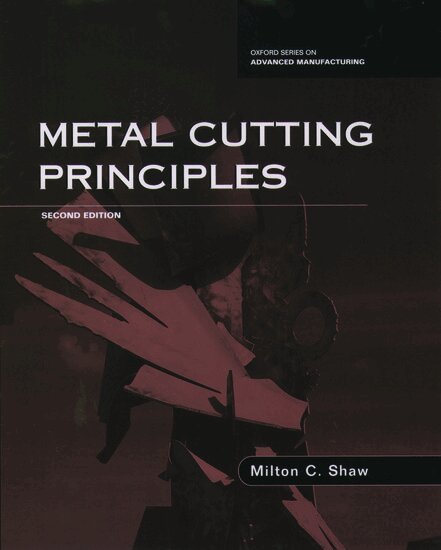
This book identifies the major problem areas of metal cutting during the production of mechanical components. Thoroughly updated with new questions and exercises at the end of each chapter, the book relates observed performance 0n metal cutting to fundamental physics, materials behavior, and chemistry. In addition, heat transfer, tribology, and solid mechanics are covered in appropriate detail.
Del 13 - Oxford Series on Advanced Manufacturing
Principles of Abrasive Processing
Inbunden, Engelska, 1996
3 106 kr
Skickas inom 5-8 vardagar
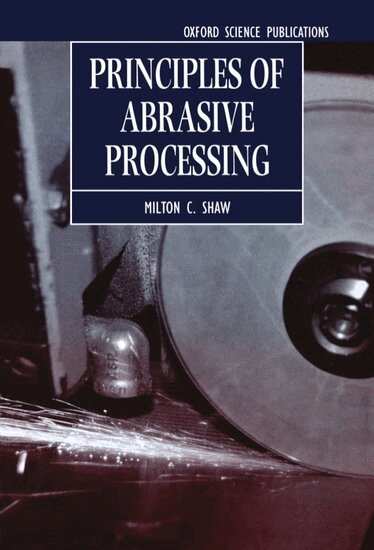
Grinding is one of the most important operations employed in Production Engineering to remove unwanted material and to introduce desired geometry and surface properties. Once considered only a secondary finishing operation, grinding is now more widely employed as suggested by the term, "abrasive machining". The approach to grinding taken here is to consider the basic processes in fundamental terms rather than to attempt to present a large mass of empirical results. Thus, the emphasis is placed on why things occur as they do rather than on specific solutions to problems ordinarily met. The rationale for this approach is that it better enables an engineer in the workshop to find solutions to new and unusual problems.
Häftad, Engelska, 1960
933 kr
Skickas inom 3-6 vardagar
E-bok
PDF, Engelska, 2001839 kr
Läs direkt efter köp
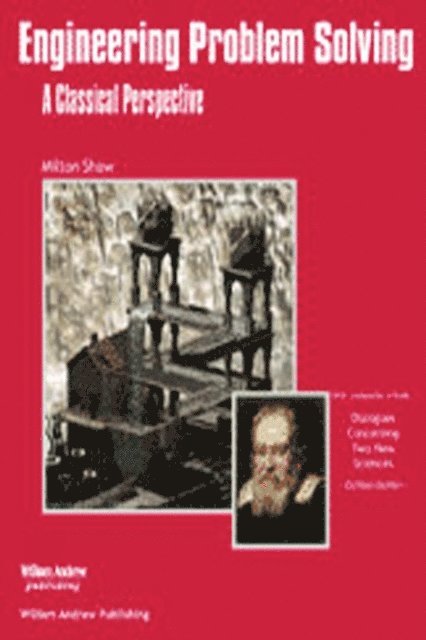
Engineering, at its origins, was a profession of problem solving. The classic text, Dialogues Concerning Two New Sciences by Galileo Galilei is revisited in this ambitious and comprehensive book by Milton Shaw. In-depth discussions of passages from the Galileo text emphasize the ""mind set"" of engineering, specifically the roles played by experimentation and dialog in analysis and creativity. In the epilogue, the author points out that engineering students are usually exposed to two types of faculty. The first type is mathematically oriented and mostly interested in analytical solutions. The second type is interested in devising and experimenting with innovative solutions. However, since many talented graduates move directly into teaching instead of gaining real world experience, an imbalance of analytical teaching has occurred. Shaw points out through an example by Dr. Dave Lineback that learning to solve practical engineering problems is a very important part of an engineer''s education, but is often denied due to expense and time and effort required. This book fills in many of the gaps in engineering education by showing students, and professionals, the historical background of problem solving.Among those who will find this book particularly useful are engineers working in cross-disciplinary capacities, such as mechanical engineers working with electrical engineering concepts or polymeric materials, engineers preparing for professional engineering exams, mid-career engineers looking to broaden their problem-solving skills, and students looking for help growing their skills.