Milton J. Lewis – författare
Visar alla böcker från författaren Milton J. Lewis. Handla med fri frakt och snabb leverans.
13 produkter
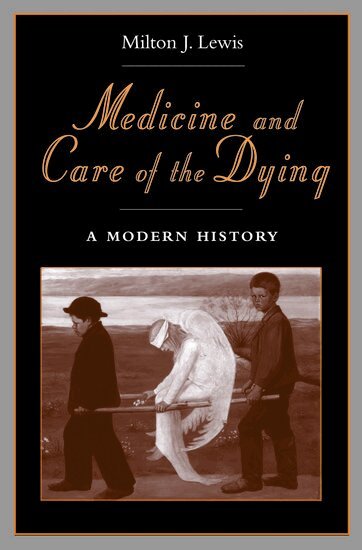
Medicine and Care of the Dying
A Modern History
Inbunden, 2006
1013 kr
Lägg i varukorg
There is a growing conflict in medicine between the research imperative, with its implicit goal of overcoming death itself, and the re-emergent clinical imperative to treat death as a part of life, and to make the process of dying as tolerable as possible. Central to this conflict is the rise of …
Public Health in Asia and the Pacific
Historical and Comparative Perspectives
Av Milton J. Lewis, Kerrie L. MacPherson
Inbunden, 2007
1882 kr
Lägg i varukorg
The Asia-Pacific region has not only the greatest concentration of population but is, arguably, the future economic centre of the world. Epidemiological transition in the region is occurring much faster than it did in the West and many countries face the emerging problem of chronic diseases at the …
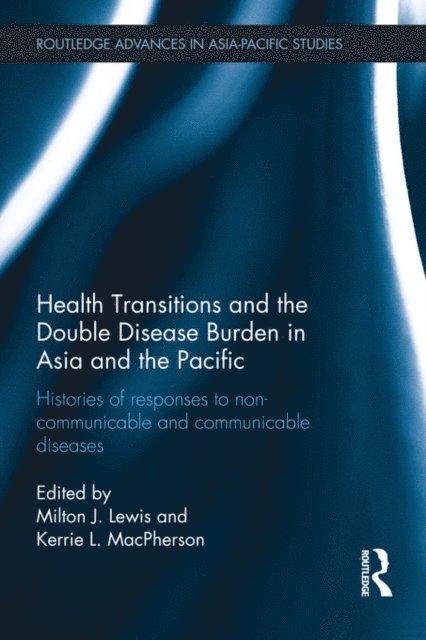
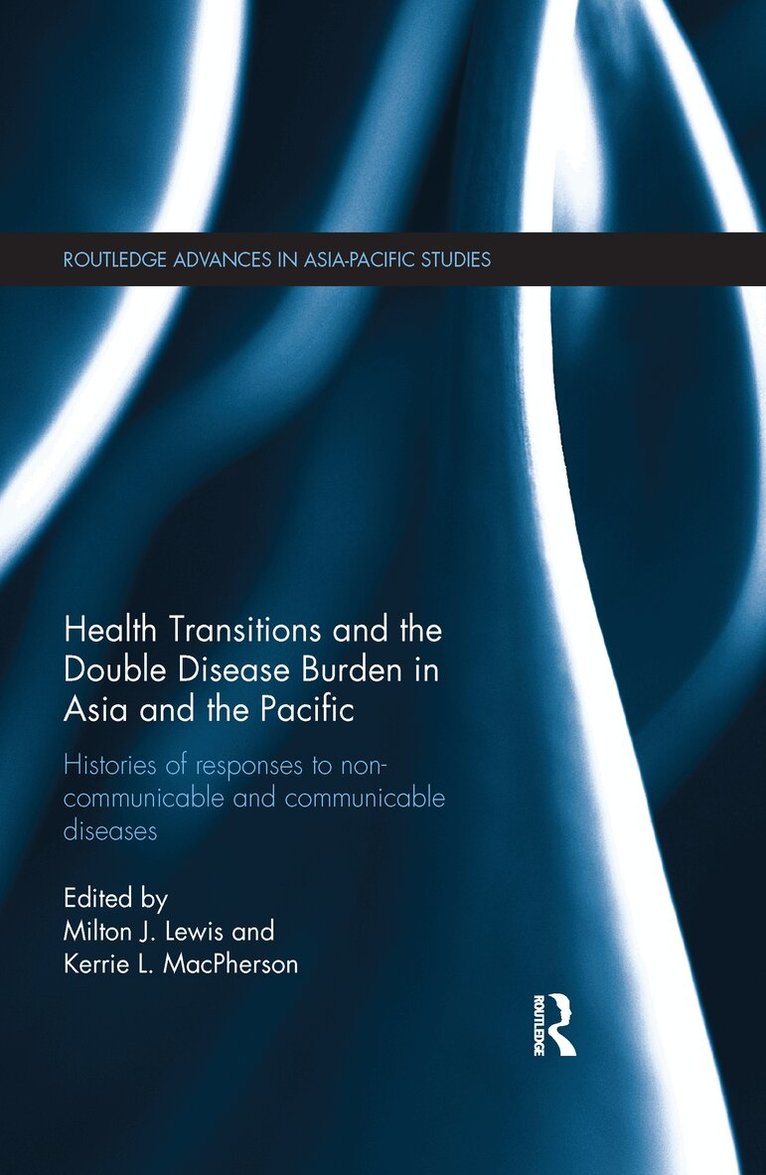
Health Transitions and the Double Disease Burden in Asia and the Pacific
Histories of Responses to Non-Communicable and Communicable Diseases
Av Milton J. Lewis, Kerrie L. MacPherson
Inbunden, 2012
2586 kr
Lägg i varukorg
Chronic diseases—cardiovascular disease, cancer, chronic respiratory disease and diabetes—are not only the principal cause of world-wide mortality but also are now responsible for a striking increase in the percentage of sickness in developing countries still grappling with the acute problems of …
Public Health in Asia and the Pacific
Historical and Comparative Perspectives
Av Milton J. Lewis, Kerrie L. MacPherson
Häftad, 2011
517 kr
Lägg i varukorg
The Asia-Pacific region has not only the greatest concentration of population but is, arguably, the future economic centre of the world. Epidemiological transition in the region is occurring much faster than it did in the West and many countries face the emerging problem of chronic diseases at the …
Disease, Medicine and Empire
Perspectives on Western Medicine and the Experience of European Expansion
Av Milton J Lewis, Roy Macleod
E-bok, 2022
642 kr
Lägg i varukorg
Originally published in 1988, the essays in this book focus primarily on colonial medicine in the British Empire but comparative material on the experience of France and Germany is also included. The authors show how medicine served as an instrument of empire, as well as constituting an …
Disease, Medicine and Empire
Perspectives on Western Medicine and the Experience of European Expansion
Av Milton J Lewis, Roy Macleod
E-bok, 2022
642 kr
Lägg i varukorg
Originally published in 1988, the essays in this book focus primarily on colonial medicine in the British Empire but comparative material on the experience of France and Germany is also included. The authors show how medicine served as an instrument of empire, as well as constituting an …
Disease, Medicine and Empire
Perspectives on Western Medicine and the Experience of European Expansion
Av Roy Macleod, Milton J Lewis
Inbunden, 2022
2197 kr
Lägg i varukorg
Originally published in 1988, the essays in this book focus primarily on colonial medicine in the British Empire but comparative material on the experience of France and Germany is also included. The authors show how medicine served as an instrument of empire, as well as constituting an …
Disease, Medicine and Empire
Perspectives on Western Medicine and the Experience of European Expansion
Av Roy Macleod, Milton J Lewis
Häftad, 2024
547 kr
Lägg i varukorg
Originally published in 1988, the essays in this book focus primarily on colonial medicine in the British Empire but comparative material on the experience of France and Germany is also included. The authors show how medicine served as an instrument of empire, as well as constituting an …
Public Health in Asia and the Pacific
Historical and Comparative Perspectives
Av Kerrie L. MacPherson, Milton J. Lewis
E-bok, 2007
576 kr
Lägg i varukorg
The Asia-Pacific region has not only the greatest concentration of population but is, arguably, the future economic centre of the world. Epidemiological transition in the region is occurring much faster than it did in the West and many countries face the emerging problem of chronic diseases at the …
Public Health in Asia and the Pacific
Historical and Comparative Perspectives
Av Kerrie L. MacPherson, Milton J. Lewis
E-bok, 2007
607 kr
Lägg i varukorg
The Asia-Pacific region has not only the greatest concentration of population but is, arguably, the future economic centre of the world. Epidemiological transition in the region is occurring much faster than it did in the West and many countries face the emerging problem of chronic diseases at the …
Health Transitions and the Double Disease Burden in Asia and the Pacific
Histories of Responses to Non-Communicable and Communicable Diseases
Av Kerrie L. MacPherson, Milton J. Lewis
E-bok, 2012
910 kr
Lägg i varukorg
Chronic diseases—cardiovascular disease, cancer, chronic respiratory disease and diabetes—are not only the principal cause of world-wide mortality but also are now responsible for a striking increase in the percentage of sickness in developing countries still grappling with the acute problems …
Health Transitions and the Double Disease Burden in Asia and the Pacific
Histories of Responses to Non-Communicable and Communicable Diseases
Av Kerrie L. MacPherson, Milton J. Lewis
E-bok, 2012
910 kr
Lägg i varukorg
Chronic diseases—cardiovascular disease, cancer, chronic respiratory disease and diabetes—are not only the principal cause of world-wide mortality but also are now responsible for a striking increase in the percentage of sickness in developing countries still grappling with the acute problems …
Health Transitions and the Double Disease Burden in Asia and the Pacific
Histories of Responses to Non-Communicable and Communicable Diseases
Av Milton J. Lewis, Kerrie L. MacPherson
Häftad, 2017
772 kr
Lägg i varukorg
Chronic diseases—cardiovascular disease, cancer, chronic respiratory disease and diabetes—are not only the principal cause of world-wide mortality but also are now responsible for a striking increase in the percentage of sickness in developing countries still grappling with the acute problems of …