Ming Lei – författare
Visar alla böcker från författaren Ming Lei. Handla med fri frakt och snabb leverans.
6 produkter
6 produkter
Inbunden, Engelska, 2021
1 523 kr
Skickas inom 10-15 vardagar
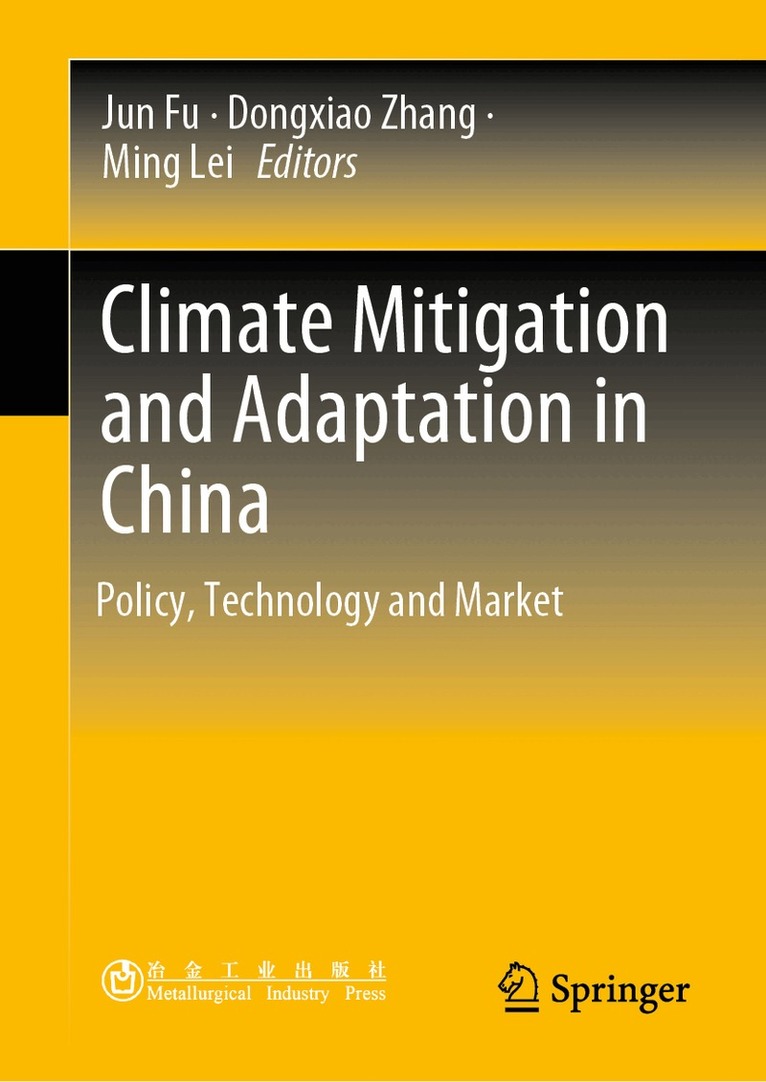
Climate change is a huge challenge to humanity in the 21th century. In view of China’s recent pledge to the international community to peak carbon emissions before 2030 and achieve carbon neutrality by 2060, this book examines climate mitigation and adaptation efforts in China through the prism of the steel sector, and it does so from three interrelated perspectives, i.e., policy, technology, and market. The book argues that in developing the country’s strategy towards green growth, over the years there has been a positive and interactive relationship between China’s international commitments and domestic agenda setting in mitigation and adaptation to the impact of climate change. To illustrate China’s efforts, two special areas, i.e., carbon capture, utilization and storage (CCUS) and emissions-trading system (ETS), have received focused examination. Along the spectrum of low-carbon, zero-carbon, and negative-carbon strategies, this study ends with a simulation model which outlines different policy scenarios, challenges, and uncertainties, as China moves further on, trying to achieve carbon neutrality in 2060. The book will be of interest to scholars, policy-makers, and business executives who want to understand China’s growing role in the world.
E-bok
Engelska, 20211 367 kr
Läs direkt efter köp
Climate change is a huge challenge to humanity in the 21th century. In view of China’s recent pledge to the international community to peak carbon emissions before 2030 and achieve carbon neutrality by 2060, this book examines climate mitigation and adaptation efforts in China through the prism of the steel sector, and it does so from three interrelated perspectives, i.e., policy, technology, and market. The book argues that in developing the country’s strategy towards green growth, over the years there has been a positive and interactive relationship between China’s international commitments and domestic agenda setting in mitigation and adaptation to the impact of climate change. To illustrate China’s efforts, two special areas, i.e., carbon capture, utilization and storage (CCUS) and emissions-trading system (ETS), have received focused examination. Along the spectrum of low-carbon, zero-carbon, and negative-carbon strategies, this study ends with a simulation model which outlines different policy scenarios, challenges, and uncertainties, as China moves further on, trying to achieve carbon neutrality in 2060. The book will be of interest to scholars, policy-makers, and business executives who want to understand China’s growing role in the world.
Häftad, Engelska, 2022
1 090 kr
Skickas inom 10-15 vardagar
Climate change is a huge challenge to humanity in the 21th century. In view of China’s recent pledge to the international community to peak carbon emissions before 2030 and achieve carbon neutrality by 2060, this book examines climate mitigation and adaptation efforts in China through the prism of the steel sector, and it does so from three interrelated perspectives, i.e., policy, technology, and market. The book argues that in developing the country’s strategy towards green growth, over the years there has been a positive and interactive relationship between China’s international commitments and domestic agenda setting in mitigation and adaptation to the impact of climate change. To illustrate China’s efforts, two special areas, i.e., carbon capture, utilization and storage (CCUS) and emissions-trading system (ETS), have received focused examination. Along the spectrum of low-carbon, zero-carbon, and negative-carbon strategies, this study ends with a simulation model which outlines different policy scenarios, challenges, and uncertainties, as China moves further on, trying to achieve carbon neutrality in 2060. The book will be of interest to scholars, policy-makers, and business executives who want to understand China’s growing role in the world.
Inbunden, Engelska, 2025
1 740 kr
Skickas inom 10-15 vardagar
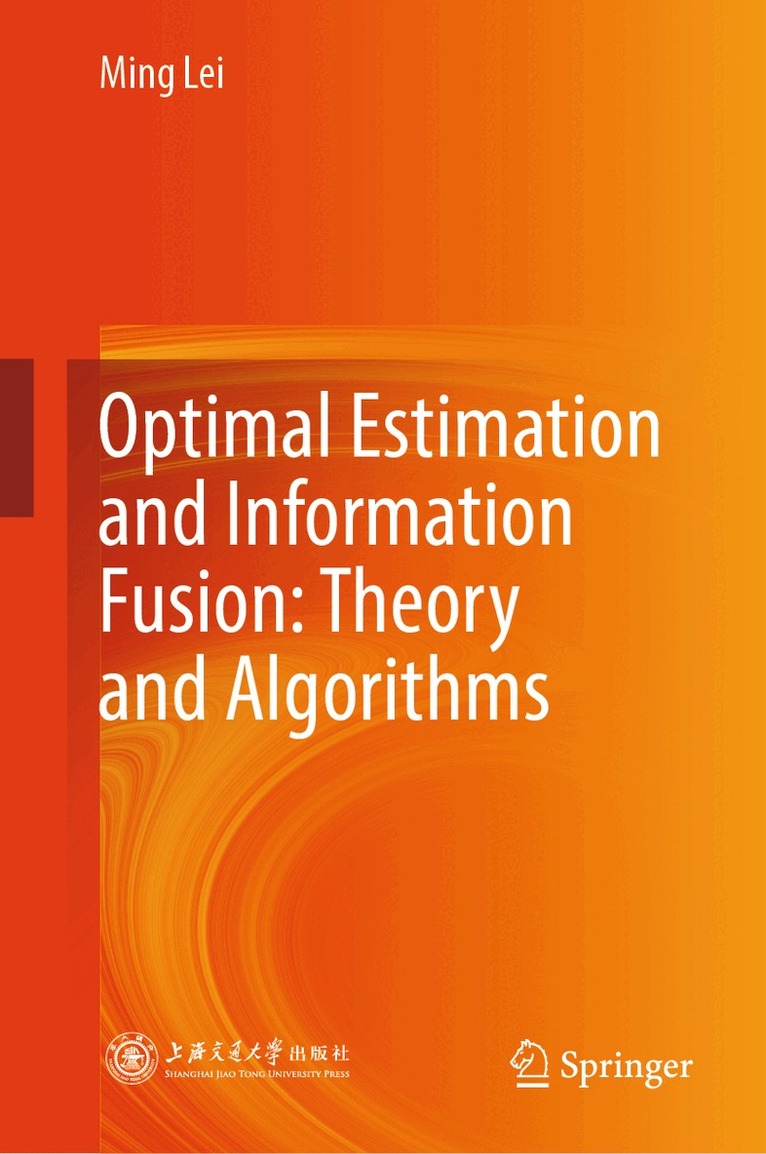
This book mainly focuses on the theme of optimizing estimation and sensor information fusion processing for stochastic dynamic systems. It summarizes the basic theories and methods of optimizing estimation and information fusion direction, including stochastic system models, optimal estimation methods, linear state estimation, nonlinear state estimation, information fusion models, structures, data processing methods, data association based on multi-source data estimation, and other aspects.On the basis of years of teaching practice, the author optimizes the content layout, focuses on the basic theoretical methods of the subject, emphasizes the systematic nature of the theory and the rigor of expression, selectively cuts out some outdated content, and introduces some important and widely accepted new developments in the subject.On the other hand, this book also serves as a reference material for technical developers in this field.
E-bok
Engelska, 20252 130 kr
Läs direkt efter köp
This book mainly focuses on the theme of optimizing estimation and sensor information fusion processing for stochastic dynamic systems. It summarizes the basic theories and methods of optimizing estimation and information fusion direction, including stochastic system models, optimal estimation methods, linear state estimation, nonlinear state estimation, information fusion models, structures, data processing methods, data association based on multi-source data estimation, and other aspects.On the basis of years of teaching practice, the author optimizes the content layout, focuses on the basic theoretical methods of the subject, emphasizes the systematic nature of the theory and the rigor of expression, selectively cuts out some outdated content, and introduces some important and widely accepted new developments in the subject.On the other hand, this book also serves as a reference material for technical developers in this field.
Häftad, Engelska, 2026
731 kr
Skickas
Online experimentation is now essential for modern software and machine learning teams. This book provides an engineer-first, end-to-end guide to building and operating production-ready experimentation platforms.The book begins with Part I establishing the core foundations of credible experimentation, including hypothesis testing, power analysis, sample sizing, metric design, and common pitfalls such as peeking, multiple testing, and novelty or learning effects. Part II focuses on platform engineering—traffic and identity management, mutual exclusion, event and logging design, ETL/ELT pipelines, building a stats engine with SciPy and statsmodels, SRM detection, integrating deployments with feature flags and canaries, and setting up guardrail and health monitoring. Part III presents advanced designs that improve speed and sensitivity: sequential testing with alpha spending, bootstrap intervals for ratios and quantiles, A/B/n testing with ANOVA, interleaving for ranking systems, switchback and geo experiments, and multi-armed bandits. Part IV connects experimentation to ML workflows, covering offline, shadow, canary, and A/B evaluation pipelines; Bayesian optimization for adaptive experimentation; counterfactual and IPS methods for learning from logs; and safe retraining supported by strong governance.What you will learn:Design trustworthy experiments with proper metrics, guardrails, α/power/MDE settings, and safeguards against peeking and multiple-testing errorsBuild a production-ready experimentation stack with assignment, identity/diversion, logging, ETL/ELT, a stats engine, and SRM checksRun advanced designs at scale, including sequential tests, bootstrap CIs, interleaving, switchback/geo experiments, and multi-armed banditsEvaluate ML systems from offline to online, leverage experiment logs for learning, and enable safe retraining with governanceWho this book is for:The primary audience for this book includes Data Engineers, ML Engineers, and Platform or Software Architects. It is also well suited for Product and Data Scientists who want a deeper understanding of experimentation systems and the engineering principles behind them.