Ming Ming Chiu – författare
Visar alla böcker från författaren Ming Ming Chiu. Handla med fri frakt och snabb leverans.
4 produkter
4 produkter
Inbunden, Engelska, 2026
747 kr
Kommande
The concept of communicative competence has been rendered as context-abstracted code-bound knowledge for language teaching and assessment. This Element offers a different perspective on 'communication' and 'competence'. Part I offers the rationale for this re-orientation. Part II examines the conceptual and pedagogic affordances and delimitations of the prevailing approach to communicative competence; Part III describes a conceptual re-framing of language use as ecological languaging in terms of embodied, situation-sensitive action through which people coordinate with others, artefacts, and environments; Part IV explores assessment approaches built on Bayesian principles for tracking learner development and progress by taking account of prior accomplishment, expert opinion, and emerging performance to create probabilistic trajectories; Part V focusses on professional developments related to conceptual refinement, curriculum design, teaching materials, and teacher education. Part VI considers some key future challenges. This title is also available as Open Access on Cambridge Core.
Häftad, Engelska, 2026
232 kr
Kommande
The concept of communicative competence has been rendered as context-abstracted code-bound knowledge for language teaching and assessment. This Element offers a different perspective on 'communication' and 'competence'. Part I offers the rationale for this re-orientation. Part II examines the conceptual and pedagogic affordances and delimitations of the prevailing approach to communicative competence; Part III describes a conceptual re-framing of language use as ecological languaging in terms of embodied, situation-sensitive action through which people coordinate with others, artefacts, and environments; Part IV explores assessment approaches built on Bayesian principles for tracking learner development and progress by taking account of prior accomplishment, expert opinion, and emerging performance to create probabilistic trajectories; Part V focusses on professional developments related to conceptual refinement, curriculum design, teaching materials, and teacher education. Part VI considers some key future challenges. This title is also available as Open Access on Cambridge Core.
Inbunden, Engelska, 2024
2 369 kr
Skickas inom 10-15 vardagar
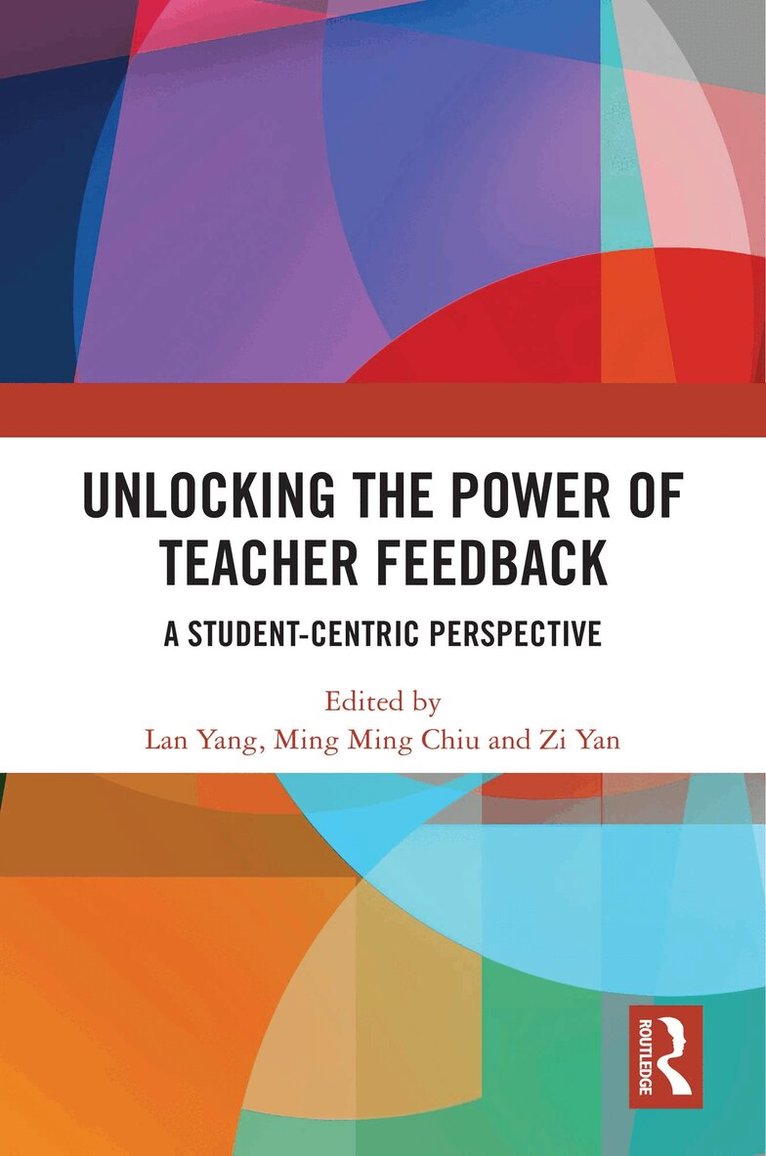
This volume addresses the pivotal role of feedback in enhancing students' motivation and learning. Through a series of innovative studies, it uncovers the intricacies of how students perceive and utilize feedback, offering practical strategies for educators while bridging the gap between feedback research and classroom practice.The book showcases six outstanding studies that offer unique insights into how teacher feedback influences student learning and achievement, all from the perspectives of students. Chapters delve into various meaningful explorations of the paramount role of feedback in education, offering readers profound insights into its pivotal significance, the nuanced ways students respond to it, and the intricate mechanisms governing its influence on student achievement and engagement. The volume uncovers key mediators such as growth-oriented goals, feedback beliefs, and school identification, shedding light on how these factors shape the impact of feedback. It also introduces practical strategies, like rebuttal writing, and emphasizes the need for personalized feedback aligned with students' cognitive styles. Additionally, the book provides a comprehensive comparison across grades and feedback comments, all while serving as a practical guide for educators, researchers, and policymakers, thereby facilitating the implementation of evidence-based feedback practices grounded in students' voices and perspectives, ultimately enriching their learning.This book will be a key resource for researchers and academics in educational psychology, student learning, and assessment, while also appealing to educators, teachers, school administrators and policymakers seeking to enhance their understanding of feedback's role in education and to improve their feedback practices. It was originally published in Educational Psychology.
Häftad, Engelska, 2025
652 kr
Skickas inom 10-15 vardagar
This volume addresses the pivotal role of feedback in enhancing students' motivation and learning. Through a series of innovative studies, it uncovers the intricacies of how students perceive and utilize feedback, offering practical strategies for educators while bridging the gap between feedback research and classroom practice.The book showcases six outstanding studies that offer unique insights into how teacher feedback influences student learning and achievement, all from the perspectives of students. Chapters delve into various meaningful explorations of the paramount role of feedback in education, offering readers profound insights into its pivotal significance, the nuanced ways students respond to it, and the intricate mechanisms governing its influence on student achievement and engagement. The volume uncovers key mediators such as growth-oriented goals, feedback beliefs, and school identification, shedding light on how these factors shape the impact of feedback. It also introduces practical strategies, like rebuttal writing, and emphasizes the need for personalized feedback aligned with students' cognitive styles. Additionally, the book provides a comprehensive comparison across grades and feedback comments, all while serving as a practical guide for educators, researchers, and policymakers, thereby facilitating the implementation of evidence-based feedback practices grounded in students' voices and perspectives, ultimately enriching their learning.This book will be a key resource for researchers and academics in educational psychology, student learning, and assessment, while also appealing to educators, teachers, school administrators and policymakers seeking to enhance their understanding of feedback's role in education and to improve their feedback practices. It was originally published in Educational Psychology.