Miranda R. Waggoner – författare
Visar alla böcker från författaren Miranda R. Waggoner. Handla med fri frakt och snabb leverans.
6 produkter
6 produkter
Inbunden, Engelska, 2017
1 122 kr
Skickas inom 5-8 vardagar
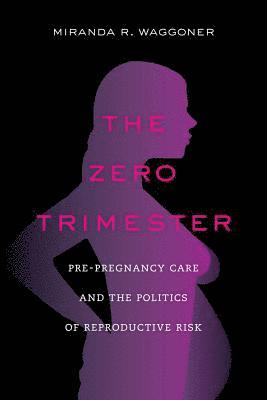
A healthy pregnancy is now defined well before pregnancy even begins. Public health messages promote pre-pregnancy health and health care by encouraging reproductive-age women to think of themselves as mothers before they think of themselves as women. This happens despite little evidence that such an approach improves maternal and child health. This book examines the dramatic shift in ideas about reproductive risk and birth outcomes over the last several decades, unearthing how these ideas intersect with the politics of women's health and motherhood at the beginning of the twenty-first century.
Häftad, Engelska, 2017
349 kr
Skickas inom 5-8 vardagar
A healthy pregnancy is now defined well before pregnancy even begins. Public health messages promote pre-pregnancy health and health care by encouraging reproductive-age women to think of themselves as mothers before they think of themselves as women. This happens despite little evidence that such an approach improves maternal and child health. This book examines the dramatic shift in ideas about reproductive risk and birth outcomes over the last several decades, unearthing how these ideas intersect with the politics of women's health and motherhood at the beginning of the twenty-first century.
E-bok
Engelska, 2017421 kr
Läs direkt efter köp
In the United States, a healthy pregnancy is now defined well before pregnancy begins. Public health messages encourage women of reproductive age to anticipate motherhood and prepare their bodies for healthy reproduction—even when pregnancy is not on the horizon. Some experts believe that this pre-pregnancy care model will reduce risk and ensure better birth outcomes than the prenatal care model. Others believe it represents yet another attempt to control women’s bodies. The Zero Trimester explores why the task of perfecting pregnancies now takes up a woman’s entire reproductive life, from menarche to menopause. Miranda R. Waggoner shows how the zero trimester rose alongside shifts in medical and public health priorities, contentious reproductive politics, and the changing realities of women’s lives in the twenty-first century. Waggoner argues that the emergence of the zero trimester is not simply related to medical and health concerns; it also reflects the power of culture and social ideologies to shape both population health imperatives and women’s bodily experiences.
E-bok
PDF, Engelska, 20191 451 kr
Läs direkt efter köp
At a moment when reproduction is increasingly politicized, this volume explores the breadth of contemporary research on reproduction from the perspective of medical sociology, illuminating the lived experience of reproduction and offering insights to inform sociology and health policy. Reproduction, Health, and Medicine elucidates the tensions and contradictions between the normal physiologic processes of pregnancy and birth and the sociocultural beliefs, values, and arrangements that shape how we experience these biological phenomena. Investigating a range of reproductive events and experiences, including pregnancy, birth, abortion and fertility planning, the volume advances our understanding of how lay people and professionals make cultural meaning out of these processes in diverse settings. The chapters highlight how studies of reproduction, health, and medicine interface with core sociological concepts such as stratification, inequality, intersectionality, family and kinship, risk, and social control, and how experiences of reproduction are shaped by gender, race, class, sexuality and citizenship, as well as culture, health care systems, and health politics.
Del 20 - Advances in Medical Sociology
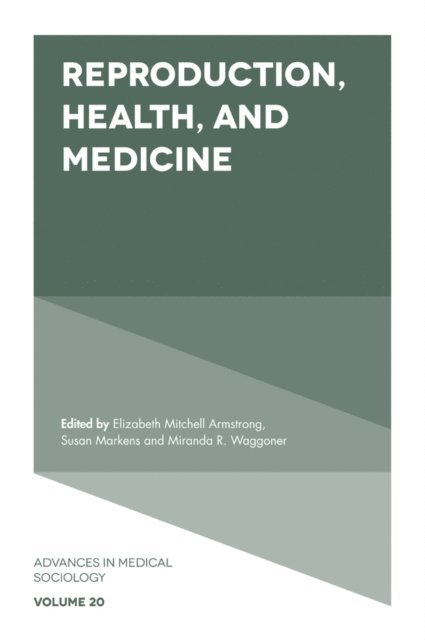
Reproduction, Health, and Medicine
Inbunden, Engelska, 2019
1 346 kr
Skickas inom 5-8 vardagar
At a moment when reproduction is increasingly politicized, this volume explores the breadth of contemporary research on reproduction from the perspective of medical sociology, illuminating the lived experience of reproduction and offering insights to inform sociology and health policy. Reproduction, Health, and Medicine elucidates the tensions and contradictions between the normal physiologic processes of pregnancy and birth and the sociocultural beliefs, values, and arrangements that shape how we experience these biological phenomena. Investigating a range of reproductive events and experiences, including pregnancy, birth, abortion and fertility planning, the volume advances our understanding of how lay people and professionals make cultural meaning out of these processes in diverse settings. The chapters highlight how studies of reproduction, health, and medicine interface with core sociological concepts such as stratification, inequality, intersectionality, family and kinship, risk, and social control, and how experiences of reproduction are shaped by gender, race, class, sexuality and citizenship, as well as culture, health care systems, and health politics.
E-bok
Engelska, 20191 401 kr
Läs direkt efter köp
At a moment when reproduction is increasingly politicized, this volume explores the breadth of contemporary research on reproduction from the perspective of medical sociology, illuminating the lived experience of reproduction and offering insights to inform sociology and health policy. Reproduction, Health, and Medicine elucidates the tensions and contradictions between the normal physiologic processes of pregnancy and birth and the sociocultural beliefs, values, and arrangements that shape how we experience these biological phenomena. Investigating a range of reproductive events and experiences, including pregnancy, birth, abortion and fertility planning, the volume advances our understanding of how lay people and professionals make cultural meaning out of these processes in diverse settings. The chapters highlight how studies of reproduction, health, and medicine interface with core sociological concepts such as stratification, inequality, intersectionality, family and kinship, risk, and social control, and how experiences of reproduction are shaped by gender, race, class, sexuality and citizenship, as well as culture, health care systems, and health politics.