
Miriam Focaccia – författare
Visar alla böcker från författaren Miriam Focaccia. Handla med fri frakt och snabb leverans.
2 produkter
2 produkter
Inbunden, Engelska, 2019
562 kr
Skickas inom 10-15 vardagar
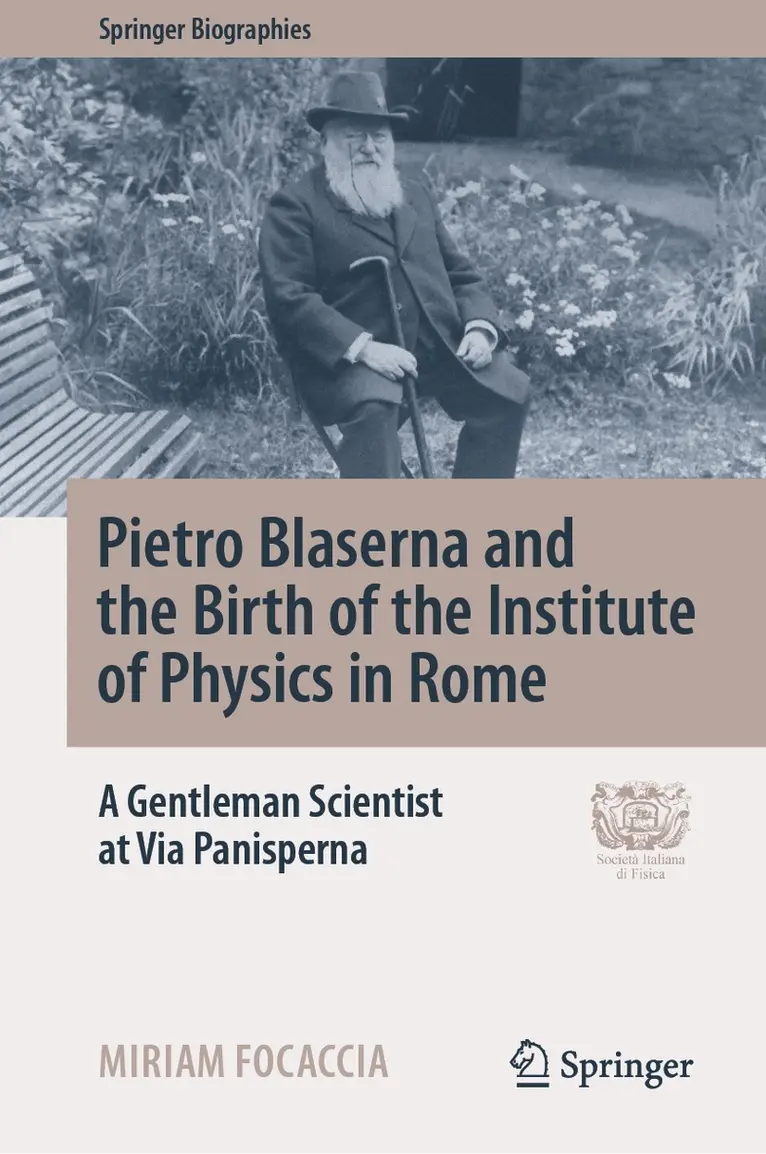
This book draws upon a wealth of archival material to present the life and achievements of Pietro Blaserna, a “gentleman scientist” whose greatest legacy is considered to be the Institute of Physics on the Via Panisperna in Rome, of which he was the creator and first director. Both in this role and as President of the Accademia dei Lincei, Blaserna contributed enormously in establishing a sound institutional base for the further development of physics in Italy. Starting from an accurate historical reconstruction of the scientific, social, and political context, the author presents the different phases of Pietro Blaserna’s life and career. As a multifaceted intellectual and a scientist holding several institutional positions, Blaserna worked ceaselessly to promote an effective policy in science and technology, which was critically important in stimulating the development of Italy as a modern nation. Blaserna may not have left scientific works that made history, but what he created in Rome was a real "house of physics", equipped with modern laboratories and instruments. In tracing his important legacy, this book will be of interest for all historians of science and for historians of nineteenth and twentieth century Italy.
E-bok
Engelska, 2019734 kr
Läs direkt efter köp
This book draws upon a wealth of archival material to present the life and achievements of Pietro Blaserna, a “gentleman scientist” whose greatest legacy is considered to be the Institute of Physics on the Via Panisperna in Rome, of which he was the creator and first director. Both in this role and as President of the Accademia dei Lincei, Blaserna contributed enormously in establishing a sound institutional base for the further development of physics in Italy. Starting from an accurate historical reconstruction of the scientific, social, and political context, the author presents the different phases of Pietro Blaserna’s life and career. As a multifaceted intellectual and a scientist holding several institutional positions, Blaserna worked ceaselessly to promote an effective policy in science and technology, which was critically important in stimulating the development of Italy as a modern nation. Blaserna may not have left scientific works that made history, but what he created in Rome was a real "house of physics", equipped with modern laboratories and instruments. In tracing his important legacy, this book will be of interest for all historians of science and for historians of nineteenth and twentieth century Italy.