Miriam Nichols – författare
Visar alla böcker från författaren Miriam Nichols. Handla med fri frakt och snabb leverans.
9 produkter
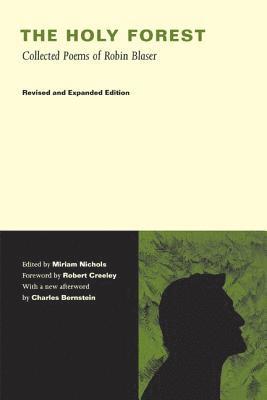
Holy Forest
Collected Poems of Robin Blaser
Av Robin Blaser, Miriam Nichols
Häftad, 2008
322 kr
Lägg i varukorg
Robin Blaser, one of the key North American poets of the postwar period, emerged from the "Berkeley Renaissance" of the 1940s and 1950s as a central figure in that burgeoning literary scene. "The Holy Forest", now spanning five decades, is Blaser's highly acclaimed lifelong serial poem. This …
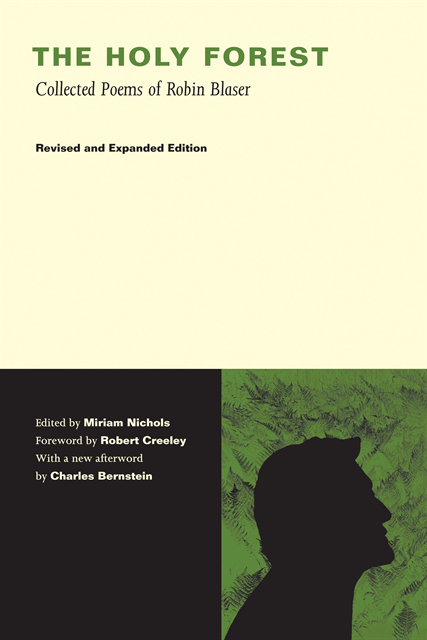
Holy Forest
Collected Poems of Robin Blaser
Av Robin Blaser, Miriam Nichols
E-bok, 2007
538 kr
Lägg i varukorg
Robin Blaser, one of the key North American poets of the postwar period, emerged from the "Berkeley Renaissance" of the 1940s and 1950s as a central figure in that burgeoning literary scene. The Holy Forest, now spanning five decades, is Blaser''s highly acclaimed lifelong serial poem. This …
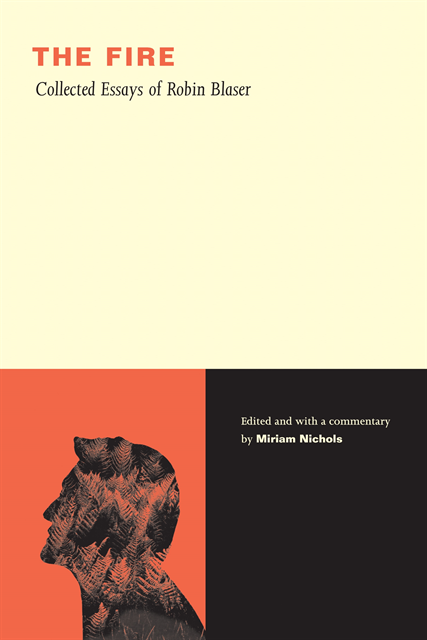
Fire
Collected Essays of Robin Blaser
Av Robin Blaser, Miriam Nichols
E-bok, 2006
604 kr
Lägg i varukorg
Spanning four decades of meditation on the avant-garde in poetry, art, and philosophy, the essays collected in The Fire reveal Robin Blaser''s strikingly fresh perspective on "New American" poets, deconstructive philosophies, current events, and the state of humanities now. The essays, gathered in …
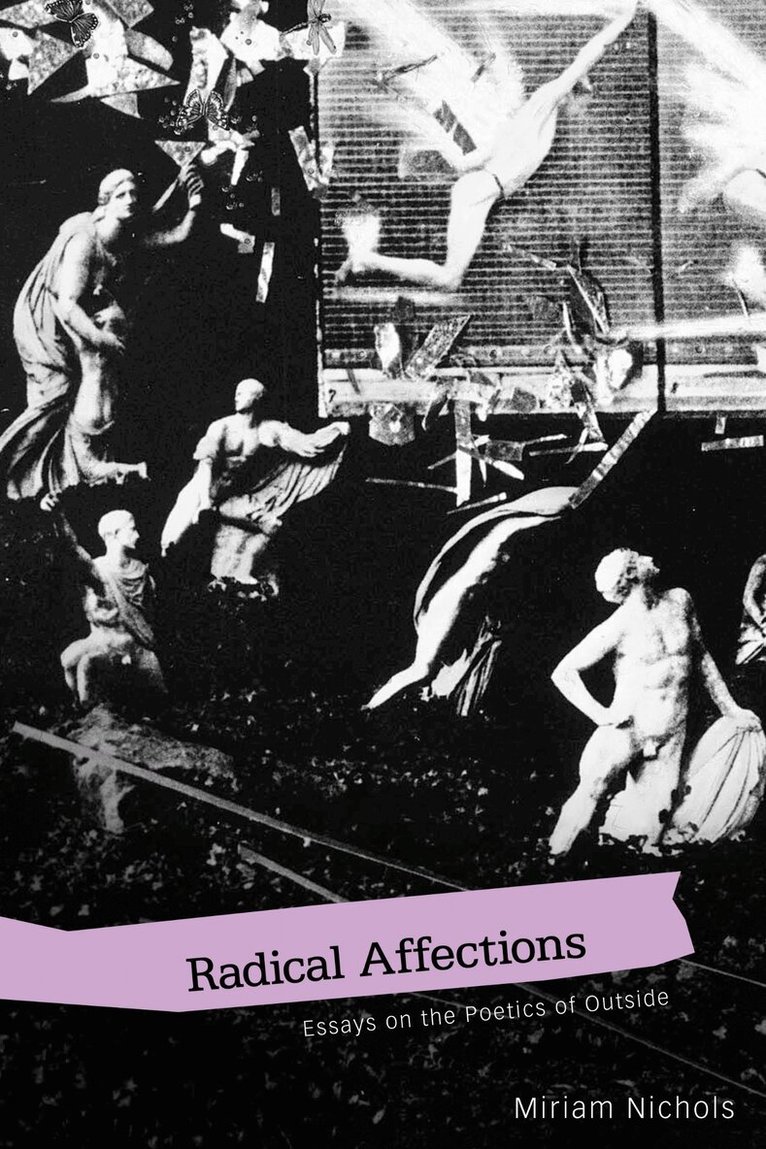
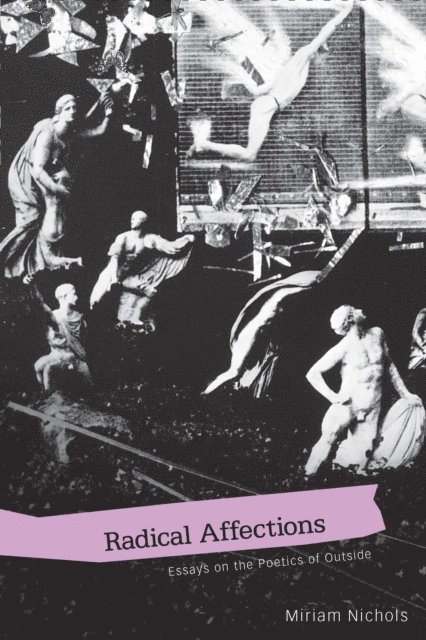
Radical Affections
Essays on the Poetics of Outside
Häftad, 2011
505 kr
Lägg i varukorg
In 1950 the poet Charles Olson published his influential essay “Projective Verse” in which he proposed a poetry of “open field” composition—to replace traditional closed poetic forms with improvised forms that would reflect exactly the content of the poem.The poets and poetry that have followed in …
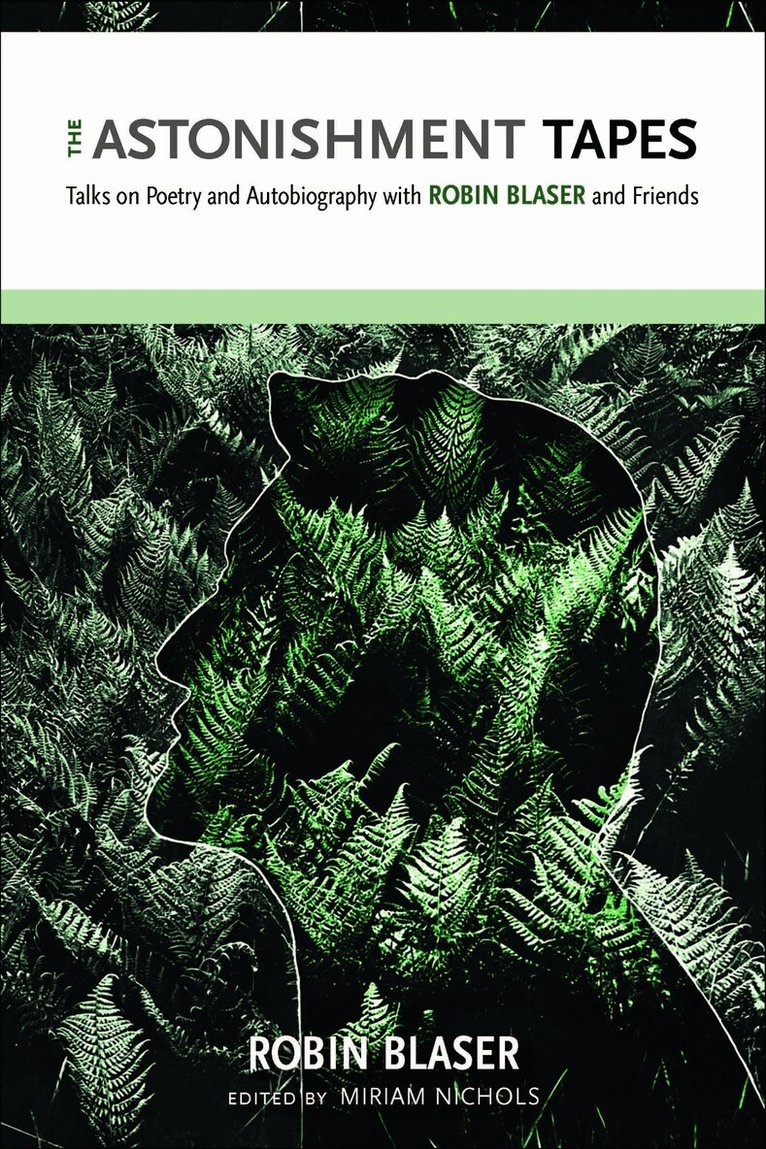
Astonishment Tapes
Talks on Poetry and Autobiography with Robin Blaser and Friends
Av Robin Blaser, Miriam Nichols
Häftad, 2015
570 kr
Lägg i varukorg
The Astonishment Tapes is the edited transcript of revealing autobiographical audiotapes recorded by the groundbreaking poet Robin Blaser, a founding member of the Berkeley contingent of the San Francisco Renaissance in New American Poetry.Robin Blaser moved from his native Idaho to attend the …
Radical Affections
Essays on the Poetics of Outside
E-bok, 2011
871 kr
Lägg i varukorg
A study of six poets central to the New American poetry—Charles Olson, Robert Creeley, Robert Duncan, Jack Spicer, Robin Blaser, and Susan Howe—with an eye both toward challenging the theoretical lenses through which they have been viewed and to opening up this counter tradition to contemporary …
Astonishment Tapes
Talks on Poetry and Autobiography with Robin Blaser and Friends
Av Robin Blaser, Miriam Nichols
E-bok, 2015
1065 kr
Lägg i varukorg
The edited transcript of revealing autobiographical audiotapes recorded by the groundbreaking poet Robin Blaser Robin Blaser moved from his native Idaho to attend the University of California, Berkeley, in 1944. While there, he developed as a poet, explored his homosexuality, engaged in a lively …
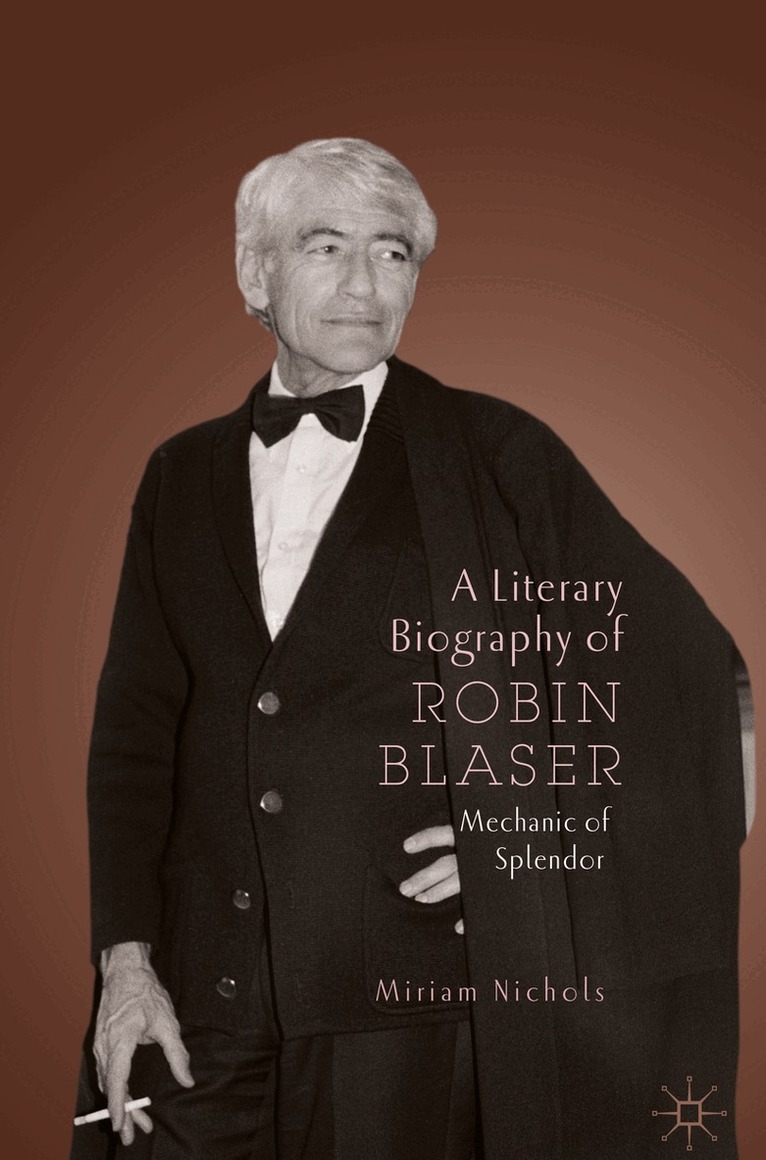
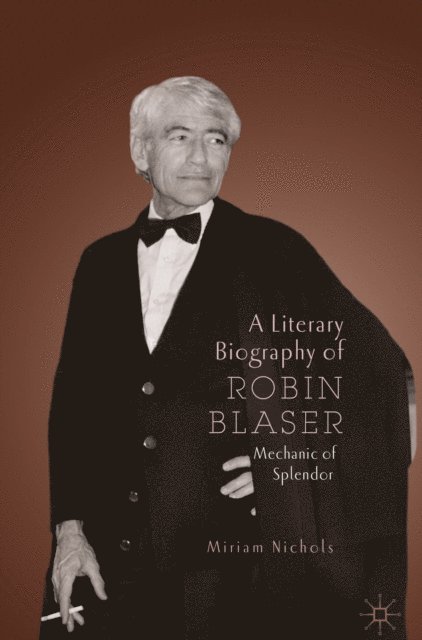
Literary Biography of Robin Blaser
Mechanic of Splendor
Inbunden, 2019
357 kr
Lägg i varukorg
A Literary Biography of Robin Blaser: Mechanic of Splendor is the first major study illustrating Robin Blaser’s significance to North American poetry. The poet Robin Blaser (1925–2009) was an important participant in the Berkeley Renaissance of the 1950s and San Francisco poetry circles of the …
Literary Biography of Robin Blaser
Mechanic of Splendor
E-bok, 2019
500 kr
Lägg i varukorg
A Literary Biography of Robin Blaser: Mechanic of Splendor is the first major study illustrating Robin Blaser’s significance to North American poetry. The poet Robin Blaser (1925–2009) was an important participant in the Berkeley Renaissance of the 1950s and San Francisco poetry circles of the …