Miriam R. Lowi - Böcker
Visar alla böcker från författaren Miriam R. Lowi. Handla med fri frakt och snabb leverans.
5 produkter
5 produkter
Del 32 - Cambridge Middle East Studies
Oil Wealth and the Poverty of Politics
Algeria Compared
Inbunden, Engelska, 2009
1 192 kr
Skickas inom 7-10 vardagar
How can we make sense of Algeria's post-colonial experience - the tragedy of unfulfilled expectations, the descent into violence, the resurgence of the state? Oil Wealth and the Poverty of Politics explains why Algeria's domestic political economy unravelled from the mid-1980s, and how the regime eventually managed to regain power and hegemony. Miriam Lowi argues the importance of leadership decisions for political outcomes, and extends the argument to explain the variation in stability in oil-exporting states following economic shocks. Comparing Algeria with Iran, Iraq, Indonesia and Saudi Arabia, she asks why some states break down and undergo regime change, while others remain stable, or manage to re-stabilise after a period of instability. In contrast with exclusively structuralist accounts of the rentier state, this book demonstrates, in a fascinating and accessible study, that political stability is a function of the way in which structure and agency combine.
Del 31 - Cambridge Middle East Library
Water and Power
The Politics of a Scarce Resource in the Jordan River Basin
Häftad, Engelska, 1995
428 kr
Skickas inom 7-10 vardagar
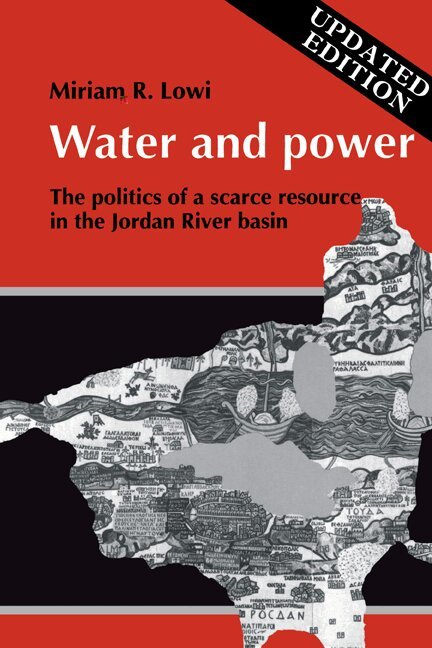
Why do states in arid regions fail to co-operate in sharing water resources when co-operation would appear to be in their mutual interest? Through in-depth analysis of the history and current status of the dispute over the Jordan River basin, Miriam Lowi explores the answers to these critical questions.
347 kr
Skickas inom 7-10 vardagar
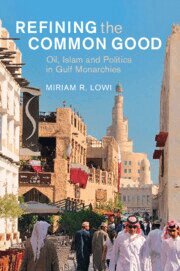
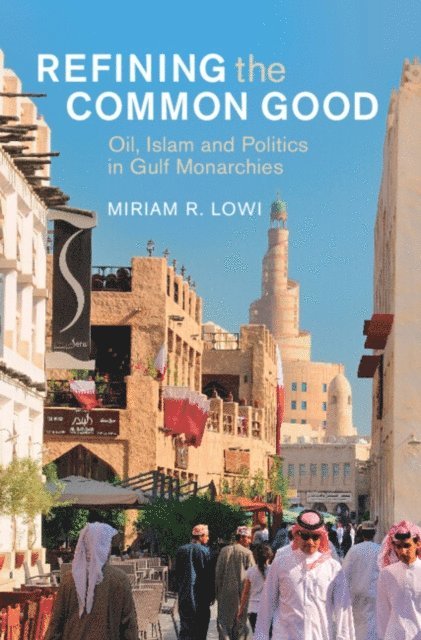
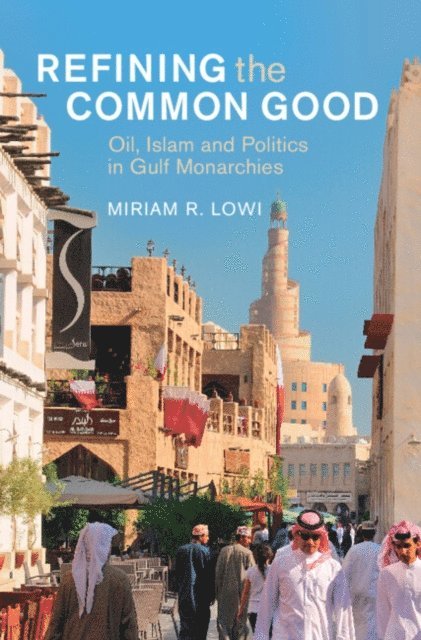
How has Islam as a set of beliefs and practices shaped the allocation of oil revenues in Arab Gulf monarchies? In turn, how has oil wealth impacted the role of Islamic doctrine in politics? Refining the Common Good explores the relationship between Islamic norms and the circulation of oil wealth in Gulf monarchies. The study demonstrates how both oil (revenues) and Islam (as doctrine) are manipulated as tools of state power, and how religious norms are refined for the sake of achieving narrow secular interests. Miriam R. Lowi examines different institutionalized practices financed by hydrocarbon revenues and sanctioned, either implicitly or explicitly, by Islam, and uses evidence from Kuwait, Qatar, Oman and Saudi Arabia to show how these practices are infused with political purpose. The dynamic relationship between oil wealth and Islamic doctrine is exploited to contribute to the management and control of society, and the consolidation of dynastic autocracy.
1 126 kr
Skickas inom 7-10 vardagar
How has Islam as a set of beliefs and practices shaped the allocation of oil revenues in Arab Gulf monarchies? In turn, how has oil wealth impacted the role of Islamic doctrine in politics? Refining the Common Good explores the relationship between Islamic norms and the circulation of oil wealth in Gulf monarchies. The study demonstrates how both oil (revenues) and Islam (as doctrine) are manipulated as tools of state power, and how religious norms are refined for the sake of achieving narrow secular interests. Miriam R. Lowi examines different institutionalized practices financed by hydrocarbon revenues and sanctioned, either implicitly or explicitly, by Islam, and uses evidence from Kuwait, Qatar, Oman and Saudi Arabia to show how these practices are infused with political purpose. The dynamic relationship between oil wealth and Islamic doctrine is exploited to contribute to the management and control of society, and the consolidation of dynastic autocracy.
Del 32 - Cambridge Middle East Studies
Oil Wealth and the Poverty of Politics
Algeria Compared
Häftad, Engelska, 2011
428 kr
Skickas inom 7-10 vardagar
How can we make sense of Algeria's post-colonial experience - the tragedy of unfulfilled expectations, the descent into violence, the resurgence of the state? Oil Wealth and the Poverty of Politics explains why Algeria's domestic political economy unravelled from the mid-1980s, and how the regime eventually managed to regain power and hegemony. Miriam Lowi argues the importance of leadership decisions for political outcomes, and extends the argument to explain the variation in stability in oil-exporting states following economic shocks. Comparing Algeria with Iran, Iraq, Indonesia and Saudi Arabia, she asks why some states break down and undergo regime change, while others remain stable, or manage to re-stabilise after a period of instability. In contrast with exclusively structuralist accounts of the rentier state, this book demonstrates, in a fascinating and accessible study, that political stability is a function of the way in which structure and agency combine.