Mohamed Ariff - Böcker
Visar alla böcker från författaren Mohamed Ariff. Handla med fri frakt och snabb leverans.
13 produkter
13 produkter
1 853 kr
Skickas inom 7-10 vardagar
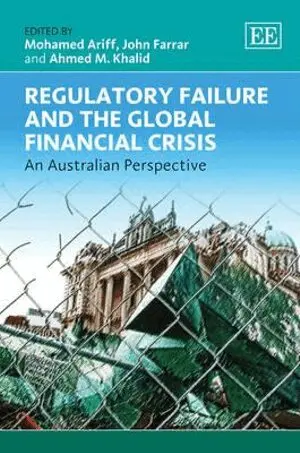
This fascinating book presents a lively discussion of key issues resulting from the recent financial crisis. The expert contributors explore why the global financial crisis occurred, how it destroyed wealth, triggered mass unemployment, and created an unprecedented loss of control on employment, monetary policy, government budgets. Important topics encompassing the origin and impact of the crisis, governance failure, regulatory forgiveness, credit splurges, asset bubbles and the greed of institutions are analysed from wide-ranging perspectives of not only academics in both economics and law, but also from industry practitioners and regulators. This multidimensional evaluation of what went wrong concludes with an outline of what is currently being done to prevent another major crisis, and prescribes recommendations for the implementation of further preventative measures.This book will prove a compelling read for economics, finance and law scholars, as well as for practitioners including accountants, lawyers and financial market players.Contributors include: R.P Buckley, M. Bond, W. Byres, J. Carmichael, F. Clarke, K. Davis, G. Dean, J. Diplock, J. Farrar, A. Fels, N. Gaston, A. Khalid, R. MacKinnon, T. Makin
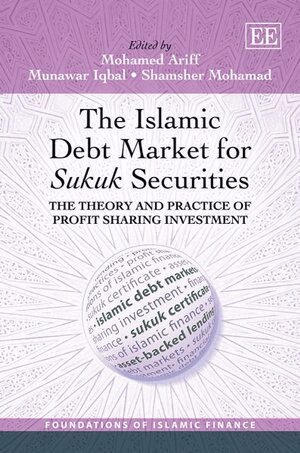
Islamic Debt Market for Sukuk Securities
The Theory and Practice of Profit Sharing Investment
Inbunden, Engelska, 2012
1 853 kr
Skickas inom 7-10 vardagar
The relatively new sukuk (or Islamic debt securities) markets have grown to more than US $800 billion over the past decade, and continue to grow at a rate of around 20-30 per cent per year. Arguably the first of its kind, this path-breaking book provides a highly unique reference tool relating to key issues surrounding sukuk markets, which are found in 12 major financial centers, including Kuala Lumpur, London and Zurich. The internationally renowned contributors present an in-depth study of sukuk securities, beginning with a comprehensive definition and history. They go on to discuss Islamic financial concepts and practices that govern how sukuk securities are issued, how markets are carefully regulated to protect investors, and how securities are designed to safeguard invested money. The prospects and challenges of developing sukuk Islamic debt markets across the world are also illustrated. This comprehensive guide to sukuk markets will prove a fascinating and useful reference tool for academics, students, researchers and practitioners with an interest in Islamic finance, and, more specifically, in the nascent field of sukuk securities. Contributors include: M. Ariff, P. Casey, M. Cizakca, S.A. Hussein, M. Iqbal, S.S.A. Khan, A. Meor-Amri, S. Mohamad, H.S. Nasser, A. Saeed, M.T. Skully
634 kr
Skickas inom 7-10 vardagar
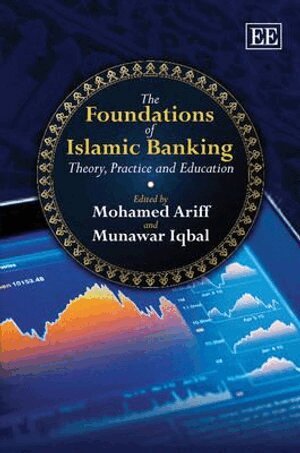
After barely half a century of experience, Islamic banking has become established as a new niche industry across the world, offering new and sophisticated financial products designed to be compliant with Islamic legal principles and common law. This comprehensive book explores the theory, principles and practices underpinning this rapidly expanding sector of banking. Expert contributors - including eminent scholars and senior practitioners in the field - examine the roots of the principles of ethical Islamic financial transactions, which have evolved over several millennia, on issues including usury, interest rates, and financial contracting for funding enterprises, mortgages, leasing and other transactions. Regulatory and governance issues are discussed, and the practice and operation of Islamic financial institutions are explained via three distinct case studies. Importantly, the final chapter looks at what steps are being taken to provide professional accreditation to Islamic banking professional personnel, and prescribes requirements for training in this growing industry. This rich and wide-ranging guide to the foundations and fundamental principles of this new form of ethics-based financial practice will prove a fascinating and illuminating read for regulators, practitioners, and scholars in the fields of economics, finance, money and banking.Contributors: I. Abraham, S.O. Alhabshi, S.H. Aljunid, M. Ariff, M.K. Badar, I. Bhatti, M. Bhatti, E. Girard, K. Hassan, T. Hassan, M. Iqbal, M.K. Lewis, C. Mews, A. Saeed, S.H. Razak, M. Shamsher, M.T. Skully, A. Walsh, M. Zaman
875 kr
Tillfälligt slut
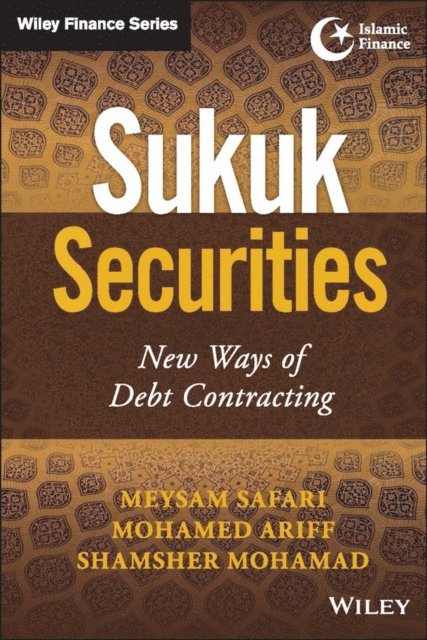
The essential guide to global sukuk markets worldwideSukuk Securities provides complete information and guidance on the latest developments in the burgeoning sukuk securities markets. Written by leading Islamic finance experts, this essential guide offers insight into the concepts, design features, contract structures, yields, and payoffs in all twelve global sukuk markets, providing Islamic finance professionals with an invaluable addition to their library. The first book to fully introduce the market, this book provides a detailed overview of the sukuk market, with practical guidance toward applying these instruments in real-world scenarios. Readers will learn how sukuk securities are regulated and the issues that arise from regulations, and gain insight into the foundation and principles of Islamic finance as applied to these instruments. Extensive tables illustrate t-test comparisons between conventional bonds and sukuk, risk factors, and the issuance of different types of sukuk securities by country to give readers a deeper understanding of the markets. In 2010, the World Bank recommended sukuk as the best form of lending for growth in developing countries; since then, the value of new issues has grown at 45 percent per year. The market's present size is close to US $1,200 billion, with private markets in major financial centers like London, Zurich, and New York. This book provides comprehensive guidance toward understanding and using these instruments, and working within these markets. Get acquainted with the sukuk market, definitions, classification, and pricingLearn the different approaches to structuring and contract designDiscover how sukuk is applied, including regulations, ratings, and securitizationExamine payoff structures and suggested sukuk valuation in the context of Islamic finance principlesWith the sukuk market growing the way it is, regulators, investors, and students need to fully understand the mechanisms at work. Sukuk Securities is the complete guide to the sukuk markets, with expert insight. July 2014 saw the first sukuk listing in London. Hong Kong and Seoul have also entered this niche market. Predictions are that there will be continued high growth of sukuk debt markets around the world, all providing targeted funding via sukuk contracting modes.
1 177 kr
Skickas inom 10-15 vardagar
In the evolving environment of global financial markets, governments, corporations, individual investors, and their associated financial institutions must grapple with a host of thorny issues that affect emerging economies with particular force, as we saw during the Asian financial crisis of the late 1990s. Among the issues analyzed by some of the top financial scholars from around the world are covered arbitrage possibilities in the absense of hedging instruments; the effect of capital controls on capital flows; the potential impact of currency unification, as well as the possibilities for pegging currency in the context of floating foreign exchange regimes; regulatory reforms; and political risk analysis.
833 kr
Skickas inom 10-15 vardagar
Top financial scholars from around the world analyze regional economic issues in light of the recent Asian financial crisis. As a result of that crisis, and the ensuing reforms, corporations, governments, individual investors have pursued a variety of strategies to cope with the fast-changing economic situation. Each chapter treats a separate issue and offers policy recommendations. Among the theoretical and empirical analyses collected here are those relating to nonperforming loans, economic restructuring, bank forecasting, prediction of corporate failure, Islamic banking issues, new measurement of systematic risk of delisted stocks resuming trading operations, and the lead-lag relationship and pricing efficiency of regional stock exchanges.
Islamic Debt Market for Sukuk Securities
The Theory and Practice of Profit Sharing Investment
Häftad, Engelska, 2013
594 kr
Skickas inom 7-10 vardagar
The relatively new sukuk (or Islamic debt securities) markets have grown to more than US $800 billion over the past decade, and continue to grow at a rate of around 20-30 per cent per year. Arguably the first of its kind, this path-breaking book provides a highly unique reference tool relating to key issues surrounding sukuk markets, which are found in 12 major financial centers, including Kuala Lumpur, London and Zurich. The internationally renowned contributors present an in-depth study of sukuk securities, beginning with a comprehensive definition and history. They go on to discuss Islamic financial concepts and practices that govern how sukuk securities are issued, how markets are carefully regulated to protect investors, and how securities are designed to safeguard invested money. The prospects and challenges of developing sukuk Islamic debt markets across the world are also illustrated. This comprehensive guide to sukuk markets will prove a fascinating and useful reference tool for academics, students, researchers and practitioners with an interest in Islamic finance, and, more specifically, in the nascent field of sukuk securities. Contributors include: M. Ariff, P. Casey, M. Cizakca, S.A. Hussein, M. Iqbal, S.S.A. Khan, A. Meor-Amri, S. Mohamad, H.S. Nasser, A. Saeed, M.T. Skully
1 937 kr
Skickas inom 7-10 vardagar
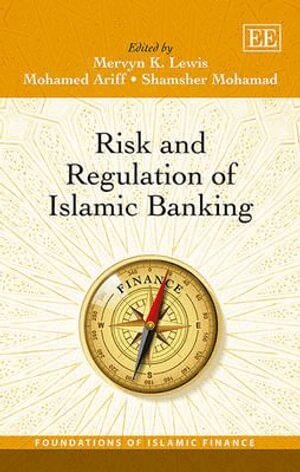
From a single product offering in 1963, the Islamic financial services industry has grown to an estimated $1.6 trillion in assets. Products must comply with profit and risk-sharing criteria and regulations preventing banks from venturing into activities with high risk and excessive uncertainty. This timely volume analyses these matters and considers the range of new products, discussing both conceptual and practical dimensions.The expert contributors examine why an ethical foundation is important and why the system requires well-thought-out regulations to ensure outcomes that protect the community's well-being. The volume explores in detail the nature of Islamic banking products and their risk elements, how the system differs from conventional banking in theory and practice, and how Islamic financial institutions are rated and regulated. It also connects Islamic finance to the mainstream theoretical literature on financial intermediation whilst exploring its differences.Offering a detailed examination of the risk and regulation of Islamic banking products, this unique volume will be of great interest to Islamic and Western universities with courses in Islamic studies and finance. Islamic research centers and training institutes, central banks and Islamic regulatory agencies will also find this a valuable resource.Contributors: M. Ariff, M.A.M. Ayob, O.I. Bacha, Z. Hassan, M. Iqbal, A. Kaleem, M.A Laldin, Y.K.Leng, M.K.Lewis, A. Mirakhor, S. Mohamad, M.Z. Othman, S.P. Parashar, V. Promwichit, M. Safari, M.T. Skully, R. Zaman
2 332 kr
Skickas inom 7-10 vardagar
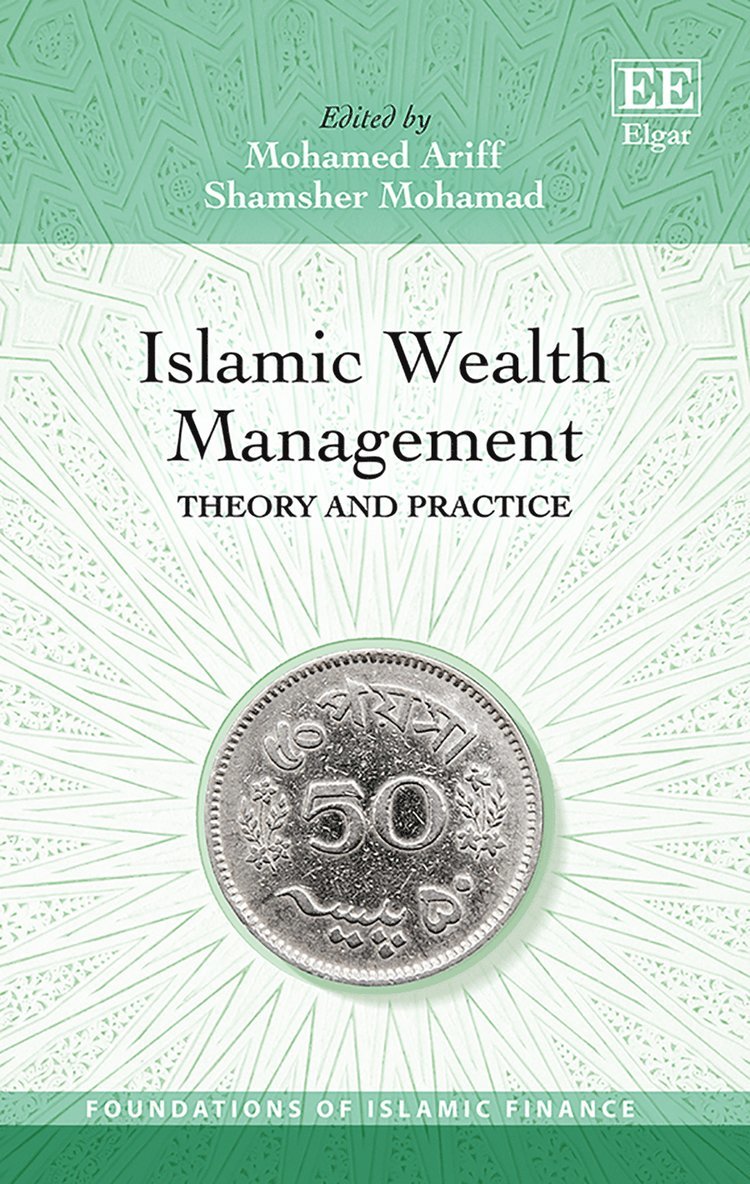
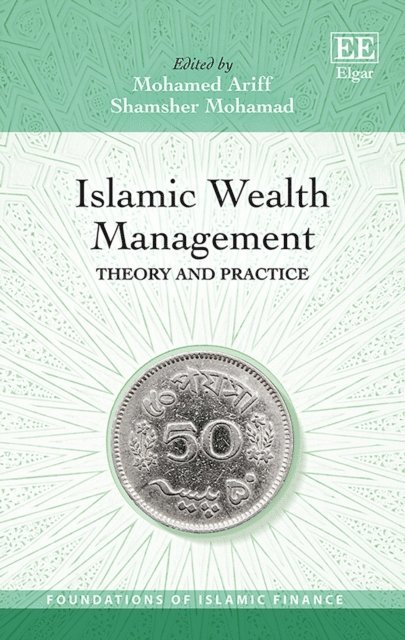
From an Islamic perspective, although the ownership of wealth is with God, humans are gifted with wealth to manage it with the objective of benefiting the human society. Such guidance means that wealth management is a process involving the accumulation, generation, purification, preservation and distribution of wealth, to be conducted carefully in permissible ways. This book is the first to lay out a coherent framework on how wealth management should be conducted in compliance with guiding principles from edicts of a major world religion. The book begins by defining wealth from both a secular perspective, and an Islamic perspective, before describing how wealth needs to be earned in lawful ways, preserved and used to benefit the needs of community, with a small part of the wealth given away to charity, and the remainder managed in accordance with laws and common practices, as established by a majority consensus of scholars of the religion in historical times. Each section of the book has relevant chapters that discuss the theory, as well as the application and the challenges in Islamic wealth management in real and financial markets. This book will appeal to students and researchers of Islamic wealth management, certainly Islamic economics and finance in general; policy makers; and a range of industry practitioners, such as investment managers, financial planners, accountants and lawyers.Contributors include: S.O. Alhabshi, M. Ariff, G.Ç. Dolgun, M.H. Dolgun, M. El Khatib, J. Farrar, F. Habib, A. Lahsasna, Z. Mahomed, A. Mirakhor, S. Mohamad, M.I.A. Mohsin, E.S. Rasid, S.H.A. Razak, S.A. Rosly, Z.M. Sori, J.A. Thahir, A. Zuleika
2 435 kr
Skickas inom 7-10 vardagar
This book reveals significant lessons on how economic prosperity was secured for people over three decades in eight Asian countries. It focusses on the careful way in which these nations designed and implemented pro-growth, liberal economic and financial policies. A new phenomenon - namely financial fragility - in the more liberalised fast growth Asian economies is also examined.The authors explore why only some of the early reformers among China, India, Indonesia, Korea, Malaysia, Pakistan, Singapore, and Thailand succumbed to a serious financial crisis in 1997 whilst others did not. They also analyse the impact of policies implemented by the crisis-hit economies, either under the IMF restructuring programs or independent pursuit of capital and currency controls. The book goes on to identify the weaknesses of the banking sector in order to explain the reasons behind the financial crisis. The book concludes with lessons for other emerging economies undertaking economic and financial development through liberalization. These examples reveal policies that could be prescribed in order to prevent future problems. Focusing on post-crisis reforms and their policy impacts, and on post-crisis evaluation of restructuring implemented in the financial sector, this book will appeal to academics and those with specific interests in Asian studies and/or banking and finance. Policymakers - in particular those at central banks and treasuries, along with professionals in financial institutions and multinational firms, will find the book to be a fascinating read.
888 kr
Skickas inom 7-10 vardagar
This book reveals significant lessons on how economic prosperity was secured for people over three decades in eight Asian countries. It focusses on the careful way in which these nations designed and implemented pro-growth, liberal economic and financial policies. A new phenomenon - namely financial fragility - in the more liberalised fast growth Asian economies is also examined.The authors explore why only some of the early reformers among China, India, Indonesia, Korea, Malaysia, Pakistan, Singapore, and Thailand succumbed to a serious financial crisis in 1997 whilst others did not. They also analyse the impact of policies implemented by the crisis-hit economies, either under the IMF restructuring programs or independent pursuit of capital and currency controls. The book goes on to identify the weaknesses of the banking sector in order to explain the reasons behind the financial crisis. The book concludes with lessons for other emerging economies undertaking economic and financial development through liberalization. These examples reveal policies that could be prescribed in order to prevent future problems. Focusing on post-crisis reforms and their policy impacts, and on post-crisis evaluation of restructuring implemented in the financial sector, this book will appeal to academics and those with specific interests in Asian studies and/or banking and finance. Policymakers - in particular those at central banks and treasuries, along with professionals in financial institutions and multinational firms, will find the book to be a fascinating read.
1 993 kr
Skickas inom 7-10 vardagar
After barely half a century of experience, Islamic banking has become established as a new niche industry across the world, offering new and sophisticated financial products designed to be compliant with Islamic legal principles and common law. This comprehensive book explores the theory, principles and practices underpinning this rapidly expanding sector of banking. Expert contributors - including eminent scholars and senior practitioners in the field - examine the roots of the principles of ethical Islamic financial transactions, which have evolved over several millennia, on issues including usury, interest rates, and financial contracting for funding enterprises, mortgages, leasing and other transactions. Regulatory and governance issues are discussed, and the practice and operation of Islamic financial institutions are explained via three distinct case studies. Importantly, the final chapter looks at what steps are being taken to provide professional accreditation to Islamic banking professional personnel, and prescribes requirements for training in this growing industry. This rich and wide-ranging guide to the foundations and fundamental principles of this new form of ethics-based financial practice will prove a fascinating and illuminating read for regulators, practitioners, and scholars in the fields of economics, finance, money and banking.Contributors: I. Abraham, S.O. Alhabshi, S.H. Aljunid, M. Ariff, M.K. Badar, I. Bhatti, M. Bhatti, E. Girard, K. Hassan, T. Hassan, M. Iqbal, M.K. Lewis, C. Mews, A. Saeed, S.H. Razak, M. Shamsher, M.T. Skully, A. Walsh, M. Zaman
Liberalization, Growth and the Asian Financial Crisis
Lessons for Developing and Transitional Economies in Asia
Inbunden, Engelska, 2000
2 934 kr
Skickas inom 7-10 vardagar
This timely book examines the effects of financial liberalization in the more advanced economies of Southeast Asia. The book also analyses the degree to which emerging and transitional economies in East and South Asia can benefit from this example. The weakness of the banking sector is examined in order to explain the reasons behind the currency crisis and to prescribe policies to avoid a similar episode in the future.Further, the book documents the individual steps taken to liberalize the economies over a period of about 20-30 years in each country. The analyses reveal that liberalization led to high growth in economies undertaking such reforms while unwillingness to take such reforms appear to have led to poor growth and hence low social development. This finding contradicts the common belief that liberalization led to the financial crisis and then to growth collapse.An efficient and liberalized financial sector is an essential precondition for promoting and accelerating economic growth and welfare. Arguments supporting this policy are based on the experience of Southeast Asian economies, particularly the pioneers such as Malaysia, Singapore, Indonesia and Thailand. This has led some less developed countries in East and South Asia to initiate the process of financial sector reforms and to realize the potential benefits of such reforms. The authors analyse the reform process and the lessons to be drawn from the experiences of these economies in their quest for sustained development in East and South Asia.