Mohamed Daoudi – författare
Visar alla böcker från författaren Mohamed Daoudi. Handla med fri frakt och snabb leverans.
7 produkter
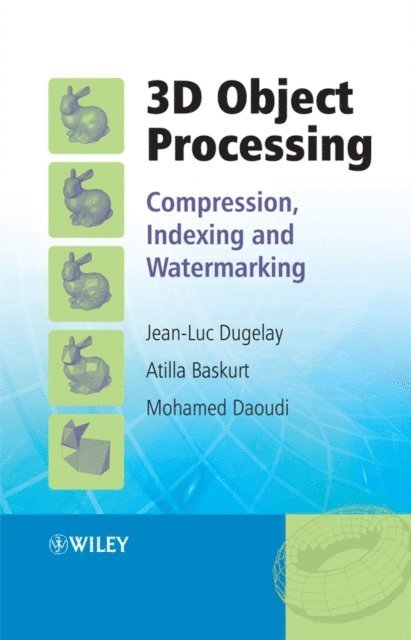
3D Object Processing
Compression, Indexing and Watermarking
Av Jean-Luc Dugelay, Atilla Baskurt m. fl.
Inbunden, 2008
1485 kr
Lägg i varukorg
The arrival, and continuing evolution, of high quality 3D objects has been made possible by recent progress in 3D scanner acquisition and 3D graphics rendering. With this increasing quality comes a corresponding increase in the size and complexity of the data files and the necessity for advances in …
3D Object Processing
Compression, Indexing and Watermarking
Av Mohamed Daoudi, Atilla Baskurt m. fl.
E-bok, 2008
1737 kr
Lägg i varukorg
The arrival, and continuing evolution, of high quality 3D objects has been made possible by recent progress in 3D scanner acquisition and 3D graphics rendering. With this increasing quality comes a corresponding increase in the size and complexity of the data files and the necessity for advances in …
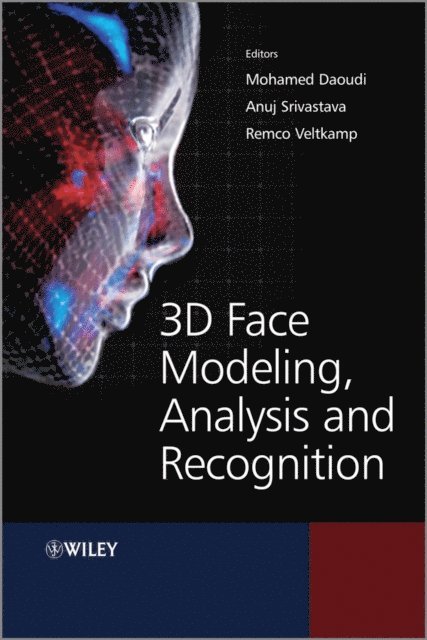
3D Face Modeling, Analysis and Recognition
Av Remco Veltkamp, Anuj Srivastava m. fl.
E-bok, 2013
1515 kr
Lägg i varukorg
3D Face Modeling, Analysis and Recognition presents methodologies for analyzing shapes of facial surfaces, develops computational tools for analyzing 3D face data, and illustrates them using state-of-the-art applications. The methodologies chosen are based on efficient representations, metrics, …
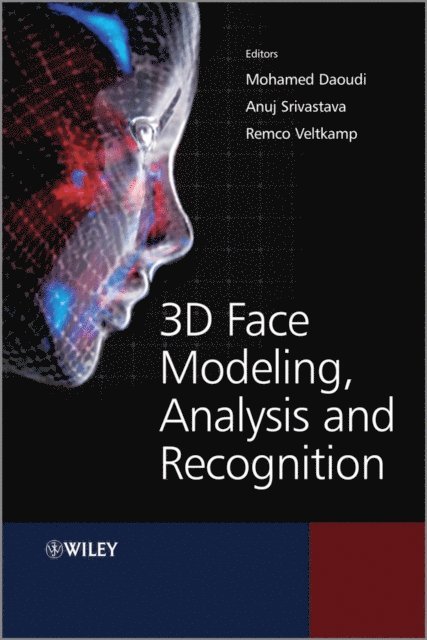
3D Face Modeling, Analysis and Recognition
Av Remco Veltkamp, Anuj Srivastava m. fl.
E-bok, 2013
1515 kr
Lägg i varukorg
3D Face Modeling, Analysis and Recognition presents methodologies for analyzing shapes of facial surfaces, develops computational tools for analyzing 3D face data, and illustrates them using state-of-the-art applications. The methodologies chosen are based on efficient representations, metrics, …
Understanding Human Activities Through 3D Sensors
Second International Workshop, UHA3DS 2016, Held in Conjunction with the 23rd International Conference on Pattern Recognition, ICPR 2016, Cancun, Mexico, December 4, 2016, Revised Selected Papers
Av Hazem Wannous, Pietro Pala m. fl.
Häftad, 2018
568 kr
Lägg i varukorg
This book constitutes the revised selected papers of the Second International Workshop on Understanding Human Activities through 3D Sensors, UHA3DS 2016, that was held in conjunction with the 23rd International Conference on Pattern Recognition, ICPR 2016, held in Cancun, Mexico, in December …
Understanding Human Activities Through 3D Sensors
Second International Workshop, UHA3DS 2016, Held in Conjunction with the 23rd International Conference on Pattern Recognition, ICPR 2016, Cancun, Mexico, December 4, 2016, Revised Selected Papers
Av Francisco Florez-Revuelta, Mohamed Daoudi m. fl.
E-bok, 2018
755 kr
Lägg i varukorg
This book constitutes the revised selected papers of the Second International Workshop on Understanding Human Activities through 3D Sensors, UHA3DS 2016, that was held in conjunction with the 23rd International Conference on Pattern Recognition, ICPR 2016, held in Cancun, Mexico, in December 2016. …
Daoudi, M: 3D Face Modeling, Analysis and Recognition
Av Mohamed Daoudi, Anuj Srivastava m. fl.
Inbunden, 2013
976 kr
Tillfälligt slut