Mohammad Hakim Haider – författare
Visar alla böcker från författaren Mohammad Hakim Haider. Handla med fri frakt och snabb leverans.
2 produkter
2 produkter
Inbunden, Engelska, 2019
603 kr
Skickas inom 10-15 vardagar
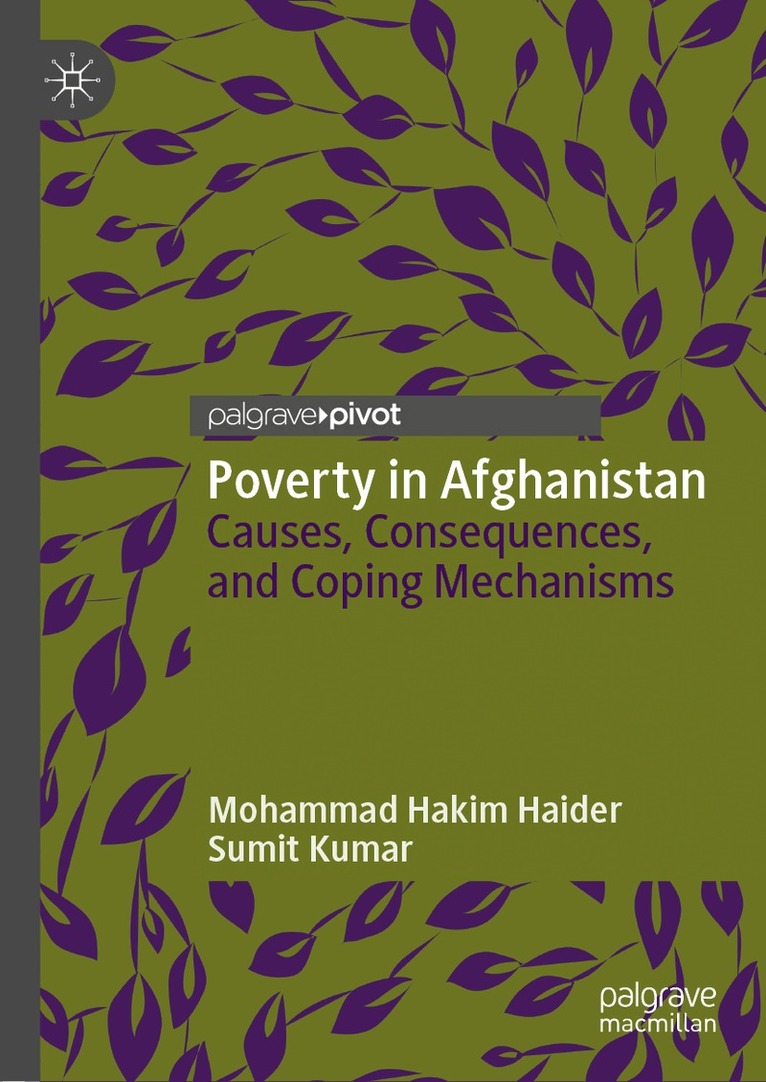
This book examines the patterns, characteristics, causes and coping mechanisms of the poor in Afghanistan applying econometric and statistical techniques. The authors address and identify the extent of poverty in Afghanistan over the years, the spatial patterns and regional imbalances of poverty in Afghanistan, the distinguishing characteristics of the poor in Afghanistan, and explore shocks faced by the poor in Afghanistan as well as subsequent coping strategies. Based on household level data collected under the ‘National Risk Vulnerability Assessment’ (NRVA) survey of 2003, 2005, 2007/08 and 2011/12 of Afghanistan, the authors identify options that may enable policy makers and other stakeholders to further enable the inclusion of the poor in development processes and to successfully cope with poverty and its adverse outcomes. This short book will be of interest to students, researchers, academicians, policymakers, international agencies and NGOs at international and national levels.
E-bok
Engelska, 2019791 kr
Läs direkt efter köp
This book examines the patterns, characteristics, causes and coping mechanisms of the poor in Afghanistan applying econometric and statistical techniques. The authors address and identify the extent of poverty in Afghanistan over the years, the spatial patterns and regional imbalances of poverty in Afghanistan, the distinguishing characteristics of the poor in Afghanistan, and explore shocks faced by the poor in Afghanistan as well as subsequent coping strategies. Based on household level data collected under the ‘National Risk Vulnerability Assessment’ (NRVA) survey of 2003, 2005, 2007/08 and 2011/12 of Afghanistan, the authors identify options that may enable policy makers and other stakeholders to further enable the inclusion of the poor in development processes and to successfully cope with poverty and its adverse outcomes. This short book will be of interest to students, researchers, academicians, policymakers, international agencies and NGOs at international and national levels.