Mohammad Karamouz - Böcker
Visar alla böcker från författaren Mohammad Karamouz. Handla med fri frakt och snabb leverans.
8 produkter
8 produkter
Livable Cities of the Future
Proceedings of a Symposium Honoring the Legacy of George Bugliarello
Häftad, Engelska, 2014
530 kr
Tillfälligt slut
At the beginning of the 20th century an estimated five percent of the world's population lived in cities. Today, half the world's population is urbanized. Urban sustainability is multifaceted and encompasses security, economics, environment and resources, health, and quality of life. It can be viewed as the intersection of two extremely complex and not yet fully understood processes, urbanization and global sustainability, which will increasingly overlap as urban populations continue to grow. Effective policies are critical for addressing urban sustainability, and must be politically realistic in deciding on appropriate balances, such as centralized versus decentralized systems, "soft" versus "hard" solutions, local versus regional focus, agriculture versus pollution, and free markets versus interventions. Livable Cities of the Future, a symposium honoring the legacy of George Bugliarello, was hosted October 26, 2012, by the Polytechnic Institute of New York University (NYU-Poly) in the Pfizer Auditorium of the Bern Dibner Library of Science and Technology.The event brought together more than 200 engineers, civic leaders, educators, and futurists to discuss how George Bugliarello's vision manifests itself in innovative urban planning for the cities of tomorrow. This report is a summary of the presentations and discussion at that event. The symposium objectives were to cultivate ideas for best practices and innovative strategies for sustainable urban development and to facilitate the evolution of New York City to a real-life laboratory for urban innovation. Participants heard the perspectives and experiences of representatives from private and public service operators, infrastructure agencies, and the academic community. Elected officials and other stakeholders in urban and other sectors examined issues critical to resilient and sustainable cities, such as energy, water supply and treatment, public health, security infrastructure, transportation, telecommunications, and environmental protection.
2 222 kr
Skickas inom 10-15 vardagar
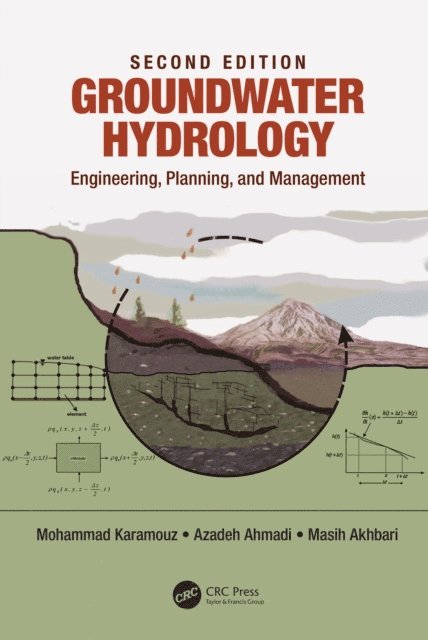
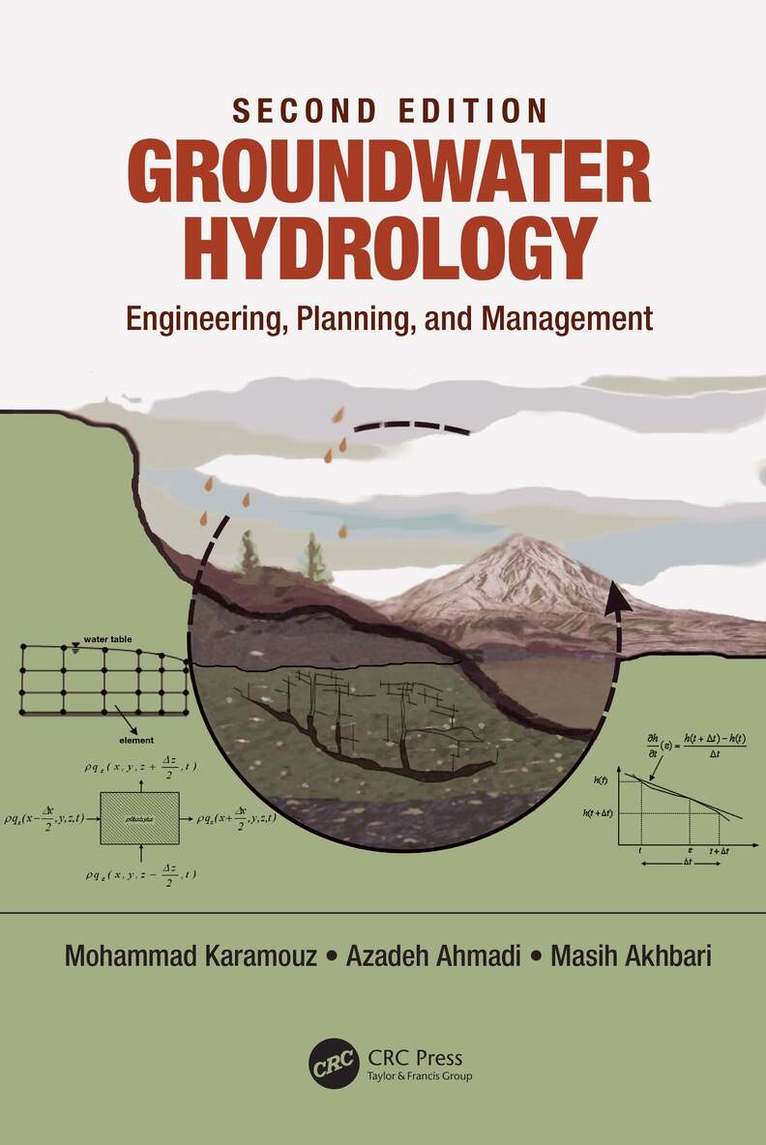
Increasing demand for water, higher standards of living, depletion of resources of acceptable quality, and excessive water pollution due to urban, agricultural, and industrial expansions have caused intense environmental, social, economic, and political predicaments. More frequent and severe floods and droughts have changed the resiliency and ability of water infrastructure systems to operate and provide services to the public. These concerns and issues have also changed the way we plan and manage our surface and groundwater resources. Groundwater Hydrology: Engineering, Planning, and Management, Second Edition presents a compilation of the state-of-the-art subjects and techniques in the education and practice of groundwater and describes them in a systematic and integrated fashion useful for undergraduate and graduate students and practitioners. This new edition features updated materials, computer codes, and case studies throughout.Features: Discusses groundwater hydrology, hydraulics, and basic laws of groundwater movement Describes environmental water quality issues related to groundwater, aquifer restoration, and remediation techniques, as well as the impacts of climate change \ Examines the details of groundwater modeling and simulation of conceptual models Applies systems analysis techniques in groundwater planning and management Delineates the modeling and downscaling of climate change impacts on groundwater under the latest IPCC climate scenariosWritten for students as well as practicing water resource engineers, the book develops a system view of groundwater fundamentals and model-making techniques through the application of science, engineering, planning, and management principles. It discusses the classical issues in groundwater hydrology and hydraulics followed by coverage of water quality issues. It also introduces basic tools and decision-making techniques for future groundwater development activities, taking into account regional sustainability issues. The combined coverage of engineering and planning tools and techniques, as well as specific challenges for restoration and remediation of polluted aquifers sets this book apart.
2 088 kr
Skickas inom 10-15 vardagar
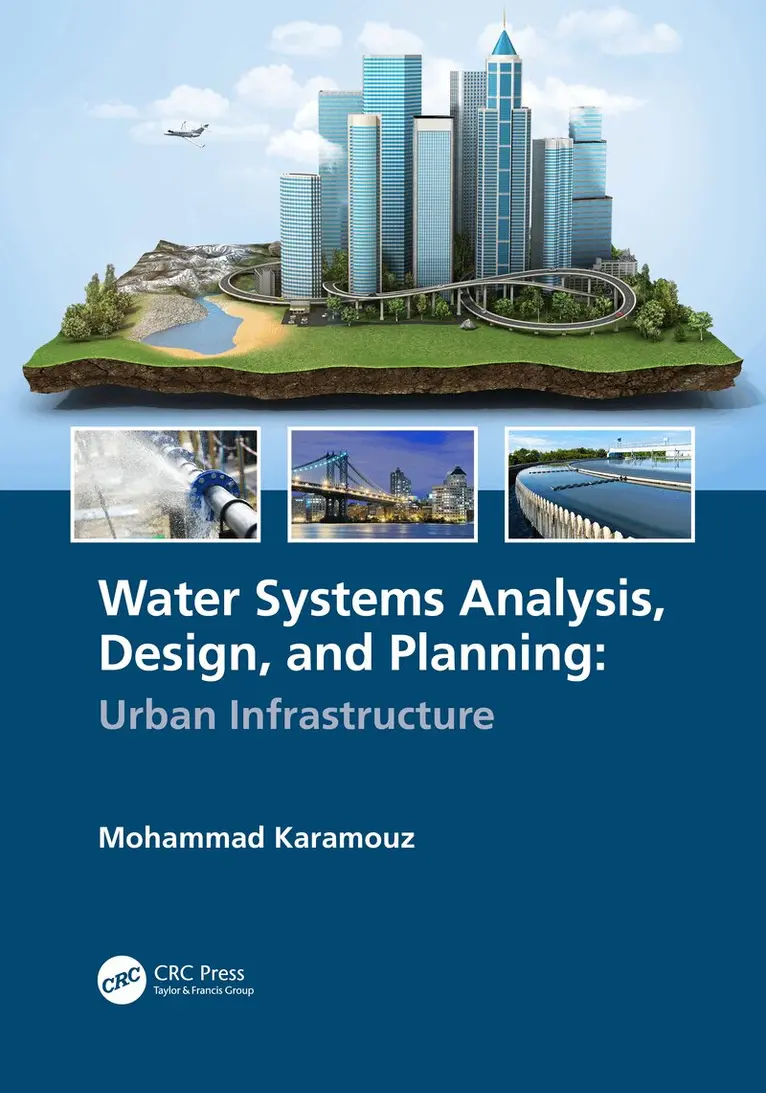
This book presents three distinct pillars for analysis, design, and planning: urban water cycle and variability as the state of water being; landscape architecture as the medium for built-by-design; and total systems as the planning approach. The increasing demand for water and urban and industrial expansions have caused myriad environmental, social, economic, and political predicaments. More frequent and severe floods and droughts have changed the resiliency and ability of water infrastructure systems to operate and provide services to the public. These concerns and issues have also changed the way we plan and manage our water resources.Focusing on urban challenges and contexts, the book provides foundational information regarding water science and engineering while also examining topics relating to urban stormwater, water supply, and wastewater infrastructures. It also addresses critical emerging issues such as simulation and economic modeling, flood resiliency, environmental visualization, satellite data applications, and digital data model (DEM) advancements.Features: Explores various theoretical, practical, and real-world applications of system analysis, design, and planning of urban water infrastructures Discusses hydrology, hydraulics, and basic laws of water flow movement through natural and constructed environments Describes a wide range of novel topics ranging from water assets, water economics, systems analysis, risk, reliability, and disaster management Examines the details of hydrologic and hydrodynamic modeling and simulation of conceptual and data-driven models Delineates flood resiliency, environmental visualization, pattern recognition, and machine learning attributes Explores a compilation of tools and emerging techniques that elevate the reader to a higher plateau in water and environmental systems managementWater Systems Analysis, Design, and Planning: Urban Infrastructure serves as a useful resource for advanced undergraduate and graduate students taking courses in the areas of water resources and systems analysis, as well as practicing engineers and landscape professionals.
1 023 kr
Tillfälligt slut
Effective management of urban water should be based on a scientific understanding of the impact of human activity on both the urban hydrological cycle – including its processes and interactions – and the environment itself. Such anthropogenic impacts, which vary broadly in time and space, need to be quantified with respect to local climate, urban development, cultural, environmental and religious practices, and other socio-economic factors.Urban Water Cycle Processes and Interactions represents the fruit of a project by UNESCO’s International Hydrological Programme on this topic. The volume begins by introducing the urban water cycle concept and the need for integrated or total management. It then explores in detail the manifold hydrological components of the cycle, the diverse elements of urban infrastructure and water services, and the various effects of urbanization on the environment – from the atmosphere and surface waters to wetlands, soils and groundwater, as well as biodiversity. A concluding series of recommendations for effective urban water management summarize the important findings set forth here.Urban Water Series - UNESCO-IHP VolumesFollowing from the Sixth Phase of UNESCO’s International Hydrological Programme (2002–2007), the Urban Water Series – UNESCO-IHP addresses fundamental issues related to the role of water in cities and the effects of urbanization on the hydrological cycle and water resources. Focusing on the development of integrated approaches to sustainable urban water management, the Series should inform the work of urban water management practitioners, policy-makers and educators throughout the world.
712 kr
Skickas inom 10-15 vardagar
Effective management of urban water should be based on a scientific understanding of the impact of human activity on both the urban hydrological cycle – including its processes and interactions – and the environment itself. Such anthropogenic impacts, which vary broadly in time and space, need to be quantified with respect to local climate, urban development, cultural, environmental and religious practices, and other socio-economic factors.Urban Water Cycle Processes and Interactions represents the fruit of a project by UNESCO’s International Hydrological Programme on this topic. The volume begins by introducing the urban water cycle concept and the need for integrated or total management. It then explores in detail the manifold hydrological components of the cycle, the diverse elements of urban infrastructure and water services, and the various effects of urbanization on the environment – from the atmosphere and surface waters to wetlands, soils and groundwater, as well as biodiversity. A concluding series of recommendations for effective urban water management summarize the important findings set forth here.Urban Water Series - UNESCO-IHP VolumesFollowing from the Sixth Phase of UNESCO’s International Hydrological Programme (2002–2007), the Urban Water Series – UNESCO-IHP addresses fundamental issues related to the role of water in cities and the effects of urbanization on the hydrological cycle and water resources. Focusing on the development of integrated approaches to sustainable urban water management, the Series should inform the work of urban water management practitioners, policy-makers and educators throughout the world.
752 kr
Skickas inom 10-15 vardagar
This book presents three distinct pillars for analysis, design, and planning: urban water cycle and variability as the state of water being; landscape architecture as the medium for built-by-design; and total systems as the planning approach. The increasing demand for water and urban and industrial expansions have caused myriad environmental, social, economic, and political predicaments. More frequent and severe floods and droughts have changed the resiliency and ability of water infrastructure systems to operate and provide services to the public. These concerns and issues have also changed the way we plan and manage our water resources.Focusing on urban challenges and contexts, the book provides foundational information regarding water science and engineering while also examining topics relating to urban stormwater, water supply, and wastewater infrastructures. It also addresses critical emerging issues such as simulation and economic modeling, flood resiliency, environmental visualization, satellite data applications, and digital data model (DEM) advancements.Features: Explores various theoretical, practical, and real-world applications of system analysis, design, and planning of urban water infrastructures Discusses hydrology, hydraulics, and basic laws of water flow movement through natural and constructed environments Describes a wide range of novel topics ranging from water assets, water economics, systems analysis, risk, reliability, and disaster management Examines the details of hydrologic and hydrodynamic modeling and simulation of conceptual and data-driven models Delineates flood resiliency, environmental visualization, pattern recognition, and machine learning attributes Explores a compilation of tools and emerging techniques that elevate the reader to a higher plateau in water and environmental systems managementWater Systems Analysis, Design, and Planning: Urban Infrastructure serves as a useful resource for advanced undergraduate and graduate students taking courses in the areas of water resources and systems analysis, as well as practicing engineers and landscape professionals.
1 752 kr
Skickas inom 10-15 vardagar
Integrating the latest developments in urban water hydrology and management, Urban Water Engineering and Management takes a system approach to urban water hydrology, engineering, planning, and management, supplying examples and case studies and highlighting pressing issues such as urban water governance, disaster management, and climate change impacts on urban areas. This expanded and updated edition draws attention to climate change as a main concern of this century by focusing on how it impacts the water cycle. Time-series analysis is simplified in a practical manner, and hydro-informatics principles and applications in urban water are also added as unique features of this edition. Written and designed especially for intermediate and advanced courses/modules in water resources in civil and environmental engineering and in urban planning, this book can be used as a textbook for civil engineering, urban and regional planning, geography, environmental science, and in courses dealing with the urban water cycle.Features:Is updated throughout and adds numerous new examples and case studies.Integrates the latest developments in urban water hydrology and management, providing a holistic system perspective on urban water engineering and planning.Includes numerous examples, case studies, and technological and IT tools addressing critical issues such as urban water governance, asset and disaster management, and the impacts of climate change on urban areas.Offers new insights for engineers, policy-makers, and decision-makers, emphasizing the importance of integrated water management and planning solutions for sustainable urban development.
3 161 kr
Skickas inom 10-15 vardagar
Focusing on conflict resolution, Water Resources Systems Analysis discusses systematic approaches to the mathematical modeling of various water resources issues, which helps decision-makers allocate water effectively and efficiently. Readers will gain an understanding of simulation, optimization, multi-criterion-decision-making, as well as engineering economics and time series analysis, all necessary for successful water systems analysis. The book explores recent developments in surface and groundwater systems optimization and modeling, and it relates these to real field applications and case studies. Supported by essential mathematical tools, this book gives current and future hydrologists, water resources managers, and civil engineers a logical reference for prioritizing and addressing critical issues such as flood control, power generation, and water quality management.