Mohammed Shahid – författare
Visar alla böcker från författaren Mohammed Shahid. Handla med fri frakt och snabb leverans.
4 produkter
4 produkter
Inbunden, Engelska, 2026
1 093 kr
Kommande
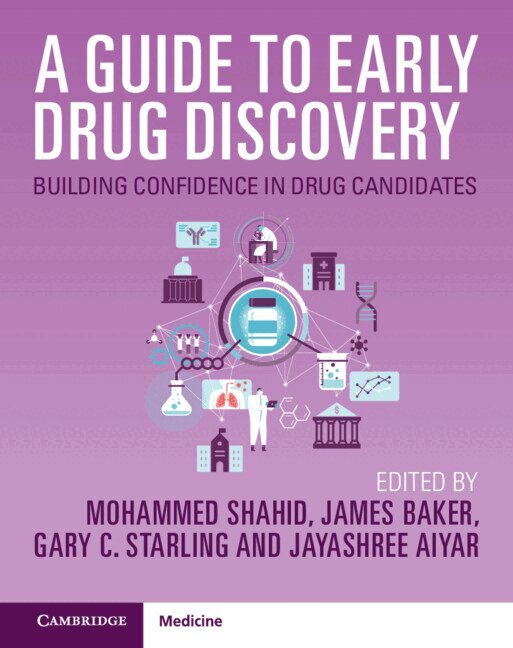
Modern early drug discovery is transforming in response to global health challenges, medical needs, and emerging technologies. This book provides a comprehensive overview of the current state-of-the-art and practical guidance for navigating the complexities of early drug discovery. Edited by experienced industry professionals, it features expert contributions from scientists committed to advancing more effective medicines. Readers gain extensive coverage of today's landscape and its future evolution, including drug target systems, therapeutic modalities, candidate optimization and safety, translational approaches, and the role of external innovation in driving pharmaceutical productivity. Designed for scientists, researchers, and stakeholders across biotech, pharma, and academia, the book delivers actionable insights while fostering collaboration and understanding across disciplines. Drug discovery is inherently collaborative, and shared learning across specialties increases success. This resource offers future-focused, experience-driven guidance for anyone seeking to contribute to the development of impactful new therapies.
Inbunden, Engelska, 2010
2 238 kr
Skickas inom 10-15 vardagar
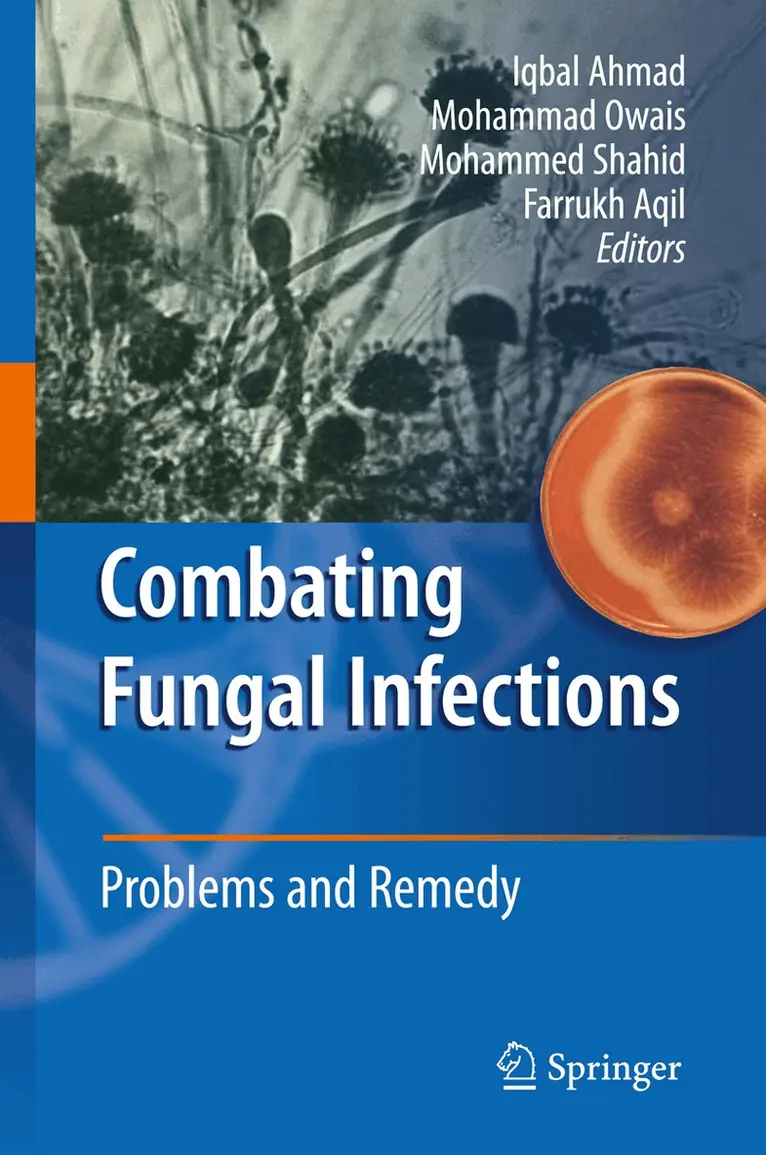
Fungi are eukaryotic microorganisms that are closely related to humans at cellular level. Human fungal pathogens belong to various classes of fungi, mainly zygo- cetes, ascomycetes, basidiomycetes, and deuteromycetes. In recent years, fungal infections have dramatically increased as a result of improved diagnosis, high frequency of catheterization, instrumentation, etc. However, the main cause remains the increasing number of immunosuppressed patients, mostly because of HIV infection and indiscriminate usage of antineoplastic and immunosuppressive agents, broad-spectrum antibiotics and prosthetic devices, and grafts in clinical settings. Presently available means of combating fungal infections are still weak and clumsy compared to control of bacterial infection. The present scenario of antifungal therapy is still based on two classes of antifungal drugs (polyenes and azoles). These drugs are effective in many cases, but display toxicity and limited spectrum of ef?cacy. The recent trend towards emergence of drug-resistant isolates in the clinic is an additional problem. In recent years, a few new antifungal drugs have entered the clinics, but they are expected to undergo same fate as the older antifungal drugs. The application of fungal genomics offers an unparalleled opportunity to develop novel antifungal drugs. However, it is too early to expect any novel drugs, as the antifungal drug discovery program is in the stage of infancy. Interestingly, several novel antifungal drug targets have been identi?ed and validated.
E-bok
PDF, Engelska, 20102 822 kr
Läs direkt efter köp
Fungi are eukaryotic microorganisms that are closely related to humans at cellular level. Human fungal pathogens belong to various classes of fungi, mainly zygo- cetes, ascomycetes, basidiomycetes, and deuteromycetes. In recent years, fungal infections have dramatically increased as a result of improved diagnosis, high frequency of catheterization, instrumentation, etc. However, the main cause remains the increasing number of immunosuppressed patients, mostly because of HIV infection and indiscriminate usage of antineoplastic and immunosuppressive agents, broad-spectrum antibiotics and prosthetic devices, and grafts in clinical settings. Presently available means of combating fungal infections are still weak and clumsy compared to control of bacterial infection. The present scenario of antifungal therapy is still based on two classes of antifungal drugs (polyenes and azoles). These drugs are effective in many cases, but display toxicity and limited spectrum of ef?cacy. The recent trend towards emergence of drug-resistant isolates in the clinic is an additional problem. In recent years, a few new antifungal drugs have entered the clinics, but they are expected to undergo same fate as the older antifungal drugs. The application of fungal genomics offers an unparalleled opportunity to develop novel antifungal drugs. However, it is too early to expect any novel drugs, as the antifungal drug discovery program is in the stage of infancy. Interestingly, several novel antifungal drug targets have been identi?ed and validated.
Häftad, Engelska, 2014
2 238 kr
Skickas inom 10-15 vardagar
Fungi are eukaryotic microorganisms that are closely related to humans at cellular level. Human fungal pathogens belong to various classes of fungi, mainly zygo- cetes, ascomycetes, basidiomycetes, and deuteromycetes. In recent years, fungal infections have dramatically increased as a result of improved diagnosis, high frequency of catheterization, instrumentation, etc. However, the main cause remains the increasing number of immunosuppressed patients, mostly because of HIV infection and indiscriminate usage of antineoplastic and immunosuppressive agents, broad-spectrum antibiotics and prosthetic devices, and grafts in clinical settings. Presently available means of combating fungal infections are still weak and clumsy compared to control of bacterial infection. The present scenario of antifungal therapy is still based on two classes of antifungal drugs (polyenes and azoles). These drugs are effective in many cases, but display toxicity and limited spectrum of ef?cacy. The recent trend towards emergence of drug-resistant isolates in the clinic is an additional problem. In recent years, a few new antifungal drugs have entered the clinics, but they are expected to undergo same fate as the older antifungal drugs. The application of fungal genomics offers an unparalleled opportunity to develop novel antifungal drugs. However, it is too early to expect any novel drugs, as the antifungal drug discovery program is in the stage of infancy. Interestingly, several novel antifungal drug targets have been identi?ed and validated.