Mohd Sapuan Salit – författare
Visar alla böcker från författaren Mohd Sapuan Salit. Handla med fri frakt och snabb leverans.
11 produkter
11 produkter
Inbunden, Engelska, 2015
1 635 kr
Skickas inom 10-15 vardagar
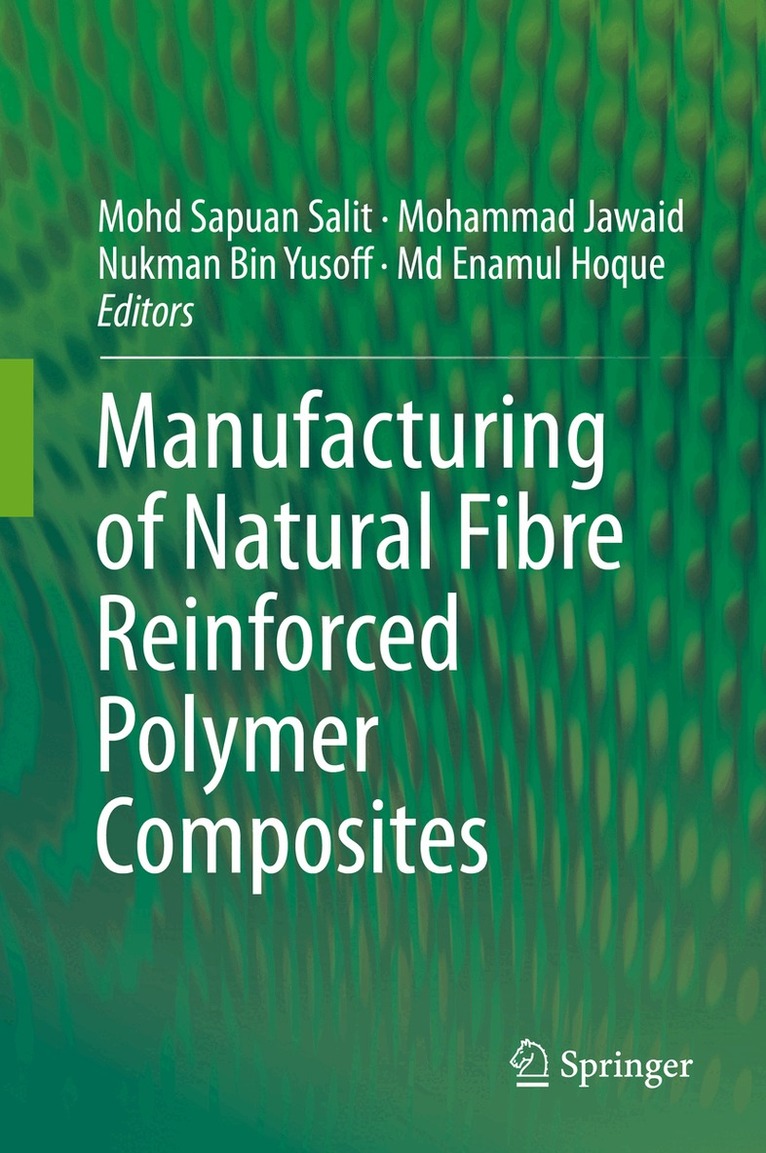
Natural fibre composite is an emerging material that has great potential to be used in engineering application. Oil palm, sugar palm, bagasse, coir, banana stem, hemp, jute, sisal, kenaf, roselle, rice husk, betul nut husk and cocoa pod are among the natural fibres reported to be used as reinforcing materials in polymer composites. Natural fibre composites were used in many industries such as automotive, building, furniture, marine and aerospace industries. The advantages of natural fibre composites include low cost, renewable, abundance, light weight, less abrasive and they are suitable to be used in semi or non-structural engineering components. Research on various aspects of natural fibre composites such as characterization, determination of properties and design have been extensively carried out. However, publications that reported on research of manufacture of natural fibre composites are very limited. Specifically, although manufacturing methods of components from natural fibre composites are similar to those of components from conventional fibre composites such as glass, carbon and Kevlar fibres, modification of equipment used for conventional fibre composites may be required. This book fills the gap of knowledge in the field of natural fibre composites for the research community. Among the methods reported that are being used to produce components from natural fibre composites include hand lay-up, compression moulding, filament winding, injection moulding, resin transfer moulding, pultrusion and vacuum bag moulding. This book is also intended to address some research on secondary processing such as machining and laser welding of natural fibre composites. It is hoped that publication of this book will provide the readers new knowledge and understanding on the manufacture of natural fibre composites.
E-bok
PDF, Engelska, 20151 977 kr
Läs direkt efter köp
Natural fibre composite is an emerging material that has great potential to be used in engineering application. Oil palm, sugar palm, bagasse, coir, banana stem, hemp, jute, sisal, kenaf, roselle, rice husk, betul nut husk and cocoa pod are among the natural fibres reported to be used as reinforcing materials in polymer composites. Natural fibre composites were used in many industries such as automotive, building, furniture, marine and aerospace industries. The advantages of natural fibre composites include low cost, renewable, abundance, light weight, less abrasive and they are suitable to be used in semi or non-structural engineering components. Research on various aspects of natural fibre composites such as characterization, determination of properties and design have been extensively carried out. However, publications that reported on research of manufacture of natural fibre composites are very limited. Specifically, although manufacturing methods of components from natural fibre composites are similar to those of components from conventional fibre composites such as glass, carbon and Kevlar fibres, modification of equipment used for conventional fibre composites may be required. This book fills the gap of knowledge in the field of natural fibre composites for the research community. Among the methods reported that are being used to produce components from natural fibre composites include hand lay-up, compression moulding, filament winding, injection moulding, resin transfer moulding, pultrusion and vacuum bag moulding. This book is also intended to address some research on secondary processing such as machining and laser welding of natural fibre composites. It is hoped that publication of this book will provide the readers new knowledge and understanding on the manufacture of natural fibre composites.
Häftad, Engelska, 2016
1 635 kr
Skickas inom 10-15 vardagar
Natural fibre composite is an emerging material that has great potential to be used in engineering application. Oil palm, sugar palm, bagasse, coir, banana stem, hemp, jute, sisal, kenaf, roselle, rice husk, betul nut husk and cocoa pod are among the natural fibres reported to be used as reinforcing materials in polymer composites. Natural fibre composites were used in many industries such as automotive, building, furniture, marine and aerospace industries. The advantages of natural fibre composites include low cost, renewable, abundance, light weight, less abrasive and they are suitable to be used in semi or non-structural engineering components. Research on various aspects of natural fibre composites such as characterization, determination of properties and design have been extensively carried out. However, publications that reported on research of manufacture of natural fibre composites are very limited. Specifically, although manufacturing methods of components from natural fibre composites are similar to those of components from conventional fibre composites such as glass, carbon and Kevlar fibres, modification of equipment used for conventional fibre composites may be required. This book fills the gap of knowledge in the field of natural fibre composites for the research community. Among the methods reported that are being used to produce components from natural fibre composites include hand lay-up, compression moulding, filament winding, injection moulding, resin transfer moulding, pultrusion and vacuum bag moulding. This book is also intended to address some research on secondary processing such as machining and laser welding of natural fibre composites. It is hoped that publication of this book will provide the readers new knowledge and understanding on the manufacture of natural fibre composites.
Inbunden, Engelska, 2017
1 744 kr
Skickas inom 10-15 vardagar
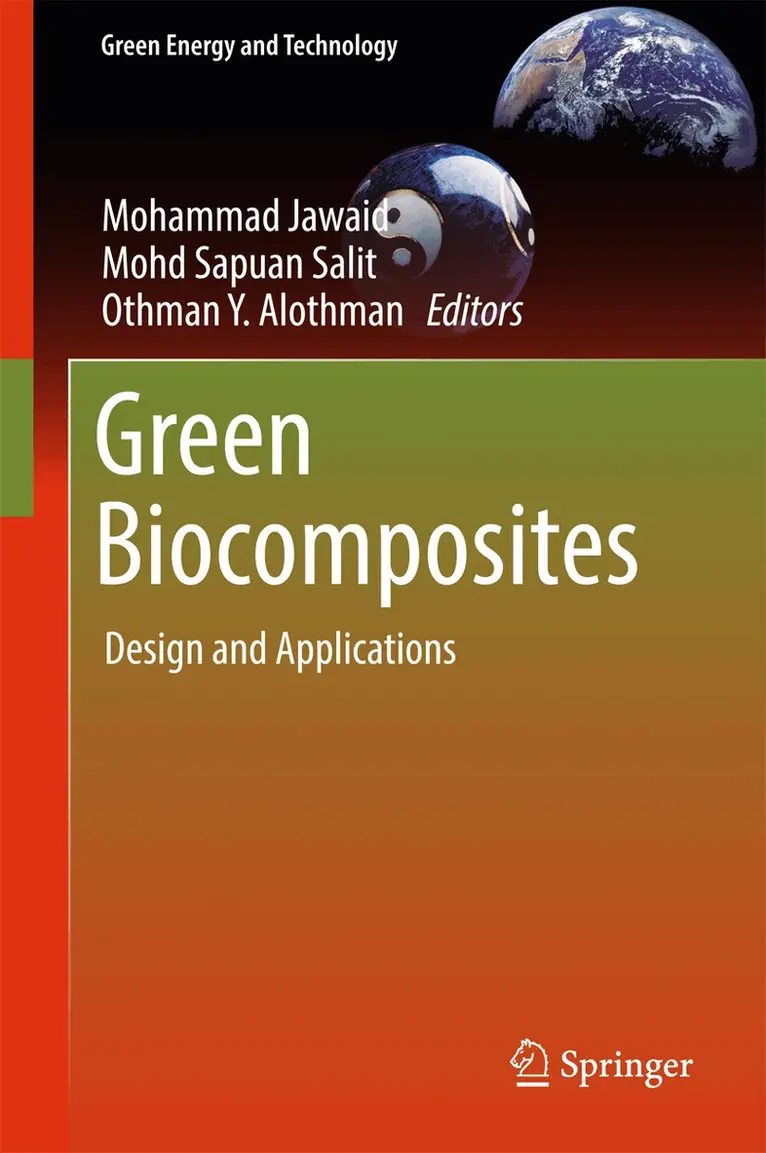
This book introduces the concept, design and application of green biocomposites, with a specific focus on the current demand for green biocomposites for automotive and aerospace components.It discusses the mathematical background, innovative approaches to physical modelling, analysis and design techniques. Including numerous illustrations, tables, case studies and exercises, the text summarises current research in the field.It is a valuable reference resource for researchers, students and scientists working in the field of materials science.
E-bok
Engelska, 20171 519 kr
Läs direkt efter köp
This book introduces the concept, design and application of green biocomposites, with a specific focus on the current demand for green biocomposites for automotive and aerospace components.It discusses the mathematical background, innovative approaches to physical modelling, analysis and design techniques. Including numerous illustrations, tables, case studies and exercises, the text summarises current research in the field.It is a valuable reference resource for researchers, students and scientists working in the field of materials science.
Häftad, Engelska, 2018
1 255 kr
Skickas inom 10-15 vardagar
This book introduces the concept, design and application of green biocomposites, with a specific focus on the current demand for green biocomposites for automotive and aerospace components.It discusses the mathematical background, innovative approaches to physical modelling, analysis and design techniques. Including numerous illustrations, tables, case studies and exercises, the text summarises current research in the field.It is a valuable reference resource for researchers, students and scientists working in the field of materials science.
Häftad, Engelska, 2016
1 092 kr
Skickas inom 10-15 vardagar
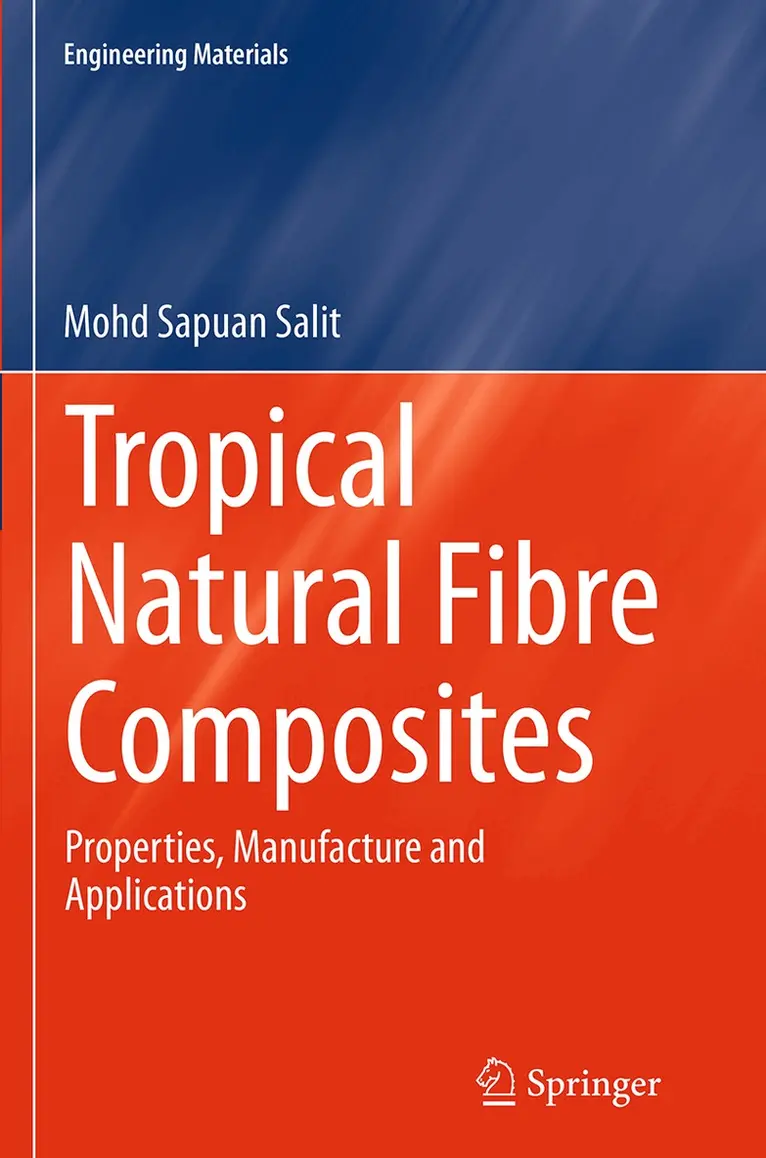
This book covers the different aspects of tropical natural fibre composites in areas such as properties, design and analysis, manufacturing techniques, material selection of kenaf, oil palm, sugar palm, pineapple leaf, coconut, sugarcane and banana based fibre composites. Important properties such as mechanical and thermal of natural fibres as well their composites are presented. A study on the composite fibre-matrix interface is highlighted together with the design process and analysis of products from natural fibre composites. An overview on the manufacturing techniques (conventionally used to produce fibre glass fibre composites) such as pultrusion and filament winding is described to produce natural fibre composites. The importance of material selection system to obtain the most optimum materials for application in engineering components from natural fibre composites is covered with a strong focus on the concurrent engineering for natural fibre composites.
Inbunden, Engelska, 2014
1 092 kr
Skickas inom 10-15 vardagar
This book covers the different aspects of tropical natural fibre composites in areas such as properties, design and analysis, manufacturing techniques, material selection of kenaf, oil palm, sugar palm, pineapple leaf, coconut, sugarcane and banana based fibre composites. Important properties such as mechanical and thermal of natural fibres as well their composites are presented. A study on the composite fibre-matrix interface is highlighted together with the design process and analysis of products from natural fibre composites. An overview on the manufacturing techniques (conventionally used to produce fibre glass fibre composites) such as pultrusion and filament winding is described to produce natural fibre composites. The importance of material selection system to obtain the most optimum materials for application in engineering components from natural fibre composites is covered with a strong focus on the concurrent engineering for natural fibre composites.
E-bok
PDF, Engelska, 20141 367 kr
Läs direkt efter köp
This book covers the different aspects of tropical natural fibre composites in areas such as properties, design and analysis, manufacturing techniques, material selection of kenaf, oil palm, sugar palm, pineapple leaf, coconut, sugarcane and banana based fibre composites. Important properties such as mechanical and thermal of natural fibres as well their composites are presented. A study on the composite fibre-matrix interface is highlighted together with the design process and analysis of products from natural fibre composites. An overview on the manufacturing techniques (conventionally used to produce fibre glass fibre composites) such as pultrusion and filament winding is described to produce natural fibre composites. The importance of material selection system to obtain the most optimum materials for application in engineering components from natural fibre composites is covered with a strong focus on the concurrent engineering for natural fibre composites.
Häftad, Engelska, 2014
550 kr
Skickas inom 10-15 vardagar
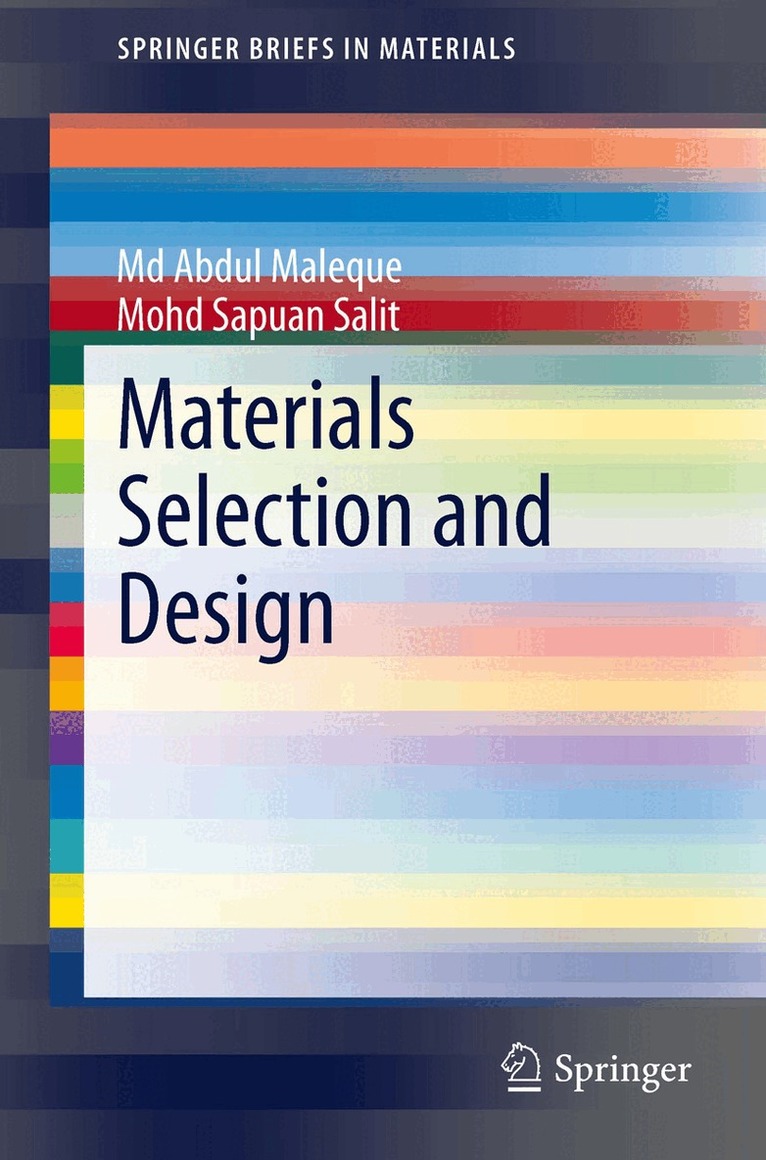
This book presents topics on the basics of materials selection and design which will give a better understanding on the selection methods and then find suitable materials for the applications. This book draws the simple and straightforward quantitative methods followed by knowledge-based expert system approach with real and tangible case studies to show how undergraduate or post-graduate students or engineers can apply their knowledge on materials selection and design. Topics discussed in this book contain special features such as illustration, tables and tutorial questions for easy understanding. A few published books or documents are available, hence this book will be very useful for those who use (or want to use) materials selection approach without the advantages of having had comprehensive knowledge or expertise in this materials’ world.
E-bok
PDF, Engelska, 2013687 kr
Läs direkt efter köp
This book presents topics on the basics of materials selection and design which will give a better understanding on the selection methods and then find suitable materials for the applications. This book draws the simple and straightforward quantitative methods followed by knowledge-based expert system approach with real and tangible case studies to show how undergraduate or post-graduate students or engineers can apply their knowledge on materials selection and design. Topics discussed in this book contain special features such as illustration, tables and tutorial questions for easy understanding. A few published books or documents are available, hence this book will be very useful for those who use (or want to use) materials selection approach without the advantages of having had comprehensive knowledge or expertise in this materials’ world.