

Public deliberation depends on how skillful communicators are in establishing their version of what is known to be publicly acceptable. This volume provides rhetorical analyses of institutional websites, political speeches, scientific presentations, journalistic accounts or visual entertainment. It shows the significance of rhetorical construction of knowledge in the public sphere. It addresses the issues of citizenship and social participation, media agendas, surveillance and verbal or visual manipulation. It offers rhetorical critiques of current trends in specialist communication and of devices used when contested interests or ideologies are presented.
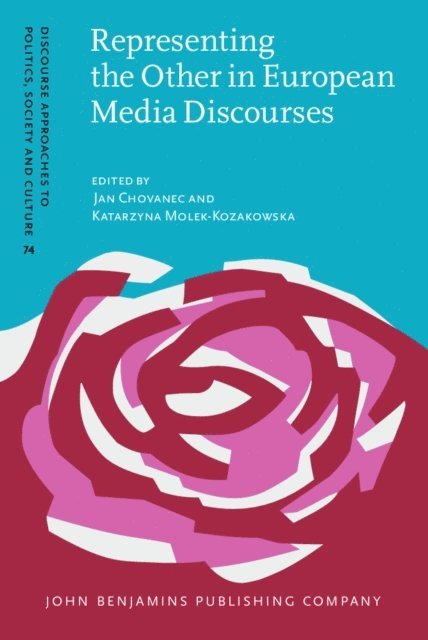
This book deals with the construction of the 'other' in European media at a time when the recently expanded EU is facing new political, economic and social challenges. The aim of the book is to document the diverse discursive forms of othering, ranging from differentiation to discrimination, that are directed against various 'other Europeans' in both institutionalized media and such non-elite semi-public contexts as discussion forums and citizen blogs. Drawing on data from British, Polish, French, Czech, Italian, Hungarian, Spanish and Estonian contexts, the individual papers investigate how various social groupings - regions, nations, ethnicities, communities, cultures - are discursively constructed as 'outsiders' rather than 'insiders', as 'them' rather than 'us'. While most of the papers are grounded in linguistics and critical discourse studies, the book will also appeal to numerous other social scientists interested in the interface between language, media and social issues.
Public deliberation depends on how skillful communicators are in establishing their version of what is known to be publicly acceptable. This volume provides rhetorical analyses of institutional websites, political speeches, scientific presentations, journalistic accounts or visual entertainment. It shows the significance of rhetorical construction of knowledge in the public sphere. It addresses the issues of citizenship and social participation, media agendas, surveillance and verbal or visual manipulation. It offers rhetorical critiques of current trends in specialist communication and of devices used when contested interests or ideologies are presented.
This book deals with the construction of the 'other' in European media at a time when the recently expanded EU is facing new political, economic and social challenges. The aim of the book is to document the diverse discursive forms of othering, ranging from differentiation to discrimination, that are directed against various 'other Europeans' in both institutionalized media and such non-elite semi-public contexts as discussion forums and citizen blogs. Drawing on data from British, Polish, French, Czech, Italian, Hungarian, Spanish and Estonian contexts, the individual papers investigate how various social groupings - regions, nations, ethnicities, communities, cultures - are discursively constructed as 'outsiders' rather than 'insiders', as 'them' rather than 'us'. While most of the papers are grounded in linguistics and critical discourse studies, the book will also appeal to numerous other social scientists interested in the interface between language, media and social issues.