
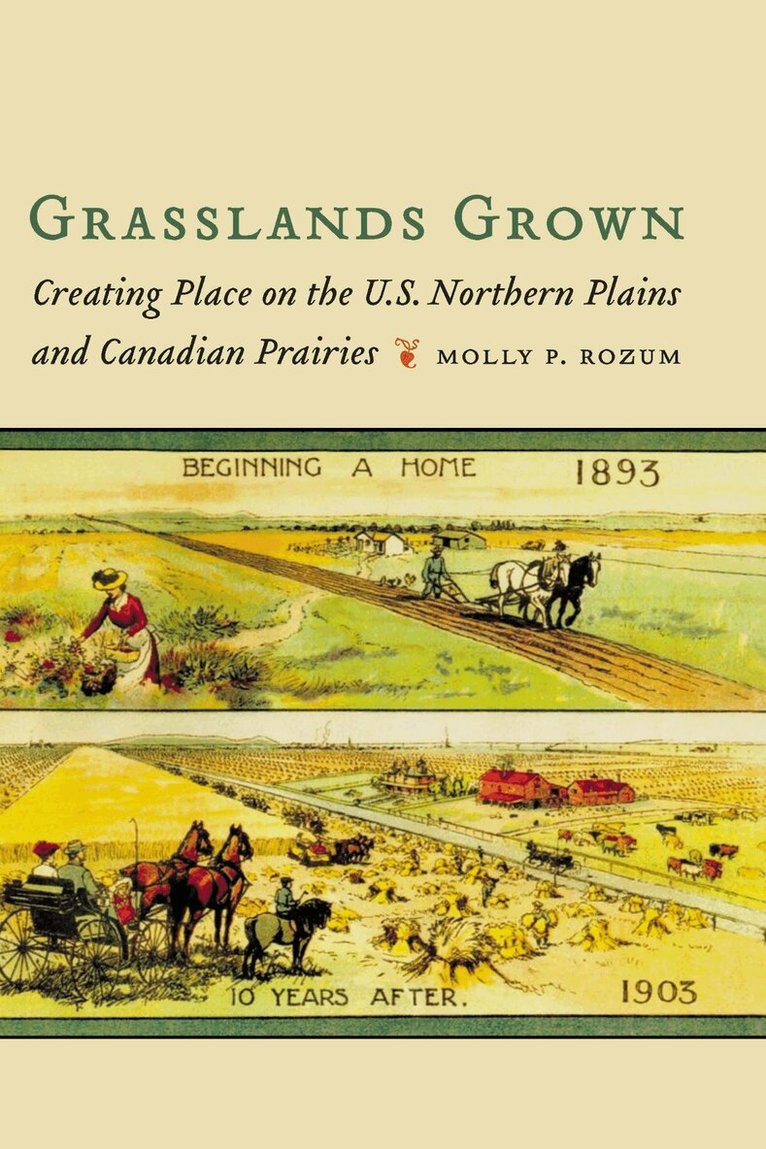
In Grasslands Grown Molly P. Rozum explores the two related concepts of regional identity and sense of place by examining a single North American ecological region: the U.S. Great Plains and the Canadian Prairie Provinces. All or parts of modern-day Alberta, Montana, Saskatchewan, North Dakota, South Dakota, and Manitoba form the center of this transnational region.As children, the first postconquest generation of northern grasslands residents worked, played, and traveled with domestic and wild animals, which introduced them to ecology and shaped sense-of-place rhythms. As adults, members of this generation of settler society worked to adapt to the northern grasslands by practicing both agricultural diversification and environmental conservation.Rozum argues that environmental awareness, including its ecological and cultural aspects, is key to forming a sense of place and a regional identity. The two concepts overlap and reinforce each other: place is more local, ecological, and emotional-sensual, and region is more ideational, national, and geographic in tone. This captivating study examines the growth of place and regional identities as they took shape within generations and over the life cycle.
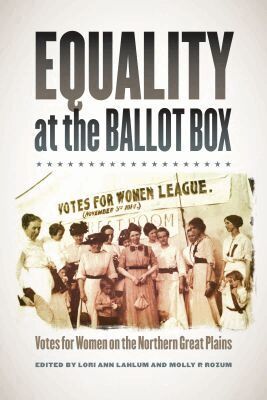
On 10 December 1869, the governor of Wyoming Territory signed the first full woman suffrage bill in the history of the United States. Suffragists in the neighboring territories of Montana and Dakota believed their prospects were similarly bright. Over the next twenty years, however, organizers’ efforts to secure votes for women met only limited success. While suffragists hoped the territories’ respective bids for statehood in 1889 and 1890 would change their fortunes, only Wyoming enshrined voting rights for all in its state constitution.The fight for full woman suffrage on the Northern Great Plains would take another three decades. In Equality at the Ballot Box, editors Lori Ann Lahlum and Molly P. Rozum have compiled a set of original essays that illuminate key aspects of the movement. Here, scholars uncover previously untold stories of the women who traveled immense distances to win over a diverse, often contentious public. Essential for understanding the larger picture of woman suffrage, including the significance of the Woman’s Christian Temperance Union, school suffrage, and the anti-suffrage movement, this volume reveals the impact this isolated, rural region had on women’s rights nationwide.The contributors to Equality at the Ballot Box build upon classic woman suffrage scholarship and develop new ideas that capture the spirit of suffrage on the Northern Great Plains. For the first time, the region’s unique circumstances are considered, including significant populations of European immigrants and American Indians as well as harsh climates and sprawling landscapes. By turning scholarly attention to this understudied area, Lahlum and Rozum start a long-needed conversation and point to rich avenues for further exploration.
In Grasslands Grown Molly P. Rozum explores the two related concepts of regional identity and sense of place by examining a single North American ecological region: the U.S. Great Plains and the Canadian Prairie Provinces. All or parts of modern-day Alberta, Montana, Saskatchewan, North Dakota, South Dakota, and Manitoba form the center of this transnational region.As children, the first postconquest generation of northern grasslands residents worked, played, and traveled with domestic and wild animals, which introduced them to ecology and shaped sense-of-place rhythms. As adults, members of this generation of settler society worked to adapt to the northern grasslands by practicing both agricultural diversification and environmental conservation.Rozum argues that environmental awareness, including its ecological and cultural aspects, is key to forming a sense of place and a regional identity. The two concepts overlap and reinforce each other: place is more local, ecological, and emotional-sensual, and region is more ideational, national, and geographic in tone. This captivating study examines the growth of place and regional identities as they took shape within generations and over the life cycle.
On 10 December 1869, the governor of Wyoming Territory signed the first full woman suffrage bill in the history of the United States. Suffragists in the neighboring territories of Montana and Dakota believed their prospects were similarly bright. Over the next twenty years, however, organizers’ efforts to secure votes for women met only limited success. While suffragists hoped the territories’ respective bids for statehood in 1889 and 1890 would change their fortunes, only Wyoming enshrined voting rights for all in its state constitution.The fight for full woman suffrage on the Northern Great Plains would take another three decades. In Equality at the Ballot Box, editors Lori Ann Lahlum and Molly P. Rozum have compiled a set of original essays that illuminate key aspects of the movement. Here, scholars uncover previously untold stories of the women who traveled immense distances to win over a diverse, often contentious public. Essential for understanding the larger picture of woman suffrage, including the significance of the Woman’s Christian Temperance Union, school suffrage, and the anti-suffrage movement, this volume reveals the impact this isolated, rural region had on women’s rights nationwide.The contributors to Equality at the Ballot Box build upon classic woman suffrage scholarship and develop new ideas that capture the spirit of suffrage on the Northern Great Plains. For the first time, the region’s unique circumstances are considered, including significant populations of European immigrants and American Indians as well as harsh climates and sprawling landscapes. By turning scholarly attention to this understudied area, Lahlum and Rozum start a long-needed conversation and point to rich avenues for further exploration.