Mona L. Siegel – författare
Visar alla böcker från författaren Mona L. Siegel. Handla med fri frakt och snabb leverans.
4 produkter
4 produkter
Peace on Our Terms
The Global Battle for Women's Rights After the First World War
Inbunden, Engelska, 2020
956 kr
Skickas inom 7-10 vardagar
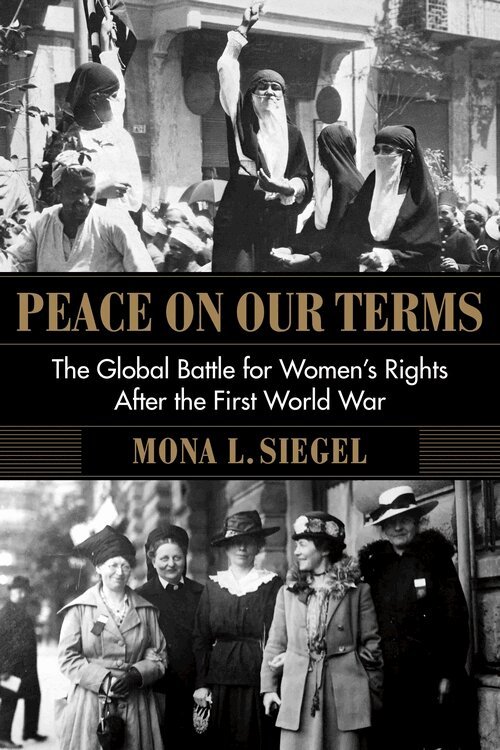
In the watershed year of 1919, world leaders met in Paris, promising to build a new international order rooted in democracy and social justice. Female activists demanded that statesmen live up to their word. Excluded from the negotiating table, women met separately, crafted their own agendas, and captured global headlines with a message that was both straightforward and revolutionary: enduring peace depended as much on recognition of the fundamental humanity and equality of all people—regardless of sex, race, class, or creed—as on respect for the sovereignty of independent states.Peace on Our Terms follows dozens of remarkable women from Europe, the Middle East, North America, and Asia as they crossed oceans and continents; commanded meeting halls in Paris, Zurich, and Washington; and marched in the streets of Cairo and Beijing. Mona L. Siegel’s sweeping global account of international organizing highlights how Egyptian and Chinese nationalists, Western and Japanese labor feminists, white Western suffragists, and African American civil rights advocates worked in tandem to advance women’s rights. Despite significant resistance, these pathbreaking women left their mark on emerging democratic constitutions and new institutions of global governance. Drawing on a wide range of sources, Peace on Our Terms is the first book to demonstrate the centrality of women’s activism to the Paris Peace Conference and the critical diplomatic events of 1919. Siegel tells the timely story of how female activists transformed women’s rights into a global rallying cry, laying a foundation for generations to come.
Peace on Our Terms
The Global Battle for Women's Rights After the First World War
Häftad, Engelska, 2021
244 kr
Skickas inom 7-10 vardagar
In the watershed year of 1919, world leaders met in Paris, promising to build a new international order rooted in democracy and social justice. Female activists demanded that statesmen live up to their word. Excluded from the negotiating table, women met separately, crafted their own agendas, and captured global headlines with a message that was both straightforward and revolutionary: enduring peace depended as much on recognition of the fundamental humanity and equality of all people—regardless of sex, race, class, or creed—as on respect for the sovereignty of independent states.Peace on Our Terms follows dozens of remarkable women from Europe, the Middle East, North America, and Asia as they crossed oceans and continents; commanded meeting halls in Paris, Zurich, and Washington; and marched in the streets of Cairo and Beijing. Mona L. Siegel’s sweeping global account of international organizing highlights how Egyptian and Chinese nationalists, Western and Japanese labor feminists, white Western suffragists, and African American civil rights advocates worked in tandem to advance women’s rights. Despite significant resistance, these pathbreaking women left their mark on emerging democratic constitutions and new institutions of global governance. Drawing on a wide range of sources, Peace on Our Terms is the first book to demonstrate the centrality of women’s activism to the Paris Peace Conference and the critical diplomatic events of 1919. Siegel tells the timely story of how female activists transformed women’s rights into a global rallying cry, laying a foundation for generations to come.
Del 18 - Studies in the Social and Cultural History of Modern Warfare
The Moral Disarmament of France
Education, Pacifism, and Patriotism, 1914-1940
Häftad, Engelska, 2011
523 kr
Skickas inom 7-10 vardagar
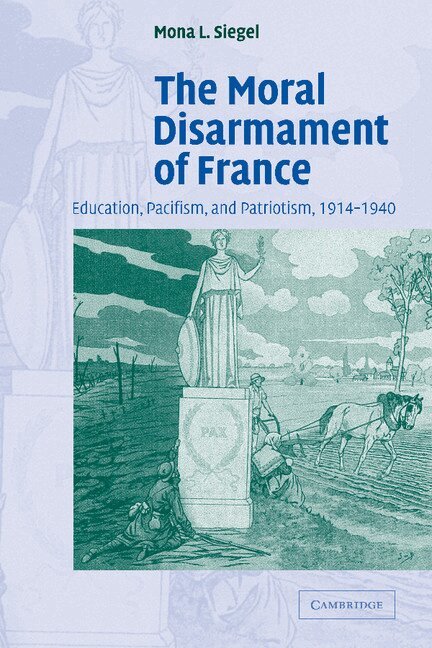
While French schoolteachers of the late nineteenth century have been widely celebrated for converting 'peasants into Frenchmen', their interwar counterparts have enjoyed little such acclaim. Both contemporary critics and subsequent scholars have condemned French pacifist schoolteachers of the interwar decades for cultivating antipatriotism and facilitating the defeat of 1940. In this book, Mona L. Siegel challenges such equations of teachers' pacifism with national betrayal. Drawn to pacifist ideals in the aftermath of World War I, schoolteachers sought to 'morally disarm' the nation by purging their classrooms of the militaristic images, symbols, narratives, and values that had led their generation to accept war without question in 1914. At the same time, however, their teaching remained rooted in longstanding patriotic and republican traditions. Siegel argues that interwar schoolteachers ultimately solidified French citizens' patriotic loyalties in an era when economic hardship and political extremism threatened to undermine those very ideals.
Del 18 - Studies in the Social and Cultural History of Modern Warfare
The Moral Disarmament of France
Education, Pacifism, and Patriotism, 1914-1940
Inbunden, Engelska, 2004
1 295 kr
Skickas inom 7-10 vardagar
While French schoolteachers of the late nineteenth century have been widely celebrated for converting 'peasants into Frenchmen', their interwar counterparts have enjoyed little such acclaim. Both contemporary critics and subsequent scholars have condemned French pacifist schoolteachers of the interwar decades for cultivating antipatriotism and facilitating the defeat of 1940. In this book, Mona L. Siegel challenges such equations of teachers' pacifism with national betrayal. Drawn to pacifist ideals in the aftermath of World War I, schoolteachers sought to 'morally disarm' the nation by purging their classrooms of the militaristic images, symbols, narratives, and values that had led their generation to accept war without question in 1914. At the same time, however, their teaching remained rooted in longstanding patriotic and republican traditions. Siegel argues that interwar schoolteachers ultimately solidified French citizens' patriotic loyalties in an era when economic hardship and political extremism threatened to undermine those very ideals.