Monica Chojnacka – författare
Visar alla böcker från författaren Monica Chojnacka. Handla med fri frakt och snabb leverans.
5 produkter
Ages of Woman, Ages of Man
Sources in European Social History, 1400-1750
Av Merry Wiesner Hanks, Monica Chojnacka
Häftad, 2002
1102 kr
Lägg i varukorg
The collection is organized around two main principles, stages of life and gender, and is divided into eight chapters: childhood, youth and sexuality, courtship and weddings, married life, economic life, networks and communities, and widowhood and old age. The sources address the numerous and …
Ages of Woman, Ages of Man
Sources in European Social History, 1400-1750
Av Merry Wiesner Hanks, Monica Chojnacka
Inbunden, 2016
2586 kr
Lägg i varukorg
The collection is organized around two main principles, stages of life and gender, and is divided into eight chapters: childhood, youth and sexuality, courtship and weddings, married life, economic life, networks and communities, and widowhood and old age. The sources address the numerous and …
Ages of Woman, Ages of Man
Sources in European Social History, 1400-1750
Av Monica Chojnacka, Merry Wiesner Hanks
E-bok, 2014
1274 kr
Lägg i varukorg
The collection is organized around two main principles, stages of life and gender, and is divided into eight chapters: childhood, youth and sexuality, courtship and weddings, married life, economic life, networks and communities, and widowhood and old age. The sources address the numerous and …
Ages of Woman, Ages of Man
Sources in European Social History, 1400-1750
Av Monica Chojnacka, Merry Wiesner Hanks
E-bok, 2014
1302 kr
Lägg i varukorg
The collection is organized around two main principles, stages of life and gender, and is divided into eight chapters: childhood, youth and sexuality, courtship and weddings, married life, economic life, networks and communities, and widowhood and old age. The sources address the numerous and …
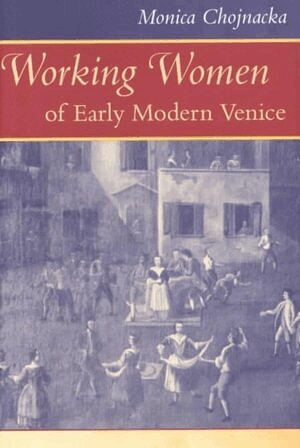
Working Women of Early Modern Venice
Inbunden, 2001
604 kr
Tillfälligt slut
In this groundbreaking book, Monica Chojnacka argues that the women of early modern Venice occupied a more socially powerful space than traditionally believed. Rather than focusing exclusively on the women of noble or wealthy merchant families, Chojnacka explores the lives of women-unmarried, …