Monica Jato - Böcker
Visar alla böcker från författaren Monica Jato. Handla med fri frakt och snabb leverans.
2 produkter
2 produkter
1 334 kr
Skickas inom 7-10 vardagar
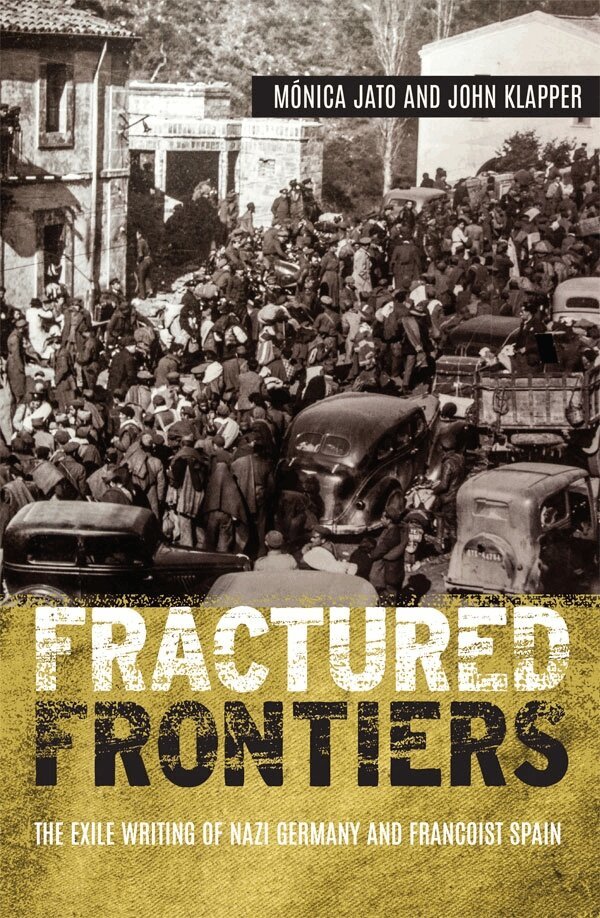
A comparative study of "inner" and "territorial" forms of literary exile under Nazism and Francoism, proposing an integrative model of exile that emphasizes common approaches and themes rather than division.Writers opposed to National Socialism or Francoism have been considered either territorial exiles, who left their country, or "inner exiles," who did not. Those who stayed were initially accorded greater status, while those who left were denigrated. With time, however, there was a growing recognition of the hardship and achievements of territorial exiles and increasing criticism of inner exiles. Later critical debates have perpetuated this fissure and failed to explore the similar origins and assumptions of the two forms of exile.This book adopts a unique cross-cultural approach, illuminating the shared roots of opposition across the two cultures and exilic settings. It challenges the traditional divide, demonstrating striking similarities in terminology, exilic identities, and literary concerns, between not only "inner" and "outer" but also the German and Spanish contexts. The study offers new perspectives on the literary historiography of twentieth-century Germany and Spain, showing how, in the impact and consequences of dictatorship, the histories of the two countries intersect. It is thus of interest to literary historiansand students of German and Spanish literature, and it also, because it provides English translations of all quotations, serves as an introduction for English-speaking readers to this poorly understood phenomenon and its implications for other exilic settings.Mónica Jato is Reader and John Klapper is Emeritus Professor in the Department of Modern Languages, University of Birmingham, UK.
Del 61 - Foro Hispánico
El éxodo español de 1939
Una topología cultural del exilio
Inbunden, Spanska, 2019
2 231 kr
Skickas inom 5-8 vardagar
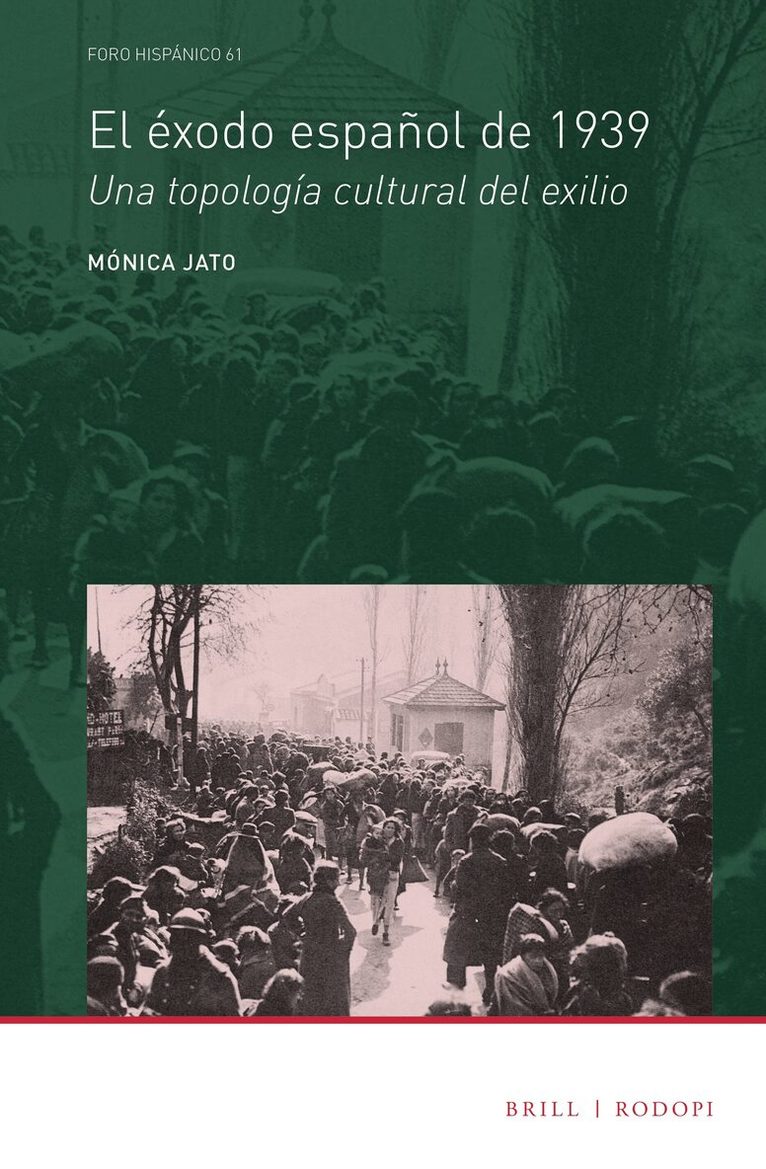
Read an interview with Mónica Jato.El éxodo español de 1939: Una topología cultural del exilio explores the cultural strategies employed by Spanish Republican refugees in adapting to radical changes in their environment and transforming the new spaces into habitable places. Thus the monograph highlights the centrality of the concept of place in the reconstruction of the lost home by analysing the various stages of the relocation of culture in exile: from French internment camps, on board ships, and finally to residence in Mexico. Adopting an interdisciplinary approach, Jato contends that the experience of space in exile is relational, and that the staging posts described in each chapter have no meaning unless they are interconnected as integral parts of a cultural topology. En El éxodo español de 1939: Una topología cultural del exilio Mónica Jato da cuenta de las variadas estrategias culturales empleadas por los refugiados republicanos españoles para adaptarse a las condiciones de sus nuevos entornos con el fin de transformarlos en lugares habitables. El libro indaga así la centralidad del concepto de lugar en la reconstrucción del hogar perdido y lo hace a través de sus diferentes etapas: en los campos de internamiento franceses, en los barcos rumbo a América y durante el asentamiento en tierras mexicanas.La experiencia del exilio es abordada aquí desde una perspectiva interdisciplinaria que pone de manifiesto el aspecto relacional de estas pausas espaciales cuya interconexión define esta particular topología cultural.