Monica L. Smith – författare
Visar alla böcker från författaren Monica L. Smith. Handla med fri frakt och snabb leverans.
11 produkter
11 produkter
Häftad, Engelska, 2010
392 kr
Skickas inom 5-8 vardagar
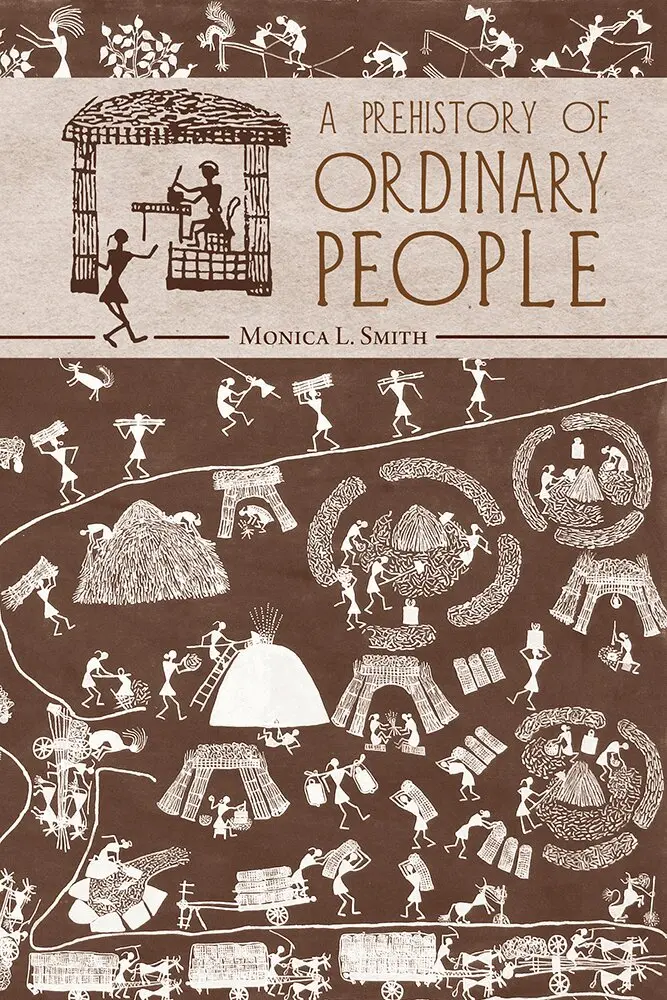
Examines how the archaeological record of ordinary objects--used by ordinary people--constitutes a manifestation of humankind's cognitive and social development. It offers an impressive synthesis in an accessible style that will appeal to archaeologists, cultural anthropologists, and others interested in the long history of human decision-making.
Inbunden, Engelska, 2026
764 kr
Skickas inom 7-10 vardagar
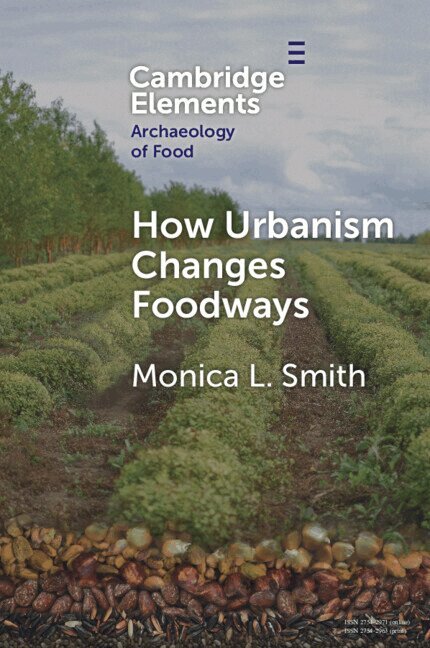
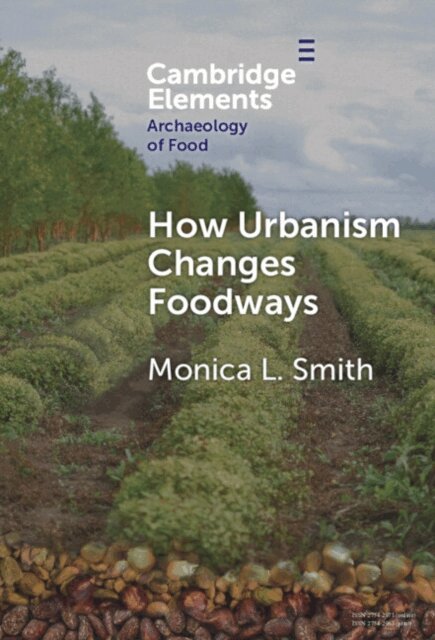
The advent of urbanism had profound impacts on landscape management, agricultural production, food preservation, and cuisine. This Element examines the 6,000-year history of urbanism through the archaeological perspective of food, using the analysis of cooking and eating vessels, botanical remains, and animal bones along with texts and iconographic evidence to understand the foodways that spurred and accompanied the growth of cities. Human-environmental changes took place as farmers became fewer in number but increasingly essential as providers of food for city-based consumers. The Element also examines the ways in which cities today share patterns of food production and consumption with the first urban settlements, and that we can address questions of sustainability, nutritional improvement, and other desired outcomes by recognizing how the growth of cities has resulted in distinct constraints and opportunities related to food.
Häftad, Engelska, 2026
237 kr
Skickas inom 7-10 vardagar
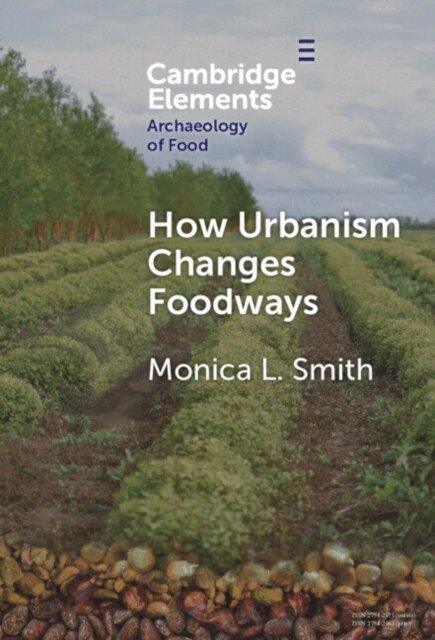
The advent of urbanism had profound impacts on landscape management, agricultural production, food preservation, and cuisine. This Element examines the 6,000-year history of urbanism through the archaeological perspective of food, using the analysis of cooking and eating vessels, botanical remains, and animal bones along with texts and iconographic evidence to understand the foodways that spurred and accompanied the growth of cities. Human-environmental changes took place as farmers became fewer in number but increasingly essential as providers of food for city-based consumers. The Element also examines the ways in which cities today share patterns of food production and consumption with the first urban settlements, and that we can address questions of sustainability, nutritional improvement, and other desired outcomes by recognizing how the growth of cities has resulted in distinct constraints and opportunities related to food.
Häftad, Engelska, 2019
156 kr
Skickas inom 11-20 vardagar
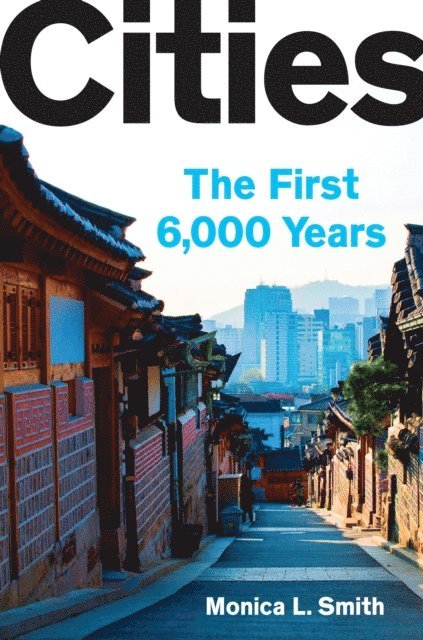
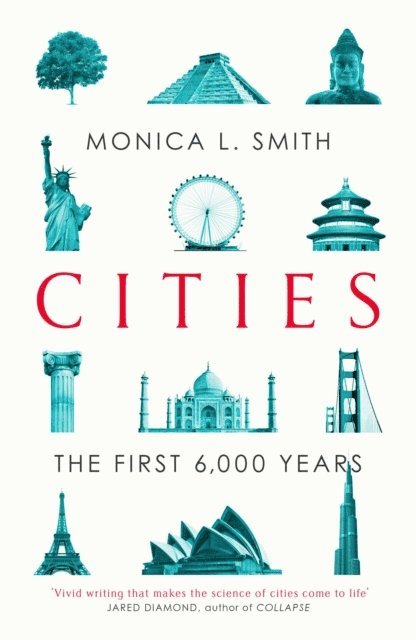
A FASCINATING INVESTIGATION INTO THE HISTORY OF CITIES: WHY DID THEY OCCUR, HOW HAVE THEY EVOLVED, WHY DO SO MANY OF US CHOOSE TO LIVE IN THEM AND HOW DO THEY AFFECT US?‘Monica Smith is the person best qualified to write a book about the big problems raised by the increasing concentration of the human population into cities. She also has a gift for vivid writing that will make the science of cities come to life for the broad public. I expect that CITIES will be a great read and will sell well.’Jared Diamond, author of Collapse Over half of the world’s population lives in an urban area and cities around the globe are getting bigger and bigger. Love them or hate them, more and more of us are choosing to live in them.Cities investigates the following intriguing questions: why did cities start to occur around 6,000 years ago, how have they evolved, why do so many of us choose to live in them, how do they affect us, and what does the future hold at a time when we’re increasingly connected by technology? In Cities, Monica L. Smith points out that, even if you don’t live in a city, your life is inevitably affected by one, whether you commute into one for work, sell coffee beans to a company that supplies urban coffee shops, or host city-dwelling tourists seeking adventure and respite from the city in your remote village. Using fascinating anecdotes and research findings from her work as an archaeologist, Smith also reveals that many of the problems that we associate with modern cities (violence, hyperconsumption, etc.) have, in fact, always existed. And, more positively, how many of the things that draw us to cities in modern times (educational and economic opportunities, social mobility, culture) are the things that have drawn us to them since they first appeared. She also makes the controversial argument that it’s down to cities that the middle class exists and she examines why social movements flourish in cities in a way they rarely do in rural settings.
Häftad, Engelska, 2030
109 kr
Kommande
A FASCINATING INVESTIGATION INTO THE HISTORY OF CITIES: WHY DID THEY OCCUR, HOW HAVE THEY EVOLVED, WHY DO SO MANY OF US CHOOSE TO LIVE IN THEM AND HOW DO THEY AFFECT US?
Häftad, Engelska, 2020
470 kr
Skickas inom 5-8 vardagar
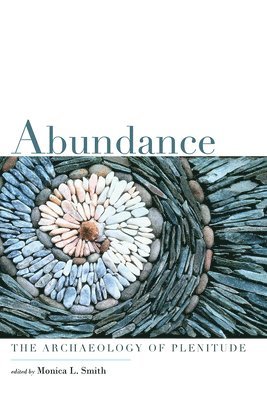
Using case studies from around the globe—including Mesoamerica, North and South America, Africa, China, and the Greco-Roman world—and across multiple time periods, the authors in this volume make the case that abundance provides an essential explanatory perspective on ancient peoples’ choices and activities. Economists frequently focus on scarcity as a driving principle in the development of social and economic hierarchies, yet focusing on plenitude enables the understanding of a range of cohesive behaviors that were equally important for the development of social complexity.Our earliest human ancestors were highly mobile hunter-gatherers who sought out places that provided ample food, water, and raw materials. Over time, humans accumulated and displayed an increasing quantity and variety of goods. In households, shrines, tombs, caches, and dumps, archaeologists have discovered large masses of materials that were deliberately gathered, curated, distributed, and discarded by ancient peoples. The volume’s authors draw upon new economic theories to consider the social, ideological, and political implications of human engagement with abundant quantities of resources and physical objects and consider how individual and household engagements with material culture were conditioned by the quest for abundance.Abundance shows that the human propensity for mass consumption is not just the result of modern production capacities but fulfills a longstanding focus on plenitude as both the assurance of well-being and a buffer against uncertainty. This book will be of great interest to scholars and students in economics, anthropology, and cultural studies.Contributors: Traci Ardren, Amy Bogaard, Elizabeth Klarich, Abigail Levine, Christopher R. Moore, Tito E. Naranjo, Stacey Pierson, James M. Potter, François G. Richard, Christopher W. Schmidt, Carol Schultze, Payson Sheets, Monica L. Smith, Katheryn C. Twiss, Mark D. Varien, Justin St. P. Walsh, María Nieves Zedeño
Häftad, Engelska, 2001
650 kr
Skickas inom 5-8 vardagar
Inbunden, Engelska, 2019
207 kr
Tillfälligt slut
A FASCINATING INVESTIGATION INTO THE HISTORY OF CITIES: WHY DID THEY OCCUR, HOW HAVE THEY EVOLVED, WHY DO SO MANY OF US CHOOSE TO LIVE IN THEM AND HOW DO THEY AFFECT US?‘Monica Smith is the person best qualified to write a book about the big problems raised by the increasing concentration of the human population into cities. She also has a gift for vivid writing that will make the science of cities come to life for the broad public. I expect that CITIES will be a great read and will sell well.’Jared Diamond, author of Collapse Over half of the world’s population lives in an urban area and cities around the globe are getting bigger and bigger. Love them or hate them, more and more of us are choosing to live in them.Cities investigates the following intriguing questions: why did cities start to occur around 6,000 years ago, how have they evolved, why do so many of us choose to live in them, how do they affect us, and what does the future hold at a time when we’re increasingly connected by technology? In Cities, Monica L. Smith points out that, even if you don’t live in a city, your life is inevitably affected by one, whether you commute into one for work, sell coffee beans to a company that supplies urban coffee shops, or host city-dwelling tourists seeking adventure and respite from the city in your remote village. Using fascinating anecdotes and research findings from her work as an archaeologist, Smith also reveals that many of the problems that we associate with modern cities (violence, hyperconsumption, etc.) have, in fact, always existed. And, more positively, how many of the things that draw us to cities in modern times (educational and economic opportunities, social mobility, culture) are the things that have drawn us to them since they first appeared. She also makes the controversial argument that it’s down to cities that the middle class exists and she examines why social movements flourish in cities in a way they rarely do in rural settings.
Inbunden, Engelska, 2017
680 kr
Tillfälligt slut
Inbunden, Engelska, 2023
836 kr
Tillfälligt slut
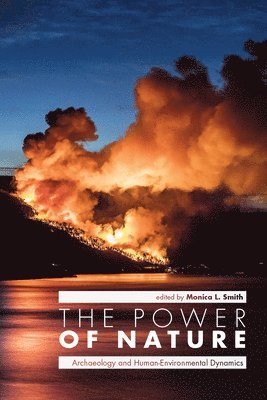
In The Power of Nature archaeologists address the force and impact of nature relative to human knowledge, action, and volition. Case studies from around the world focusing on different levels of sociopolitical complexity—ranging from early agricultural societies to states and empires—address the ways in which nature retains the upper hand in human agentive environmental discourse, providing an opportunity for an insightful perspective on the current anthropological emphasis on how humans affect the environment. Climatic events, pathogens, and animals as nonhuman agents, ranging in size from viruses to mega-storms, have presented our species with dynamic conditions that overwhelm human capacities. In some cases, people have modified architecture to deal with a constant onslaught of storms, as in Japan or the Caribbean; in other cases, they have welcomed the occasional natural disaster as a chance to start fresh or to put into place new ideas and practices, as in the case of ancient Roman cities. Using the concept of “agency” as one in which multiple sentient and nonhuman actors interact in a landscape, and exploring locations such as the Caribbean, the Pacific, South Asia, the Andes, the Mediterranean, Mesoamerica, North America, and the Arctic, the authors provide compelling explanations of the effect of an entire realm of natural powers that beset human societies past and present—from storms, earthquakes, and fires to vegetation, domestic animals, and wild birds. Throughout, the emphasis is on the philosophical and engineering adjustments that people make to stay resilient when facing the perpetual changes of the natural world. Using an archaeological perspective, The Power of Nature illustrates and analyzes the manyways that people do not control their environments. It will be of interest to archaeologists, as well as scholars in science, biology, botany, forestry, urban studies, and disaster management. Contributors: Steven Ammeran, Traci Ardren, Katelyn J. Bishop, Karen Mohr Chávez, Sergio Chávez, Stanislava Chávez, Emelie Cobb, Jago Cooper, Harper Dine, Chelsea Fisher, Jennifer Huebert, Dale L. Hutchinson, Sara L. Juengst, Kanika Kalra, François Oliva, Matthew C. Peros, Jordan Pickett, Seth Quintus, John Robb, Monica L. Smith, Jillian A. Swift, Silvia Tomášková, Kyungsoo Yoo
Häftad, Engelska, 2023
177 kr
Tillfälligt slut