Monica Ponce de Leon - Böcker
Visar alla böcker från författaren Monica Ponce de Leon. Handla med fri frakt och snabb leverans.
5 produkter
5 produkter
283 kr
Skickas inom 7-10 vardagar
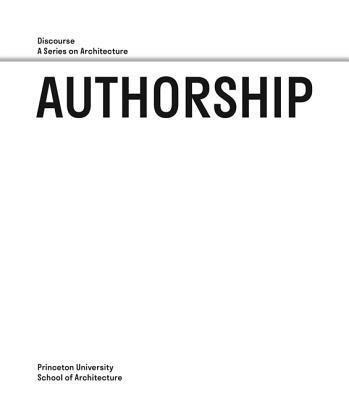
Authorship critically examines emergent themes in contemporary architecture by revisiting the seemingly defunct notion of design authorship. As we revel in the death of the master architect, how do we come to terms with the shifting role of creativity in architecture’s cultural production? In Authorship, a cross-disciplinary group of designers and scholars explores this topic through a myriad of lenses. Subjects include the impact of digital tools and computational scripts on the conception of buildings in the age of robotics, the current climate of appropriation and sampling as a counter-form of authorship, and the rise of reauthored materials in a postdigital age. These questions are cast against alternative ideas of authorship that, in turn, reposition the history of architecture. Featured essays investigate the separation between the personal and the authored while other contributions expose meaning, symbolism, and iconography as the subjects of authority—not authorship. Ultimately, this book dismantles, realigns, and reassembles disparate architectural conditions to form new ways of thinking.Discourse is a biannual publication series that presents timely themes on and around architecture. A selective compilation of essays, interviews, roundtable discussions, featured exhibitions, photo-essays, and collateral materials—such as architectural models, sketches, and built works—highlight architectural culture, practice, and theory.
444 kr
Kommande
412 kr
Skickas inom 7-10 vardagar
Leading art historians, architects, designers, artists, and urbanists share new perspectives on this visionary architect’s material legacyLina Bo Bardi (1914–1992) is renowned for her boldly modernist designs like the São Paulo Museum of Art and the culture and leisure center SESC Pompéia. An artist, architect, designer, writer, and activist, she was a tireless champion for local craft and materials. Her democratic designs were inclusive and stood as an open invitation to those typically excluded from elitist institutions, embodying an aesthetic that stood out among the modernist movement in Brazil and abroad. This collection of essays presents new perspectives on Bo Bardi from leading contemporary artists, architects, curators, and scholars. Contributors engage with the conceptual, social, and political philosophies latent in the architectural materials she chose—from her application of concrete to her implementation of nature and her reuse of vernacular materials.Beautifully illustrated and featuring seven gatefolds, Lina Bo Bardi: Material Ideologies sheds vital new light on the ideological strategies inherent in Bo Bardi’s iconic projects and lesser-known work.Distributed for the Princeton University School of Architecture
1 625 kr
Skickas inom 10-15 vardagar
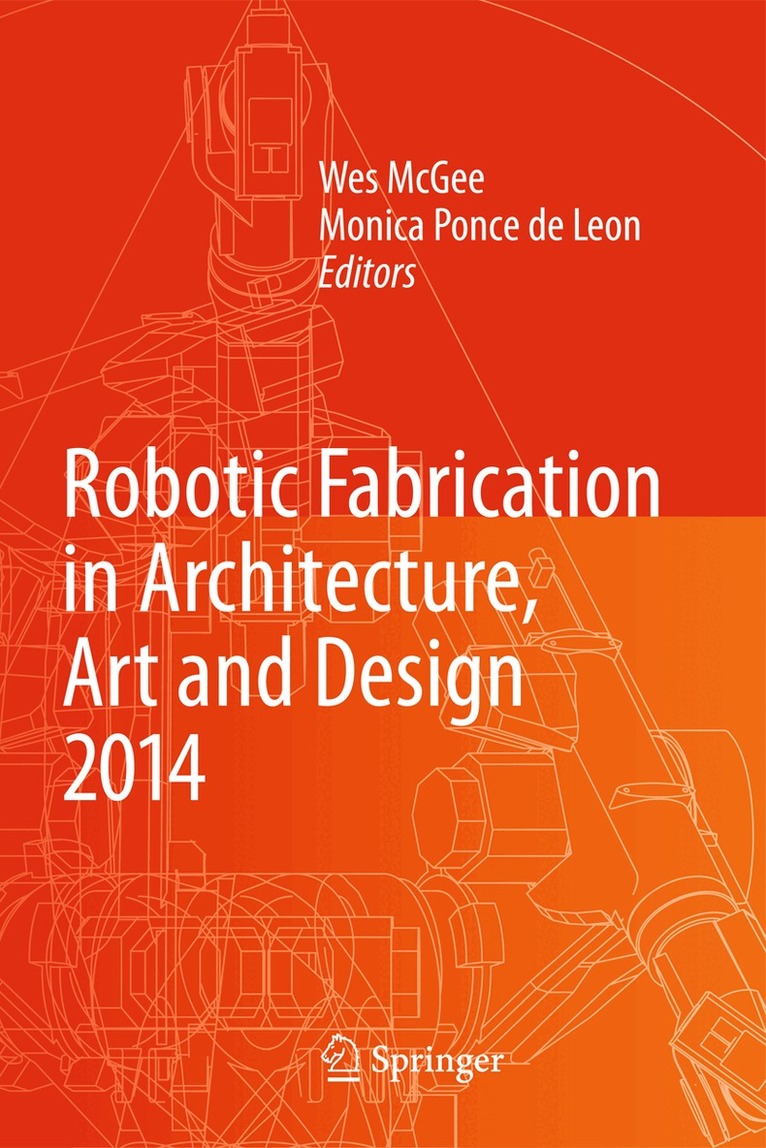
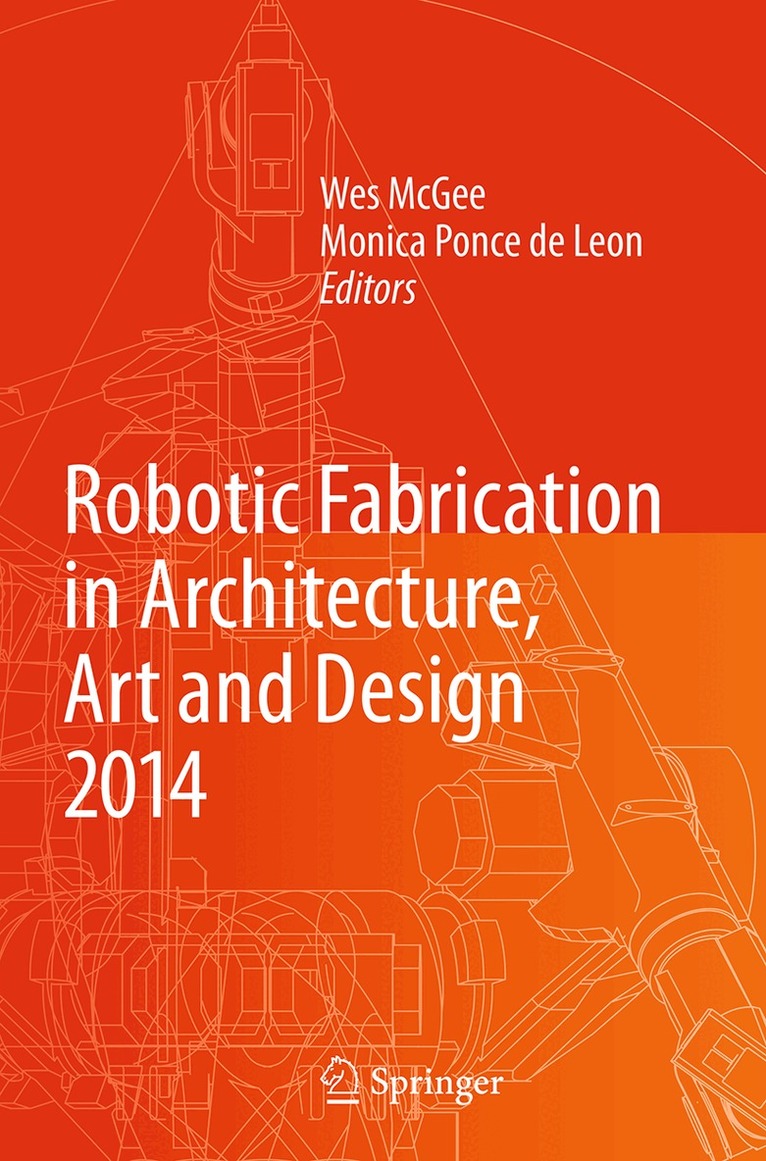
Robotic automation has become ubiquitous in the modern manufacturing landscape, spanning an overwhelming range of processes and applications-- from small scale force-controlled grinding operations for orthopedic joints to large scale composite manufacturing of aircraft fuselages. Smart factories, seamlessly linked via industrial networks and sensing, have revolutionized mass production, allowing for intelligent, adaptive manufacturing processes across a broad spectrum of industries. Against this background, an emerging group of researchers, designers, and fabricators have begun to apply robotic technology in the pursuit of architecture, art, and design, implementing them in a range of processes and scales. Coupled with computational design tools the technology is no longer relegated to the repetitive production of the assembly line, and is instead being employed for the mass-customization of non-standard components. This radical shift in protocol has been enabled by the development of new design to production workflows and the recognition of robotic manipulators as “multi-functional” fabrication platforms, capable of being reconfigured to suit the specific needs of a process.The emerging discourse surrounding robotic fabrication seeks to question the existing norms of manufacturing and has far reaching implications for the future of how architects, artists, and designers engage with materialization processes. This book presents the proceedings of Rob|Arch2014, the second international conference on robotic fabrication in architecture, art, and design. It includes a Foreword by Sigrid Brell-Cokcan and Johannes Braumann, Association for Robots in Architecture. The work contained traverses a wide range of contemporary topics, from methodologies for incorporating dynamic material feedback into existing fabrication processes, to novel interfaces for robotic programming, to new processes forlarge-scale automated construction. The latent argument behind this research is that the term ‘file-to-factory’ must not be a reductive celebration of expediency but instead a perpetual challenge to increase the quality of feedback between design, matter, and making.
1 640 kr
Skickas inom 10-15 vardagar
Robotic automation has become ubiquitous in the modern manufacturing landscape, spanning an overwhelming range of processes and applications-- from small scale force-controlled grinding operations for orthopedic joints to large scale composite manufacturing of aircraft fuselages. Smart factories, seamlessly linked via industrial networks and sensing, have revolutionized mass production, allowing for intelligent, adaptive manufacturing processes across a broad spectrum of industries. Against this background, an emerging group of researchers, designers, and fabricators have begun to apply robotic technology in the pursuit of architecture, art, and design, implementing them in a range of processes and scales. Coupled with computational design tools the technology is no longer relegated to the repetitive production of the assembly line, and is instead being employed for the mass-customization of non-standard components. This radical shift in protocol has been enabled by the development of new design to production workflows and the recognition of robotic manipulators as “multi-functional” fabrication platforms, capable of being reconfigured to suit the specific needs of a process.The emerging discourse surrounding robotic fabrication seeks to question the existing norms of manufacturing and has far reaching implications for the future of how architects, artists, and designers engage with materialization processes. This book presents the proceedings of Rob|Arch2014, the second international conference on robotic fabrication in architecture, art, and design. It includes a Foreword by Sigrid Brell-Cokcan and Johannes Braumann, Association for Robots in Architecture. The work contained traverses a wide range of contemporary topics, from methodologies for incorporating dynamic material feedback into existing fabrication processes, to novel interfaces for robotic programming, to new processes forlarge-scale automated construction. The latent argument behind this research is that the term ‘file-to-factory’ must not be a reductive celebration of expediency but instead a perpetual challenge to increase the quality of feedback between design, matter, and making.