Moniza Rizzini Ansari – författare
Visar alla böcker från författaren Moniza Rizzini Ansari. Handla med fri frakt och snabb leverans.
4 produkter
4 produkter
1 819 kr
Skickas inom 10-15 vardagar
This book demonstrates how the various legal efforts employed to eradicate global urban poverty also play a significant role in shaping it.Urban poverty has been widely examined as a social problem that requires attention and social commitment. Law is often seen as both an important contributor to the problem as well as a source of crucial tools to overcome it. In spite of this, however, poverty is surprisingly disregarded within legal scholarship. This book counters this by drawing on legal theory, legal history, and legal geography to inquire how urban poverty is made visible and invisible as a problem across global cities. More specifically, it investigates the mechanisms and networks through which global urban poverty has been conceptually and materially shaped in a way that fits the remit of global corporate philanthropy and the development aid agenda. By following law’s circuitous interactions with poverty knowledge and antipoverty interventions, the book demonstrates how it plays a historical role in making poverty seen, known, and remedied. As a result, the book argues, law consolidates a stable image of poverty as an essential ‘problem’ – to be uniformly found worldwide and so reasonably fixable with the appropriate legal reforms. Taking poverty to be a fundamental manifestation of social injustice, the book thus raises key questions about the role of law in the achievement of social justice.This innovative and insightful account of the relationship between law and poverty will appeal to scholars in critical and socio-legal studies, as well as others working in poverty studies, urban studies, development studies, geography, sociology, and social policy.
621 kr
Kommande
This book demonstrates how the various legal efforts employed to eradicate global urban poverty also play a significant role in shaping it.Urban poverty has been widely examined as a social problem that requires attention and social commitment. Law is often seen as both an important contributor to the problem as well as a source of crucial tools to overcome it. In spite of this, however, poverty is surprisingly disregarded within legal scholarship. This book counters this by drawing on legal theory, legal history, and legal geography to inquire how urban poverty is made visible and invisible as a problem across global cities. More specifically, it investigates the mechanisms and networks through which global urban poverty has been conceptually and materially shaped in a way that fits the remit of global corporate philanthropy and the development aid agenda. By following law’s circuitous interactions with poverty knowledge and antipoverty interventions, the book demonstrates how it plays a historical role in making poverty seen, known, and remedied. As a result, the book argues, law consolidates a stable image of poverty as an essential ‘problem’ – to be uniformly found worldwide and so reasonably fixable with the appropriate legal reforms. Taking poverty to be a fundamental manifestation of social injustice, the book thus raises key questions about the role of law in the achievement of social justice.This innovative and insightful account of the relationship between law and poverty will appeal to scholars in critical and socio-legal studies, as well as others working in poverty studies, urban studies, development studies, geography, sociology, and social policy.
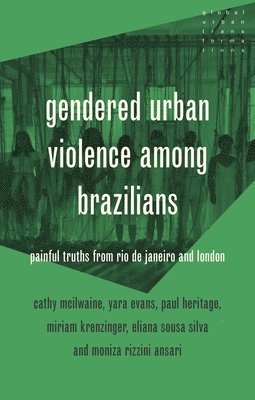
Gendered Urban Violence Among Brazilians
Painful Truths from Rio De Janeiro and London
Inbunden, Engelska, 2024
1 159 kr
Skickas
This book aims to examine the nature of and resistance to gendered urban violence among Brazilian women in London and in the favelas of Maré, Rio de Janeiro. Drawing on the conceptualisation of translocational gendered urban violence framework, it highlights the importance of examining direct forms of gender-based violence across private, public and transnational spheres as interlinked with structural, symbolic and infrastructural violence. The book also explores the embodied and spatialised nature of gendered urban violence, considered through artistic engagements and arts-based methods. In developing a translocational feminist tracing methodological and epistemological approach across the social sciences and the arts, the book argues for the importance of a collaborative approach among academic, civil society organisations, artists and creative researchers with a view to engendering empathetic transformation to address gendered urban violence in the long-term.An electronic edition of this book is freely available under a Creative Commons (CC BY-NC-ND) licence.
Gendered urban violence among Brazilians
Painful truths from Rio de Janeiro and London
Häftad, Engelska, 2026
346 kr
Kommande
This book aims to examine the nature of and resistance to gendered urban violence among Brazilian women in London and in the favelas of Maré, Rio de Janeiro. Drawing on the conceptualisation of translocational gendered urban violence framework, it highlights the importance of examining direct forms of gender-based violence across private, public and transnational spheres as interlinked with structural, symbolic and infrastructural violence. The book also explores the embodied and spatialised nature of gendered urban violence, considered through artistic engagements and arts-based methods. In developing a translocational feminist tracing methodological and epistemological approach across the social sciences and the arts, the book argues for the importance of a collaborative approach among academic, civil society organisations, artists and creative researchers with a view to engendering empathetic transformation to address gendered urban violence in the long-term.