Moray J. Campbell – författare
Visar alla böcker från författaren Moray J. Campbell. Handla med fri frakt och snabb leverans.
6 produkter
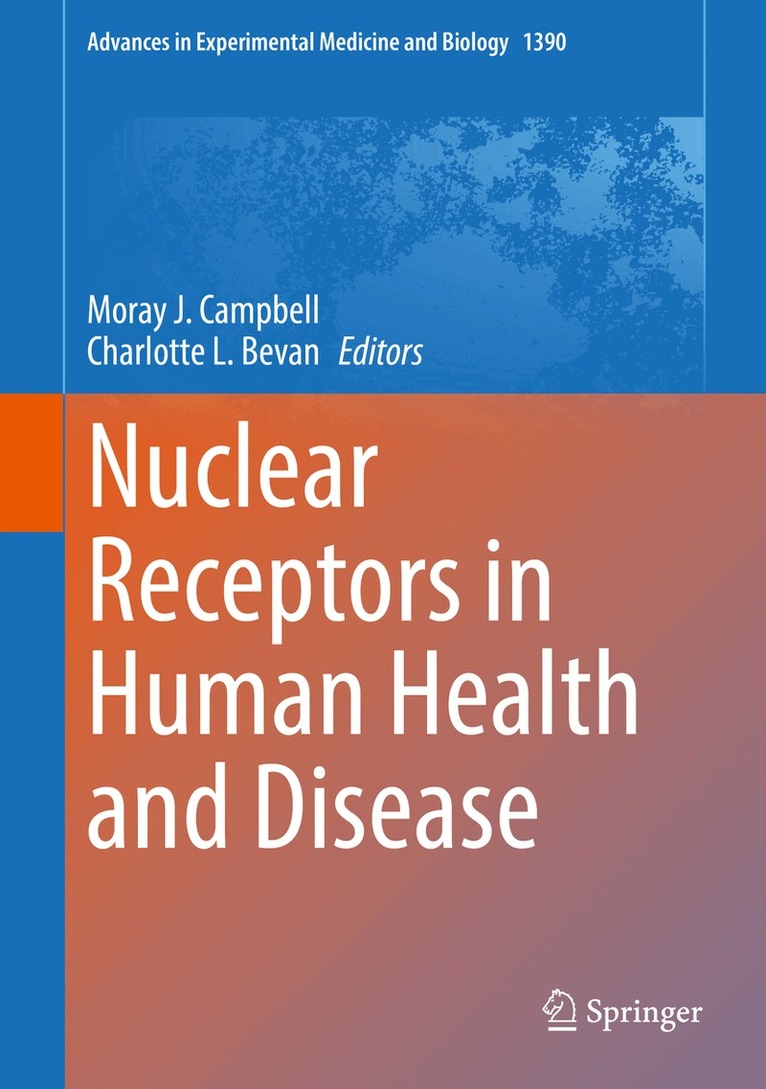
Nuclear Receptors in Human Health and Disease
Av Moray J. Campbell, Charlotte L. Bevan
Inbunden, 2022
1688 kr
Lägg i varukorg
This book addresses and dissects the roles and crosstalk mechanisms for the 48 human nuclear receptors (NR) in human health and disease. After a State-of-the-Art introduction by an undisputed and celebrated field leader to provide an overview of the field and its significance, chapters are …
Nuclear Receptors in Human Health and Disease
Av Charlotte L. Bevan, Moray J. Campbell
E-bok, 2022
2174 kr
Lägg i varukorg
This book addresses and dissects the roles and crosstalk mechanisms for the 48 human nuclear receptors (NR) in human health and disease. After a State-of-the-Art introduction by an undisputed and celebrated field leader to provide an overview of the field and its significance, chapters are …
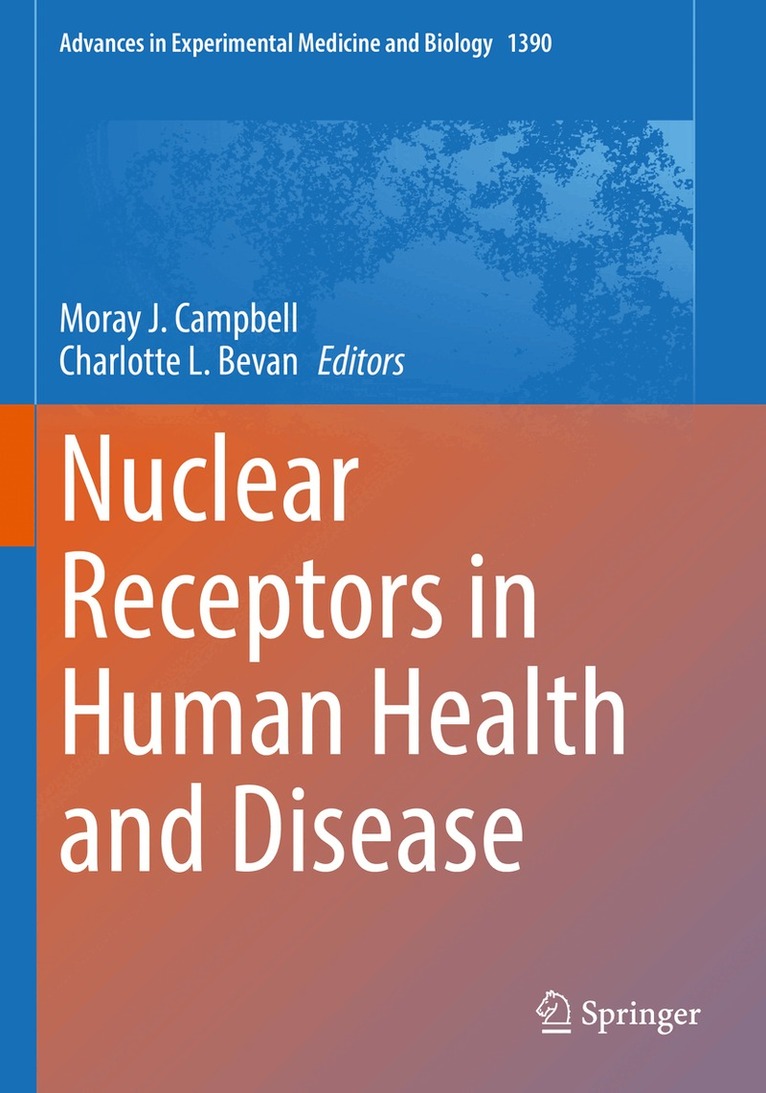
Nuclear Receptors in Human Health and Disease
Av Moray J. Campbell, Charlotte L. Bevan
Häftad, 2023
1688 kr
Lägg i varukorg
This book addresses and dissects the roles and crosstalk mechanisms for the 48 human nuclear receptors (NR) in human health and disease. After a State-of-the-Art introduction by an undisputed and celebrated field leader to provide an overview of the field and its significance, chapters are …
Nuclear Receptors
Current Concepts and Future Challenges
Av Chris M. Bunce, Moray J. Campbell
Inbunden, 2010
2249 kr
Lägg i varukorg
In 1890 a case of myxedema was treated in Lisbon by the implantation of a sheep thyroid gland with the immediate improvement in the patient’s condition. A few years later, medications for the then ill-explained condition of the menopause included tablets made from cow ovaries. In the first quarter …
Nuclear Receptors
Current Concepts and Future Challenges
Av Moray J. Campbell, Chris M. Bunce
E-bok, 2010
3013 kr
Lägg i varukorg
In 1890 a case of myxedema was treated in Lisbon by the implantation of a sheep thyroid gland with the immediate improvement in the patient’s condition. A few years later, medications for the then ill-explained condition of the menopause included tablets made from cow ovaries. In the first quarter …
Nuclear Receptors
Current Concepts and Future Challenges
Av Chris M. Bunce, Moray J. Campbell
Häftad, 2012
2249 kr
Lägg i varukorg
In 1890 a case of myxedema was treated in Lisbon by the implantation of a sheep thyroid gland with the immediate improvement in the patient’s condition. A few years later, medications for the then ill-explained condition of the menopause included tablets made from cow ovaries. In the first quarter …