Moritz Föllmer - Böcker
Visar alla böcker från författaren Moritz Föllmer. Handla med fri frakt och snabb leverans.
4 produkter
4 produkter
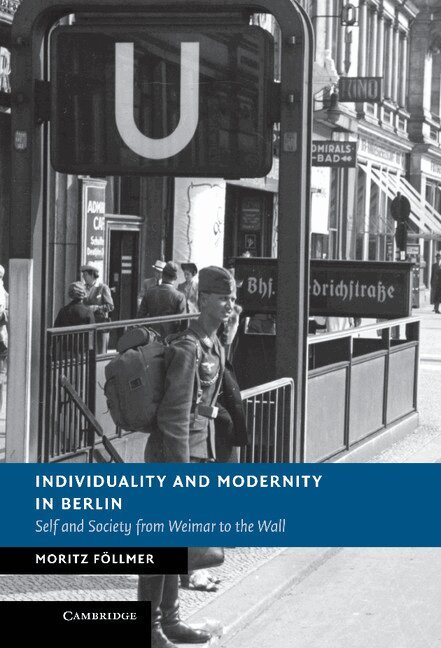
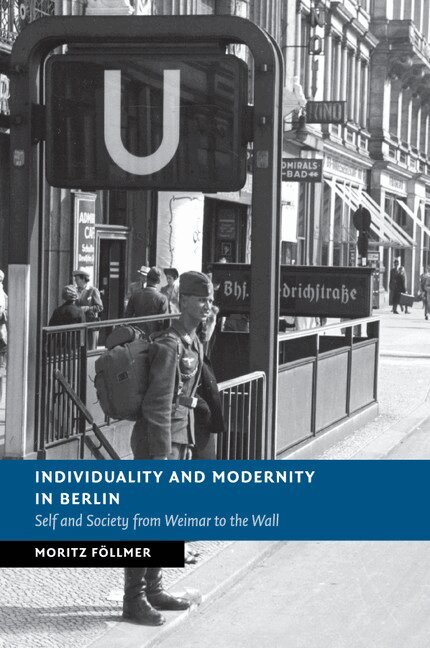
Individuality and Modernity in Berlin
Self and Society from Weimar to the Wall
Inbunden, Engelska, 2013
1 228 kr
Skickas inom 7-10 vardagar
Moritz Föllmer traces the history of individuality in Berlin from the late 1920s to the construction of the Berlin Wall in August 1961. The demand to be recognised as an individual was central to metropolitan society, as were the spectres of risk, isolation and loss of agency. This was true under all five regimes of the period, through economic depression, war, occupation and reconstruction. The quest for individuality could put democracy under pressure, as in the Weimar years, and could be satisfied by a dictatorship, as was the case in the Third Reich. It was only in the course of the 1950s, when liberal democracy was able to offer superior opportunities for consumerism, that individuality finally claimed the mantle. Individuality and Modernity in Berlin proposes a fresh perspective on twentieth-century Berlin that will engage readers with an interest in the German metropolis as well as European urban history more broadly.
441 kr
Skickas inom 7-10 vardagar
Moritz Föllmer traces the history of individuality in Berlin from the late 1920s to the construction of the Berlin Wall in August 1961. The demand to be recognised as an individual was central to metropolitan society, as were the spectres of risk, isolation and loss of agency. This was true under all five regimes of the period, through economic depression, war, occupation and reconstruction. The quest for individuality could put democracy under pressure, as in the Weimar years, and could be satisfied by a dictatorship, as was the case in the Third Reich. It was only in the course of the 1950s, when liberal democracy was able to offer superior opportunities for consumerism, that individuality finally claimed the mantle. Individuality and Modernity in Berlin proposes a fresh perspective on twentieth-century Berlin that will engage readers with an interest in the German metropolis as well as European urban history more broadly.
1 065 kr
Skickas inom 7-10 vardagar
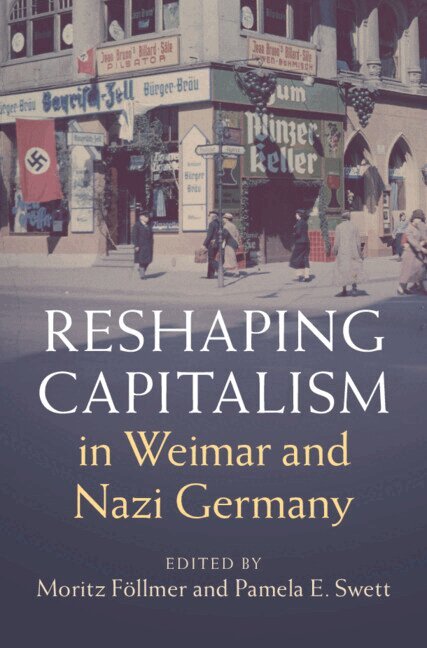
In Weimar and Nazi Germany, capitalism was hotly contested, discreetly practiced, and politically regulated. This volume shows how it adapted to fit a nation undergoing drastic changes following World War I. Through wide-ranging cultural histories, a transatlantic cast of historians probes the ways contemporaries debated, concealed, promoted, and racialized capitalism. They show how bankers and industrialists, storeowners and commercial designers, intellectuals and politicians reshaped a controversial economic order at a time of fundamental uncertainty and drastic rupture. The book thus sheds fresh light on the strategies used by Hitler and his followers to gain and maintain widespread support. The authors conclude that National Socialism succeeded in mobilizing capitalism's energies while at the same time claiming to have overcome a system they identified with pernicious Jewish influences. In so doing, the volume also speaks to the broader issue of how capitalism can adapt to new times.
360 kr
Skickas inom 7-10 vardagar
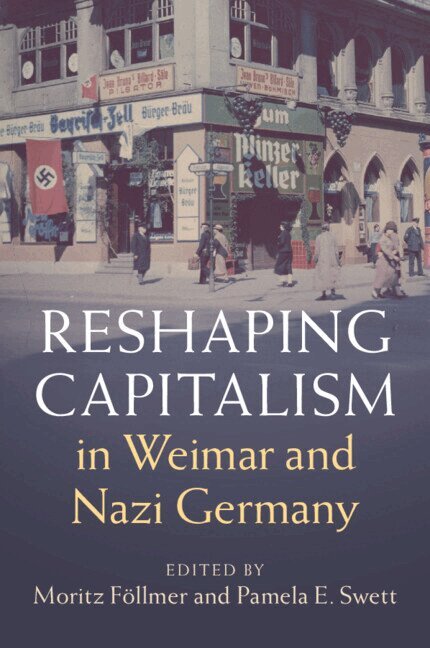
In Weimar and Nazi Germany, capitalism was hotly contested, discreetly practiced, and politically regulated. This volume shows how it adapted to fit a nation undergoing drastic changes following World War I. Through wide-ranging cultural histories, a transatlantic cast of historians probes the ways contemporaries debated, concealed, promoted, and racialized capitalism. They show how bankers and industrialists, storeowners and commercial designers, intellectuals and politicians reshaped a controversial economic order at a time of fundamental uncertainty and drastic rupture. The book thus sheds fresh light on the strategies used by Hitler and his followers to gain and maintain widespread support. The authors conclude that National Socialism succeeded in mobilizing capitalism's energies while at the same time claiming to have overcome a system they identified with pernicious Jewish influences. In so doing, the volume also speaks to the broader issue of how capitalism can adapt to new times.