Morten Tønnessen – författare
Visar alla böcker från författaren Morten Tønnessen. Handla med fri frakt och snabb leverans.
3 produkter
3 produkter
Häftad, Engelska, 2019
648 kr
Skickas inom 10-15 vardagar
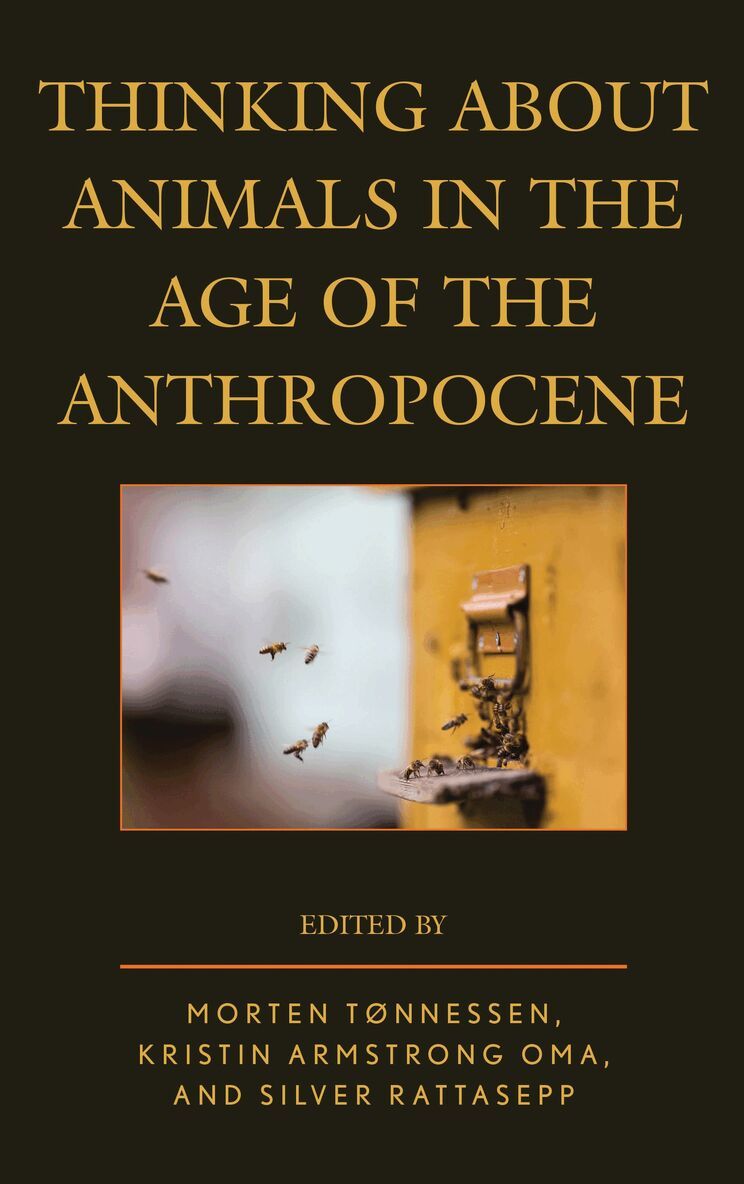
The term “Anthropocene”, the era of mankind, is increasingly being used as a scientific designation for the current geological epoch. This is because the human species now dominates ecosystems worldwide, and affects nature in a way that rivals natural forces in magnitude and scale. Thinking about Animals in the Age of the Anthropocene presents a dozen chapters that address the role and place of animals in this epoch characterized by anthropogenic (human-made) environmental change. While some chapters describe our impact on the living conditions of animals, others question conventional ideas about human exceptionalism, and stress the complex cognitive and other abilities of animals. The Anthropocene idea forces us to rethink our relation to nature and to animals, and to critically reflect on our own role and place in the world, as a species. Nature is not what it was. Nor are the lives of animals as they used to be before mankind´s rise to global ecological prominence. Can we eventually learn to live with animals, rather than causing extinction and ecological mayhem?
Del 25 - Biosemiotics
Semiotic Agency
Science beyond Mechanism
Inbunden, Engelska, 2022
1 299 kr
Skickas inom 10-15 vardagar
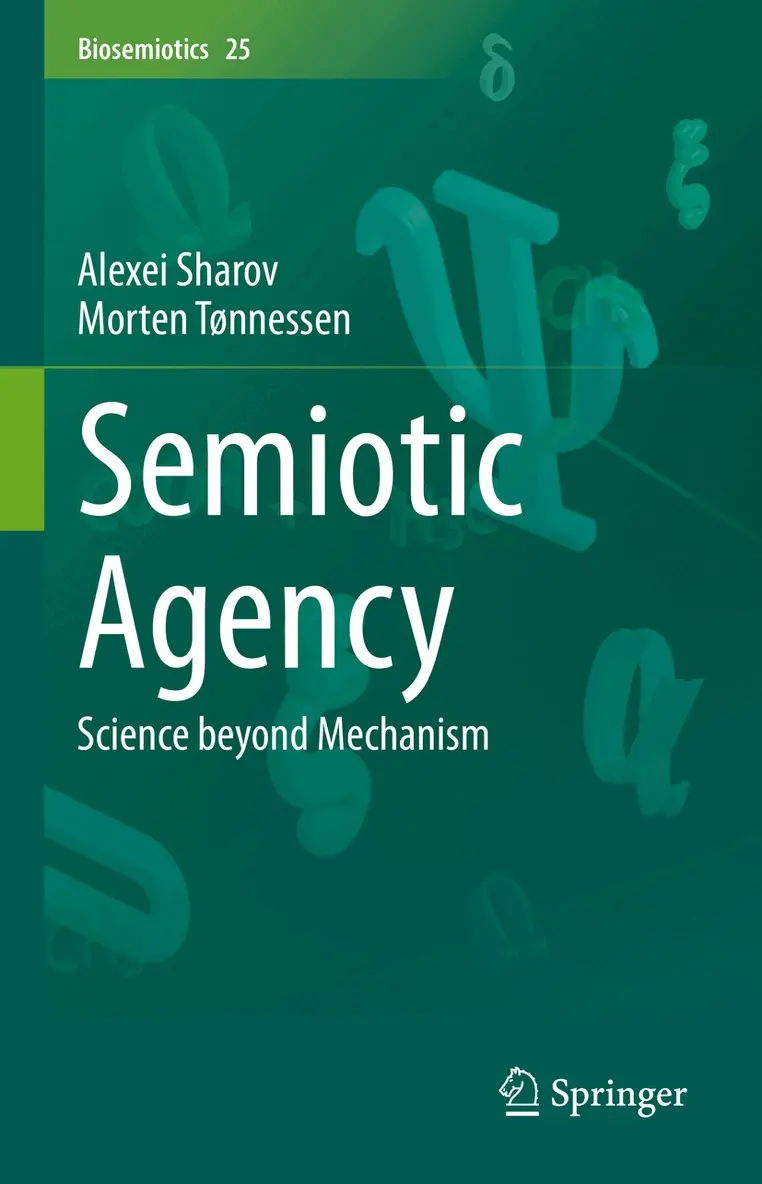
This book invites readers to embark on a journey into the world of agency encompassing humans, other organisms, cells, intracellular molecular agents, colonies, populations, ecological systems, and artificial autonomous systems. We combine mechanistic and non-mechanistic approaches in the analysis of the function and evolution of organisms, their subagents, and multi-organism systems, and in this way offer a theoretical platform for integrating biosemiotics with both natural science and the humanities/social sciences. Agents are autonomous systems that incorporate knowledge on how to make sense of their environment and use it to achieve their goals. The functions of all agents are supported by mechanisms at the lowest level; however, the explanatory power of mechanistic analysis is not sufficient for complex agents. Non-mechanistic methods rely on the goal-directedness of agents whose dynamics follow self-stabilized dynamic attractors. The properties of attractors depend on stable or slowly changing factors, and such dependencies can be interpreted as sign relations if they are adaptive in nature. Agents can replace or redirect mechanisms on demand in order to preserve their functions; for performing higher-level semiotic functions, mechanisms are thus only means. We assume that mechanism and semiosis are not mutually exclusive, and that simple agents can interpret signs mechanistically. This assumption allows us to extend semiotic analysis to all agents, including ribosomes in cells, computers, and robots. This book challenges established traditions in natural science and the humanities/social sciences: semiotics no longer appears as restricted to humans and rational thinking, and biology is no longer limited to rely exclusively on mechanistic reasoning.
Del 25 - Biosemiotics
Semiotic Agency
Science beyond Mechanism
Häftad, Engelska, 2023
806 kr
Skickas inom 5-8 vardagar
This book invites readers to embark on a journey into the world of agency encompassing humans, other organisms, cells, intracellular molecular agents, colonies, populations, ecological systems, and artificial autonomous systems. We combine mechanistic and non-mechanistic approaches in the analysis of the function and evolution of organisms, their subagents, and multi-organism systems, and in this way offer a theoretical platform for integrating biosemiotics with both natural science and the humanities/social sciences. Agents are autonomous systems that incorporate knowledge on how to make sense of their environment and use it to achieve their goals. The functions of all agents are supported by mechanisms at the lowest level; however, the explanatory power of mechanistic analysis is not sufficient for complex agents. Non-mechanistic methods rely on the goal-directedness of agents whose dynamics follow self-stabilized dynamic attractors. The properties of attractors depend on stable or slowly changing factors, and such dependencies can be interpreted as sign relations if they are adaptive in nature. Agents can replace or redirect mechanisms on demand in order to preserve their functions; for performing higher-level semiotic functions, mechanisms are thus only means. We assume that mechanism and semiosis are not mutually exclusive, and that simple agents can interpret signs mechanistically. This assumption allows us to extend semiotic analysis to all agents, including ribosomes in cells, computers, and robots. This book challenges established traditions in natural science and the humanities/social sciences: semiotics no longer appears as restricted to humans and rational thinking, and biology is no longer limited to rely exclusively on mechanistic reasoning.