Mousumi Dutta – författare
2 502 kr
Skickas inom 10-15 vardagar
703 kr
Skickas inom 10-15 vardagar
831 kr
Läs direkt efter köp
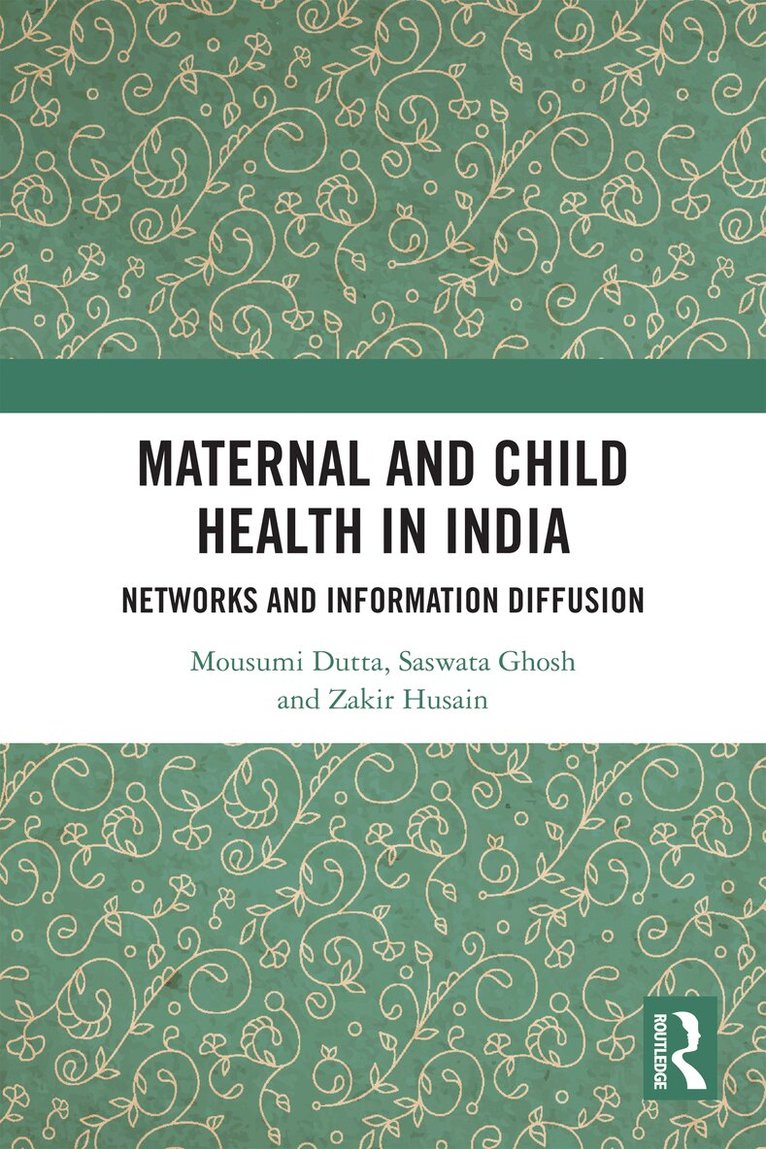
This book examines the process of information diffusion and the challenges of spreading awareness about maternal and child health (MCH) outcomes in India, with a special focus on Bihar – a state in eastern India.
Investing in the health of women and children results in significant and long-lasting economic and social benefits to society. Analysing the National Family Health Survey data, the volume explores the role that access to information has on the adoption of MCH practices. It also explores regional variations – between Empowered Action Group (EAG) states and non-EAG states and also across EAG states – in the impact of information networks. Using appropriate econometric methods, the authors study the role of peer effects and grass-roots health workers in bringing about a change in attitude within communities. The book looks at the process of information dissemination between the grass-roots health workers and the target women and brings to the forefront the intricacies of patriarchal family dynamics that hinder women from accessing basic maternal and child healthcare needs. Based on grass-roots experiences, the book provides sharp insights from the field for the benefit of researchers, policymakers, and activists.
Rich in empirical data, this book will be of interest to academics and researchers of development economics, public health policy and practice, community health, healthcare administration and management, primary healthcare and family practice, and health and social care.
831 kr
Läs direkt efter köp
This book examines the process of information diffusion and the challenges of spreading awareness about maternal and child health (MCH) outcomes in India, with a special focus on Bihar – a state in eastern India.
Investing in the health of women and children results in significant and long-lasting economic and social benefits to society. Analysing the National Family Health Survey data, the volume explores the role that access to information has on the adoption of MCH practices. It also explores regional variations – between Empowered Action Group (EAG) states and non-EAG states and also across EAG states – in the impact of information networks. Using appropriate econometric methods, the authors study the role of peer effects and grass-roots health workers in bringing about a change in attitude within communities. The book looks at the process of information dissemination between the grass-roots health workers and the target women and brings to the forefront the intricacies of patriarchal family dynamics that hinder women from accessing basic maternal and child healthcare needs. Based on grass-roots experiences, the book provides sharp insights from the field for the benefit of researchers, policymakers, and activists.
Rich in empirical data, this book will be of interest to academics and researchers of development economics, public health policy and practice, community health, healthcare administration and management, primary healthcare and family practice, and health and social care.
529 kr
Skickas inom 10-15 vardagar
712 kr
Läs direkt efter köp
561 kr
Skickas inom 10-15 vardagar
734 kr
Läs direkt efter köp
This book analyses the reasons for relying on behavioural contraception methods among urban ‘elites’ in India and examines their efficacy in controlling fertility. It also traces variations in contraception choice over the reproductive cycle of women.
Although researchers and policy makers generally equate reliance on behavioural contraceptive methods with low levels of education and awareness and lack of desire to control fertility, this perception has been questioned in recent years. The authors’ analysis of the first three rounds of the National Family Health Survey (NFHS) data in India reveals that behavioural contraceptive methods are popular in eastern India. Moreover, it is urban educated women who rely on behavioural methods, and are apparently able to regulate fertility quite effectively with such methods. NFHS data, however, has some limitations and this motivates the authors to explore birth control methods through primary surveys of currently married graduate women in Kolkata.
The use of behavioural contraception methods is a little researched area globally and this is the first book focusing on the topic in India.
1 114 kr
Skickas inom 10-15 vardagar
1 428 kr
Läs direkt efter köp
1 114 kr
Skickas inom 10-15 vardagar
1 189 kr
Skickas inom 10-15 vardagar
1 575 kr
Läs direkt efter köp
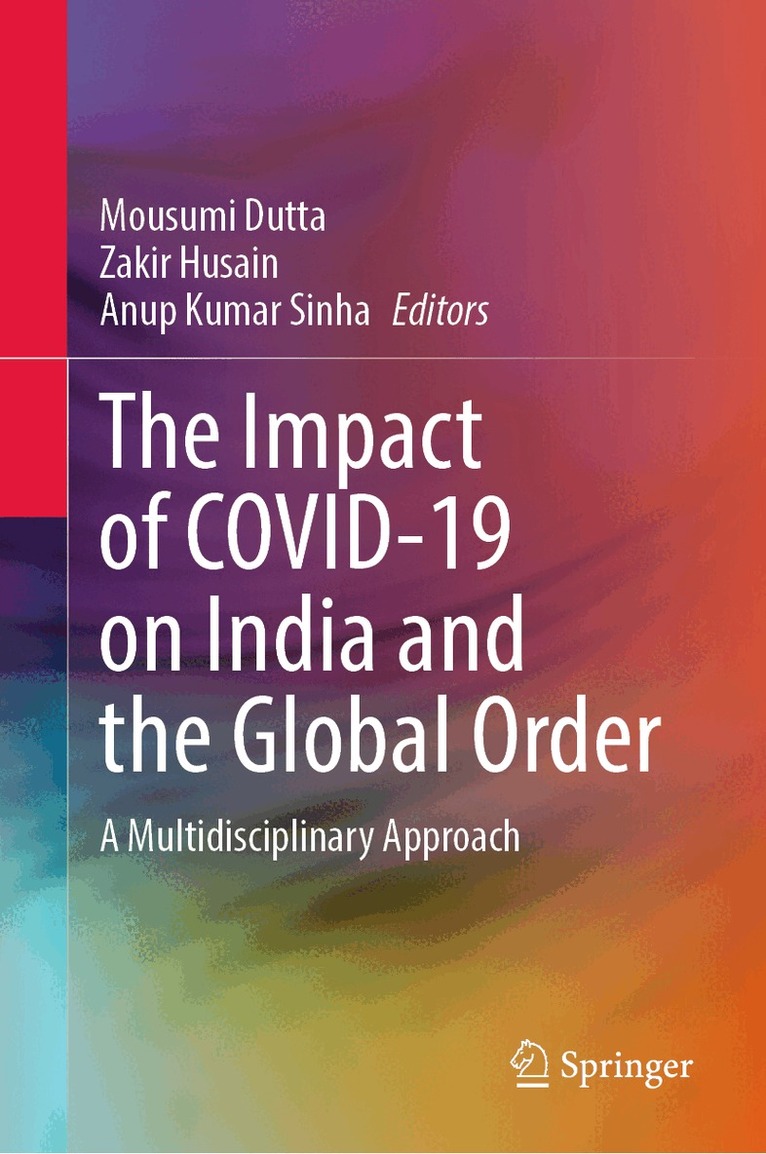
This book provides a multidisciplinary analysis of the many socio-economic challenges posed by COVID-19 pandemic across international boundaries, disrupting the economic system and life styles globally. It starts by setting the historical context of the pandemic and proceeds to describe the impact on the Indian economy, how certain sections of the population have become economically and psychologically vulnerable. International experts from diverse fields—development economics, macroeconomics, corporate finance, history, sociology, psychology, public policy, and urban studies—contribute to this exciting analysis of an Indian and global society at the crossroads. The book examines emerging themes related to global economic revival, intellectual property rights over the vaccine, and rupturing of the global supply chains. It discusses the response of institutions and markets to the global pandemic. It closes with a futuristic look at the new society and global system that may emerge out of the chaos. A valuable resource appealing to a wide readership across the social sciences and the humanities. Readers include undergraduate students, postgraduate students, researchers and academic teachers, and also public policy experts.
1 189 kr
Skickas inom 10-15 vardagar
1 469 kr
Skickas inom 10-15 vardagar
1 845 kr
Läs direkt efter köp
This volume comprehensively analyzes the determinants and consequences of intimate partner violence in India. It examines the contested relationship between empowerment and intimate partner violence—at individual and community levels. It highlights the short and long-term effects of intimate partner violence on the children of victims. The book employs up-to-date quantitative methods and is based on a recently released nationally representative database. The focus is on India, a fast-growing South Asian country with poor gender indicators. It extends the understanding of intimate partner violence to developing countries lacking poor victim support bases. It also addresses SDG5, “eliminate all forms of violence against all women and girls in the public and private spheres, including trafficking and sexual and other types of exploitation.” The book is essential for anyone interested in the data-based analysis of intimate partner violence and activists and policymakers seeking to reduce such violence in India.