Muhsin J. al-Musawi - Böcker
Visar alla böcker från författaren Muhsin J. al-Musawi. Handla med fri frakt och snabb leverans.
9 produkter
9 produkter
542 kr
Skickas inom 10-15 vardagar
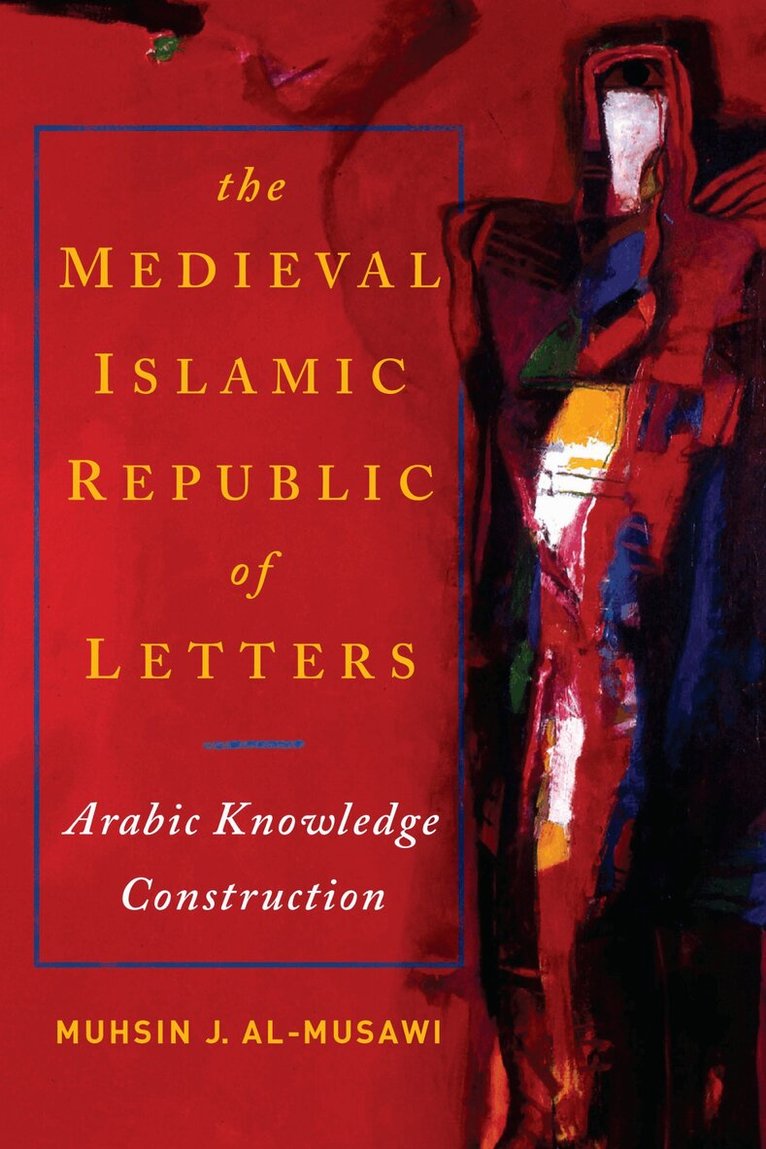
In The Medieval Islamic Republic of Letters: Arabic Knowledge Construction, Muhsin J. al-Musawi offers a groundbreaking study of literary heritage in the medieval and premodern Islamic period. Al-Musawi challenges the paradigm that considers the period from the fall of Baghdad in 1258 to the collapse of the Ottoman Empire in 1919 as an "Age of Decay" followed by an "Awakening" (al-nahdah). His sweeping synthesis debunks this view by carefully documenting a "republic of letters" in the Islamic Near East and South Asia that was vibrant and dynamic, one varying considerably from the generally accepted image of a centuries-long period of intellectual and literary stagnation.Al-Musawi argues that the massive cultural production of the period was not a random enterprise: instead, it arose due to an emerging and growing body of readers across Islamic lands who needed compendiums, lexicons, and commentaries to engage with scholars and writers. Scholars, too, developed their own networks to respond to each other and to their readers. Rather than addressing only the elite, this culture industry supported a common readership that enlarged the creative space and audience for prose and poetry in standard and colloquial Arabic. Works by craftsmen, artisans, and women appeared side by side with those by distinguished scholars and poets.Through careful exploration of these networks, The Medieval Islamic Republic of Letters makes use of relevant theoretical frameworks to situate this culture in the ongoing discussion of non-Islamic and European efforts. Thorough, theoretically rigorous, and nuanced, al-Musawi's book is an original contribution to a range of fields in Arabic and Islamic cultural history of the twelfth to eighteenth centuries.
801 kr
Skickas inom 10-15 vardagar
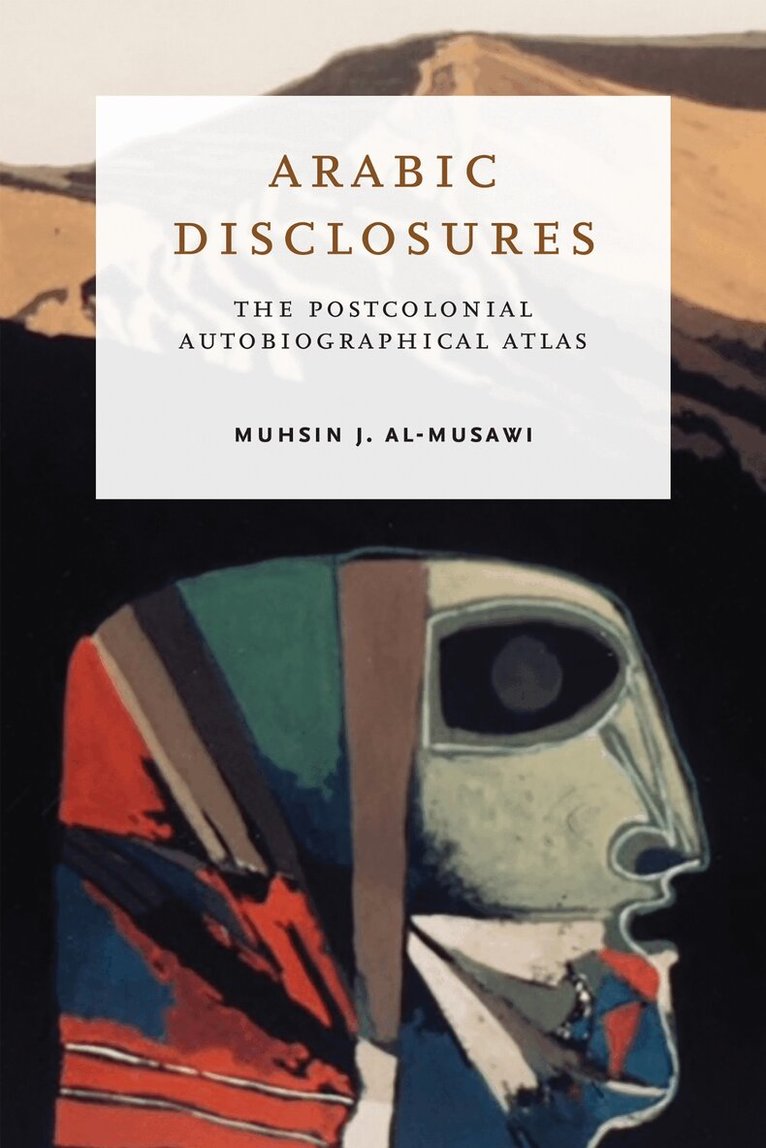
Arabic Disclosures presents readers with a comparative analysis of Arabic postcolonial autobiographical writing.In Arabic Disclosures Muhsin J. al-Musawi investigates the genre of autobiography within the modern tradition of Arabic literary writing from the early 1920s to the present. Al-Musawi notes in the introduction that the purpose of this work is not to survey the entirety of autobiographical writing in modern Arabic but rather to apply a rigorously identified set of characteristics and approaches culled from a variety of theoretical studies of the genre to a particular set of autobiographical works in Arabic, selected for their different methodologies, varying historical contexts within which they were conceived and written, and the equally varied lives experienced by the authors involved.The book begins in the larger context of autobiographical space, where the theories of Bourdieu, Bachelard, Bakhtin, and Lefebvre are laid out, and then considers the multiple ways in which a postcolonial awareness of space has impacted the writings of many of the authors whose works are examined. Organized chronologically, al-Musawi begins with the earliest modern example of autobiographical work in Ṭāhā Ḥusayn's book, translated into English as The Stream of Days. Al-Musawi studies some of the major pioneers in the development of modern Arabic thought and literary expression: Jurjī Zaydān, Mīkḫāˀīl Nuˁaymah, Aḥmad Amīn, Salāmah Mūsā, Sayyid Quṭb, and untranslated works by the prominent critic and scholar Ḥammādī Ṣammūd, the novelist ʿĀliah Mamdūḥ, and others. He also examines the autobiographies of a number of women, including Nawāl al-Saʿdāwī and Fadwā Ṭūqān, and fiction writers. The book draws a map of Arab thought and culture in its multiple engagements with other cultures and will be useful for scholars and students of comparative literature, Arabic studies, and Middle Eastern studies, intellectual thought, and history.
1 838 kr
Skickas inom 10-15 vardagar
In The Medieval Islamic Republic of Letters: Arabic Knowledge Construction, Muhsin J. al-Musawi offers a groundbreaking study of literary heritage in the medieval and premodern Islamic period. Al-Musawi challenges the paradigm that considers the period from the fall of Baghdad in 1258 to the collapse of the Ottoman Empire in 1919 as an "Age of Decay" followed by an "Awakening" (al-nahdah). His sweeping synthesis debunks this view by carefully documenting a "republic of letters" in the Islamic Near East and South Asia that was vibrant and dynamic, one varying considerably from the generally accepted image of a centuries-long period of intellectual and literary stagnation.Al-Musawi argues that the massive cultural production of the period was not a random enterprise: instead, it arose due to an emerging and growing body of readers across Islamic lands who needed compendiums, lexicons, and commentaries to engage with scholars and writers. Scholars, too, developed their own networks to respond to each other and to their readers. Rather than addressing only the elite, this culture industry supported a common readership that enlarged the creative space and audience for prose and poetry in standard and colloquial Arabic. Works by craftsmen, artisans, and women appeared side by side with those by distinguished scholars and poets.Through careful exploration of these networks, The Medieval Islamic Republic of Letters makes use of relevant theoretical frameworks to situate this culture in the ongoing discussion of non-Islamic and European efforts. Thorough, theoretically rigorous, and nuanced, al-Musawi's book is an original contribution to a range of fields in Arabic and Islamic cultural history of the twelfth to eighteenth centuries.
767 kr
Skickas inom 10-15 vardagar
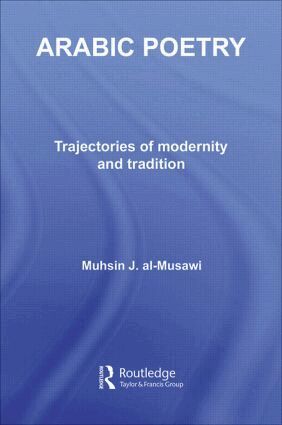
Since the late 1940s, Arabic poetry has spoken for an Arab conscience, as much as it has debated positions and ideologies, nationally and worldwide. This book tackles issues of modernity and tradition in Arabic poetry as manifested in poetic texts and criticism by poets as participants in transformation and change. It studies the poetic in its complexity, relating to issues of selfhood, individuality, community, religion, ideology, nation, class and gender.Al-Musawi also explores in context issues that have been cursorily noticed or neglected, like Shi’i poetics, Sufism, women’s poetry, and expressions of exilic consciousness. Arabic Poetry employs current literary theory and provides comprehensive coverage of modern and post-modern poetry from the 1950s onwards, making it essential reading for those with interests in Arabic culture and literature and Middle East studies.
2 488 kr
Skickas inom 10-15 vardagar
Since the late 1940s, Arabic poetry has spoken for an Arab conscience, as much as it has debated positions and ideologies, nationally and worldwide. This book tackles issues of modernity and tradition in Arabic poetry as manifested in poetic texts and criticism by poets as participants in transformation and change. It studies the poetic in its complexity, relating to issues of selfhood, individuality, community, religion, ideology, nation, class and gender.Al-Musawi also explores in context issues that have been cursorily noticed or neglected, like Shi’i poetics, Sufism, women’s poetry, and expressions of exilic consciousness. Arabic Poetry employs current literary theory and provides comprehensive coverage of modern and post-modern poetry from the 1950s onwards, making it essential reading for those with interests in Arabic culture and literature and Middle East studies.
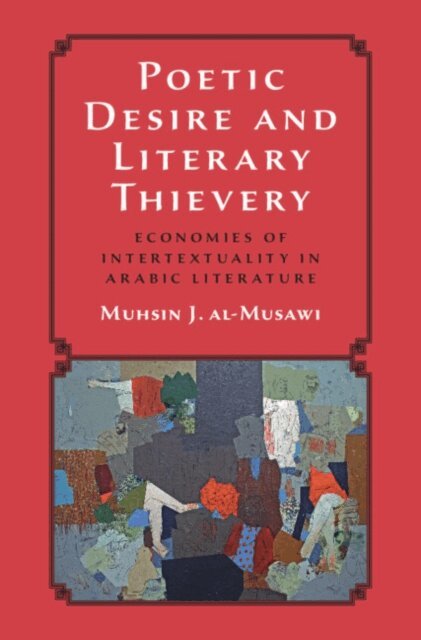
Poetic Desire and Literary Thievery
Economies of Intertextuality in Arabic Literature
Häftad, Engelska, 2026
413 kr
Skickas inom 7-10 vardagar
How do we define plagiarism in literature? In this wide-ranging and innovative study, Muhsin J. al-Musawi examines debates surrounding literary authenticity across Arabic and Islamic culture over seven centuries. Al-Musawi argues that intertextual borrowing was driven by personal desire alongside the competitive economy of the Abbasid Islamic Empire. Here, accusations of plagiarism had wide-ranging consequences, as competition among poets and writers grew fierce, while philologists and critics served as public arbiters over controversies of alleged poetic thefts. Taking in an extensive remit of Arabic sources, from Persian writers to the poets of Andalusia and Morocco, al-Musawi extends his argument all the way to Ibrāhīm ᶜAbd al-Qādir al-Māzinī's writing in Egypt and the Iraqi poet Nāzik al-Malā՚ikah's work in the twentieth century to present 'theft' as a necessary condition of creative production in Arabic literature. As a result, this study sheds light on a vast yet understudied aspect of the Arabic literary tradition, while raising important questions surrounding the rising challenge of artificial intelligence in matters of academic integrity.
Poetic Desire and Literary Thievery
Economies of Intertextuality in Arabic Literature
Inbunden, Engelska, 2026
1 371 kr
Skickas inom 7-10 vardagar
How do we define plagiarism in literature? In this wide-ranging and innovative study, Muhsin J. al-Musawi examines debates surrounding literary authenticity across Arabic and Islamic culture over seven centuries. Al-Musawi argues that intertextual borrowing was driven by personal desire alongside the competitive economy of the Abbasid Islamic Empire. Here, accusations of plagiarism had wide-ranging consequences, as competition among poets and writers grew fierce, while philologists and critics served as public arbiters over controversies of alleged poetic thefts. Taking in an extensive remit of Arabic sources, from Persian writers to the poets of Andalusia and Morocco, al-Musawi extends his argument all the way to Ibrāhīm ᶜAbd al-Qādir al-Māzinī's writing in Egypt and the Iraqi poet Nāzik al-Malā՚ikah's work in the twentieth century to present 'theft' as a necessary condition of creative production in Arabic literature. As a result, this study sheds light on a vast yet understudied aspect of the Arabic literary tradition, while raising important questions surrounding the rising challenge of artificial intelligence in matters of academic integrity.
The Arabian Nights in Contemporary World Cultures
Global Commodification, Translation, and the Culture Industry
Häftad, Engelska, 2023
356 kr
Skickas inom 7-10 vardagar
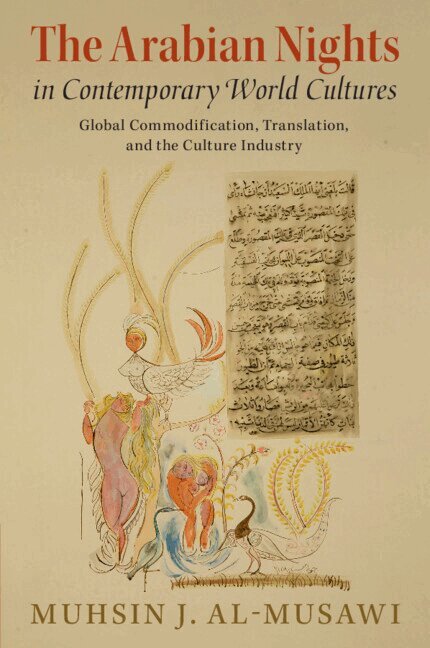
The stories in the Thousand and One Nights, or the Arabian Nights, are familiar to many of us: from the tales of Aladdin, Sinbad the Sailor, Ali Baba and his forty thieves, to the framing story of Scheherazade telling these stories to her homicidal husband, Shahrayar. This book offers a rich and wide-ranging analysis of the power of this collection of tales that penetrates so many cultures and appeals to such a variety of predilections and tastes. It also explores areas that were left untouched, like the decolonization of the Arabian Nights, and its archaeologies. Unique in its excavation into inroads of perception and reception, Muhsin J. al-Musawi's book unearths means of connection with common publics and learned societies. Al-Musawi shows, as never before, how the Arabian Nights has been translated, appropriated, and authenticated or abused over time, and how its reach is so expansive as to draw the attention of poets, painters, illustrators, translators, editors, musicians, political scientists like Leo Strauss, and novelists like Michel Butor, James Joyce and Marcel Proust amongst others. Making use of documentaries, films, paintings, novels and novellas, poetry, digital forums and political jargon, this book offers nuanced understanding of the perennial charm and power of this collection.
The Arabian Nights in Contemporary World Cultures
Global Commodification, Translation, and the Culture Industry
Inbunden, Engelska, 2021
529 kr
Skickas inom 7-10 vardagar
The stories in the Thousand and One Nights, or the Arabian Nights, are familiar to many of us: from the tales of Aladdin, Sinbad the Sailor, Ali Baba and his forty thieves, to the framing story of Scheherazade telling these stories to her homicidal husband, Shahrayar. This book offers a rich and wide-ranging analysis of the power of this collection of tales that penetrates so many cultures and appeals to such a variety of predilections and tastes. It also explores areas that were left untouched, like the decolonization of the Arabian Nights, and its archaeologies. Unique in its excavation into inroads of perception and reception, Muhsin J. al-Musawi's book unearths means of connection with common publics and learned societies. Al-Musawi shows, as never before, how the Arabian Nights has been translated, appropriated, and authenticated or abused over time, and how its reach is so expansive as to draw the attention of poets, painters, illustrators, translators, editors, musicians, political scientists like Leo Strauss, and novelists like Michel Butor, James Joyce and Marcel Proust amongst others. Making use of documentaries, films, paintings, novels and novellas, poetry, digital forums and political jargon, this book offers nuanced understanding of the perennial charm and power of this collection.