Murray Edelman – författare
Visar alla böcker från författaren Murray Edelman. Handla med fri frakt och snabb leverans.
7 produkter
7 produkter
Häftad, Engelska, 1988
222 kr
Skickas inom 5-8 vardagar
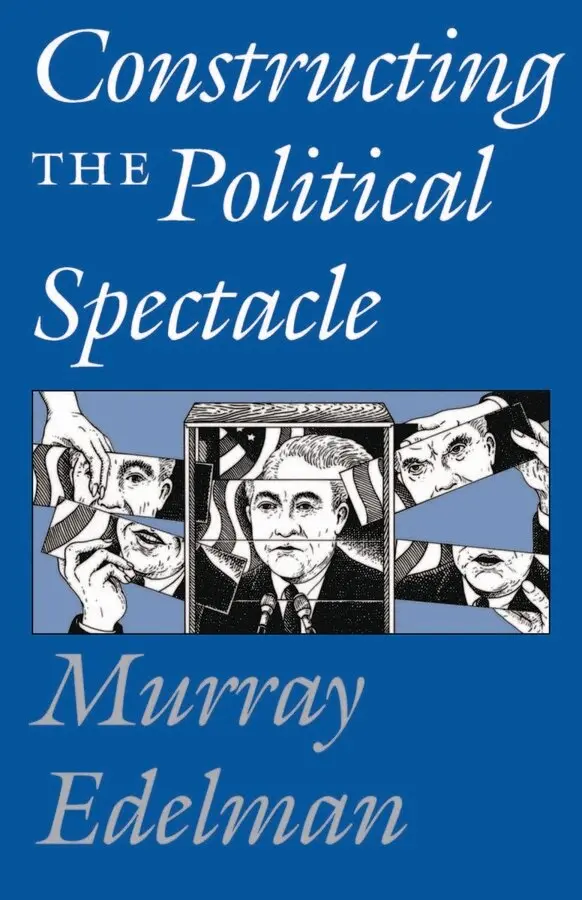
Thanks to the ready availability of political news today, informed citizens can protect and promote their own interests and the public interest more effectively. Or can they? Murray Edelman argues against this conventional interpretation of politics, one that takes for granted that we live in a world of facts and that people react rationally to the facts they know. In doing so, he explores in detail the ways in which the conspicuous aspects of the political scene are interpretations that systematically buttress established inequalities and interpretations already dominant political ideologies.
Häftad, Engelska, 1996
246 kr
Skickas inom 5-8 vardagar
In this book, Murray Edelman continues his quest to understand the influence of perception on the political process by turning to the role of art. He argues that political ideas, language, and actions cannot help but be based upon the images and narratives we take from literature, paintings, film, television, and other genres. Edelman believes art provides us with models, scenarios, narratives, and images we draw upon in order to make sense of political events, and he explores the different ways art can shape political perceptions and actions to both promote and inhibit diversity and democracy.
Häftad, Engelska, 1985
293 kr
Skickas inom 5-8 vardagar
The symbolic manifestations, purposes, and uses of politics are revealed in this provocative analysis of the institution of politics and man as a political animal. Unlike the conventional study of politics that deals with how people get the things they want through government, this book concentrates on how politics influence what they want, what they fear, and what they regard as possible. In examining politics as a symbolic form, it looks at man and politics as reflections of each other.
Inbunden, Engelska, 2001
604 kr
Skickas inom 7-10 vardagar
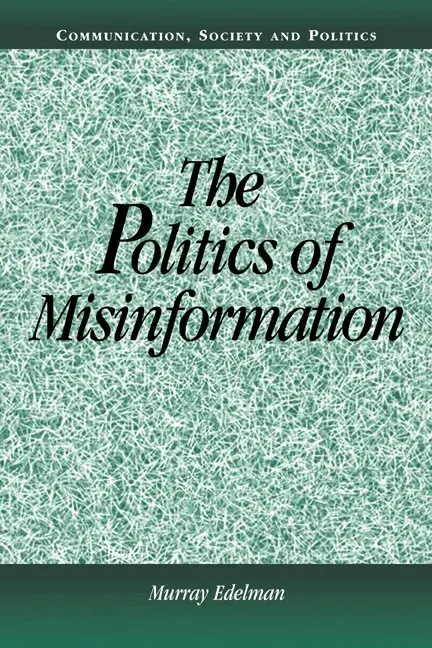
The Politics of Misinformation is an examination of how concentrations of social and economic power result in public languages of politics that are necessarily image-based, vague, and misleading in their denial of undemocratic tendencies. As a result, public discourses of democracy tend to be populistic, emotional, and likely to emphasize images of progress rather than structural inequalities in their formulations of public problems. Similarly, discourses of policy solutions to public problems emphasize assumptions about rationality in policy processes that are equally poor descriptions of most political outcomes. In short, neither typical problem definitions nor solutions invite critical popular understanding or involvement in democratic politics.
Häftad, Engelska, 2001
290 kr
Skickas inom 7-10 vardagar
The Politics of Misinformation is an examination of how concentrations of social and economic power result in public languages of politics that are necessarily image-based, vague, and misleading in their denial of undemocratic tendencies. As a result, public discourses of democracy tend to be populistic, emotional, and likely to emphasize images of progress rather than structural inequalities in their formulations of public problems. Similarly, discourses of policy solutions to public problems emphasize assumptions about rationality in policy processes that are equally poor descriptions of most political outcomes. In short, neither typical problem definitions nor solutions invite critical popular understanding or involvement in democratic politics.
E-bok
PDF, Engelska, 2013344 kr
Läs direkt efter köp
Political Language: Words That Succeed and Policies That Fail deals with chronic inequalities of a smaller portion of the population getting more. The book discusses the persistence of poverty and greater inequalities in a democratic society such as the United States. The text reviews the chronic problems and the various beliefs found in American society, and also notes the general acceptance of the large differences in the quality of life of the people, which includes political power and autonomy. The book then defines perception of the political spectator and explains the linguistic generation of assumptions (taking for granted), linguistic reconstruction of facts (cover-ups), and the linguistic segmentation of politics (distinct from ordinary world). The text then emphasizes the language of inquiry, of authority, of participation, and of resistance as leading to free inquiry and experimentation or political loyalty. The selection can prove beneficial for political students, economists, educators, sociologists, and members of ministerial affairs related to population and economics.
E-bok
PDF, Engelska, 2013356 kr
Läs direkt efter köp
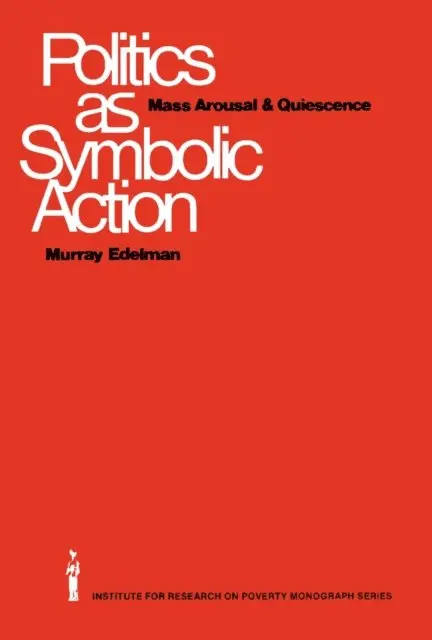
Politics as Symbolic Action: Mass Arousal and Quiescence deals with the dynamics of development of political threats related to political behavior. The book discusses the conditions under which the dynamics related to political behavior are the prior causes of political arousal, violence, and quiescence. The text examines the influence of governmental activity on people''s beliefs and perceptions—how non-empirical cognitions become the resistant basis of change. The text also examines how the individual phenomenon and the group phenomenon become linked through symbol formation and myths. The book discusses emotion as a catalyst of political ritual and political violence as inferred from Theodore Sarbin''s role theory. The use of metaphors, language forms, and mass tensions can all be social-psychological and political processes that can lead to political arousal or quiescence. The book also explains major violent disturbances as having patterns reflective of organization, disorganization, or by leadership example; the book notes the popular notion that the organization or the leader''s direction starts or worsens the violence as very simplistic. The book then proposes that political perceptions and beliefs are changeable and that phenomenological perceptions of specific groups of people can identify which political behavior are systematic. The text is suitable for political analysts, political scientists, sociologists, and educators involved in group psychology and analyses.