Mushtaque Ahmed - Böcker
Visar alla böcker från författaren Mushtaque Ahmed. Handla med fri frakt och snabb leverans.
4 produkter
4 produkter
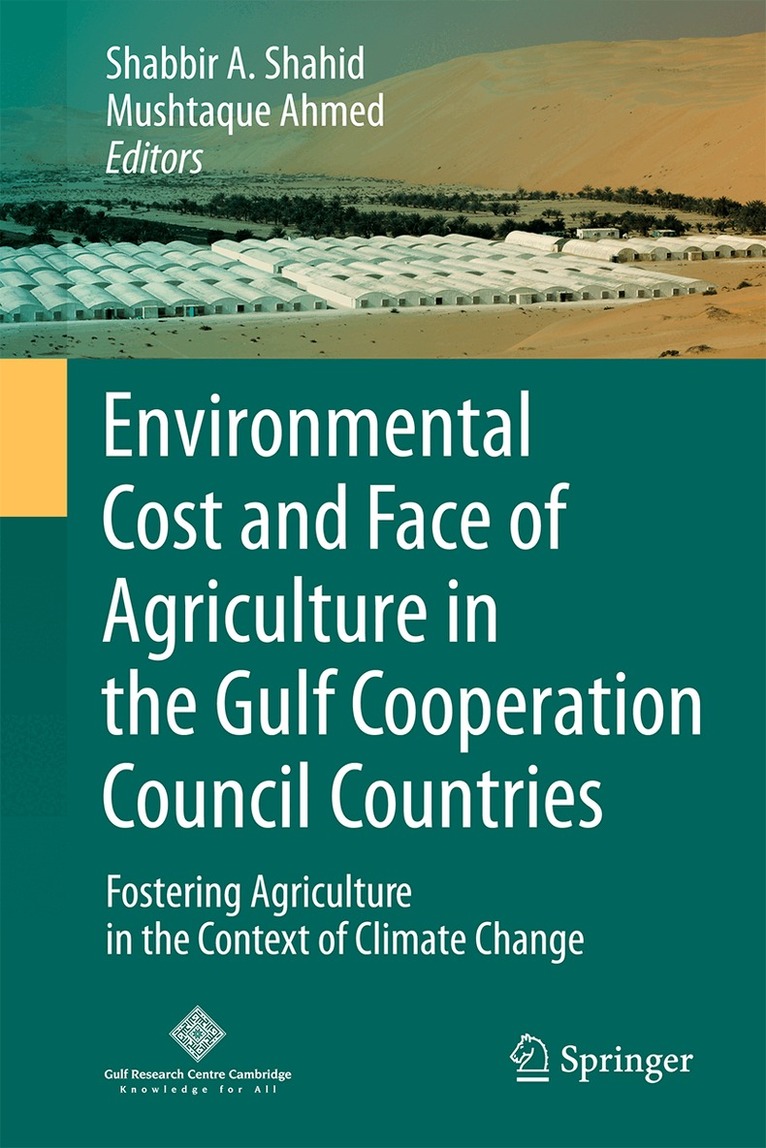
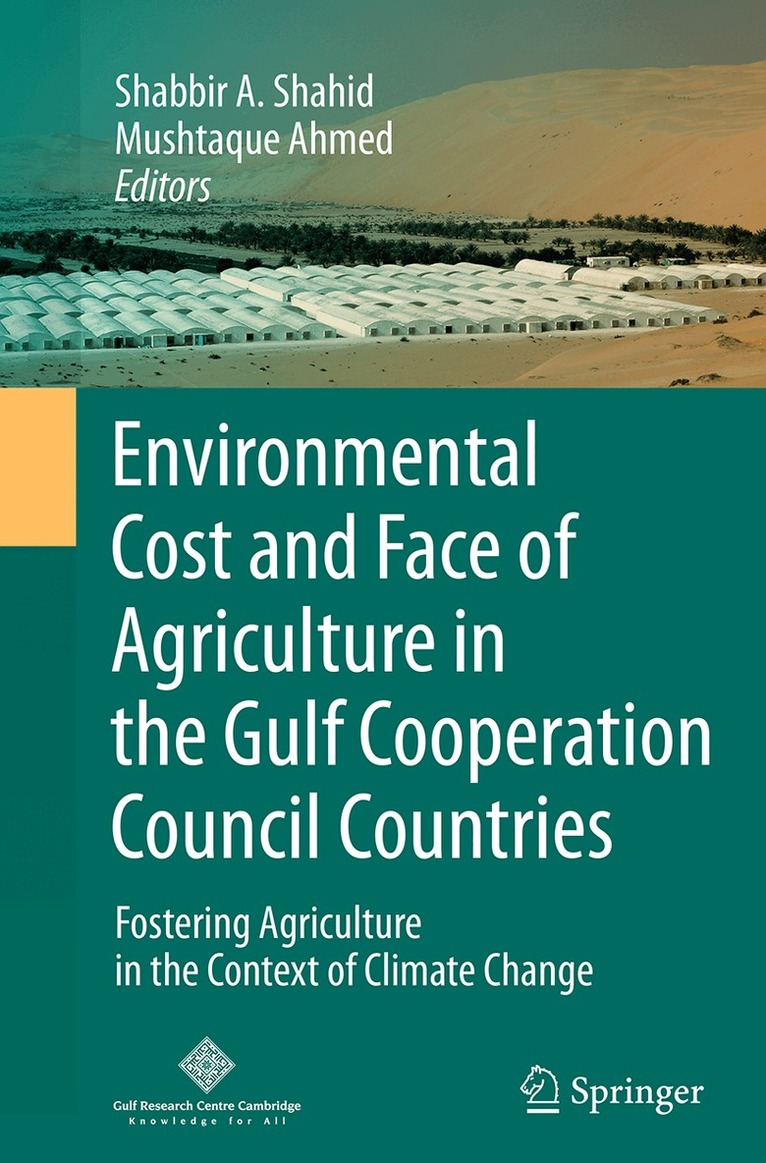
Environmental Cost and Face of Agriculture in the Gulf Cooperation Council Countries
Fostering Agriculture in the Context of Climate Change
Inbunden, Engelska, 2014
1 578 kr
Skickas inom 10-15 vardagar
This volume presents the outcome of an Agriculture Workshop organized by the Gulf Research Centre Cambridge (GRCC) and held at Cambridge University, UK during the Gulf Research Meeting 11-14 July 2012. Co-directed by the editors, the workshop, entitled “Environmental Cost and Changing Face of Agriculture in the Gulf States” was attended by participants from Australia, Bahrain, India, Kuwait, Oman, Saudi Arabia, Turkey, UAE, UK and Morocco. These scientists, educators, researchers, policy makers and managers share their experience in agriculture in the Gulf States, with the aim of helping to improve agriculture production and thus bridge the gap between local production and the food import.The papers gathered here were presented at the workshop and have all passed through rigorous peer review by renowned scientists. The diverse papers present various aspects of agriculture production in the evolving face of climate change and dwindling water resources in the region. The book covers topics such as the prospects of agriculture in a changing climate; the potential of climate-smart agriculture; the impact of food prices, income and income distribution on food security; improved efficiency in water use; challenges in using treated wastewater in agriculture; investment in foreign agriculture and agricultural research and development. The papers span the nations of the Gulf Cooperation Council, with specific case studies set in Oman, Bahrain and Kuwait.
1 064 kr
Skickas inom 10-15 vardagar
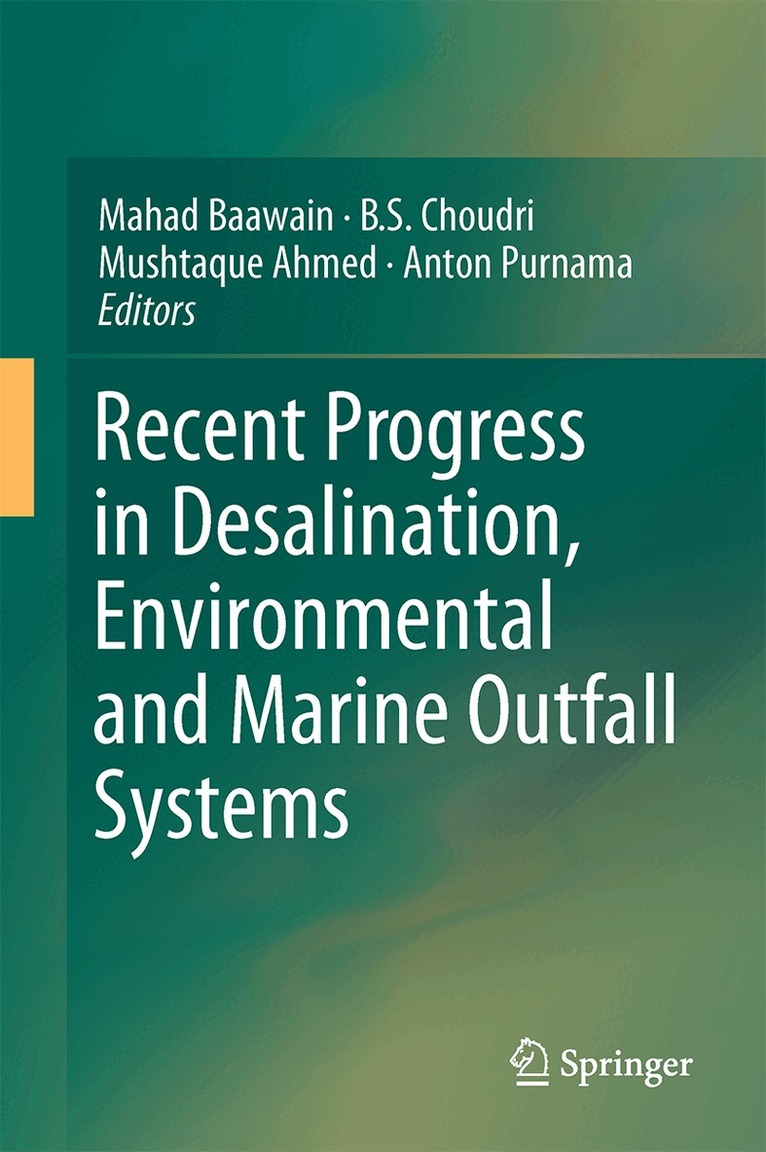
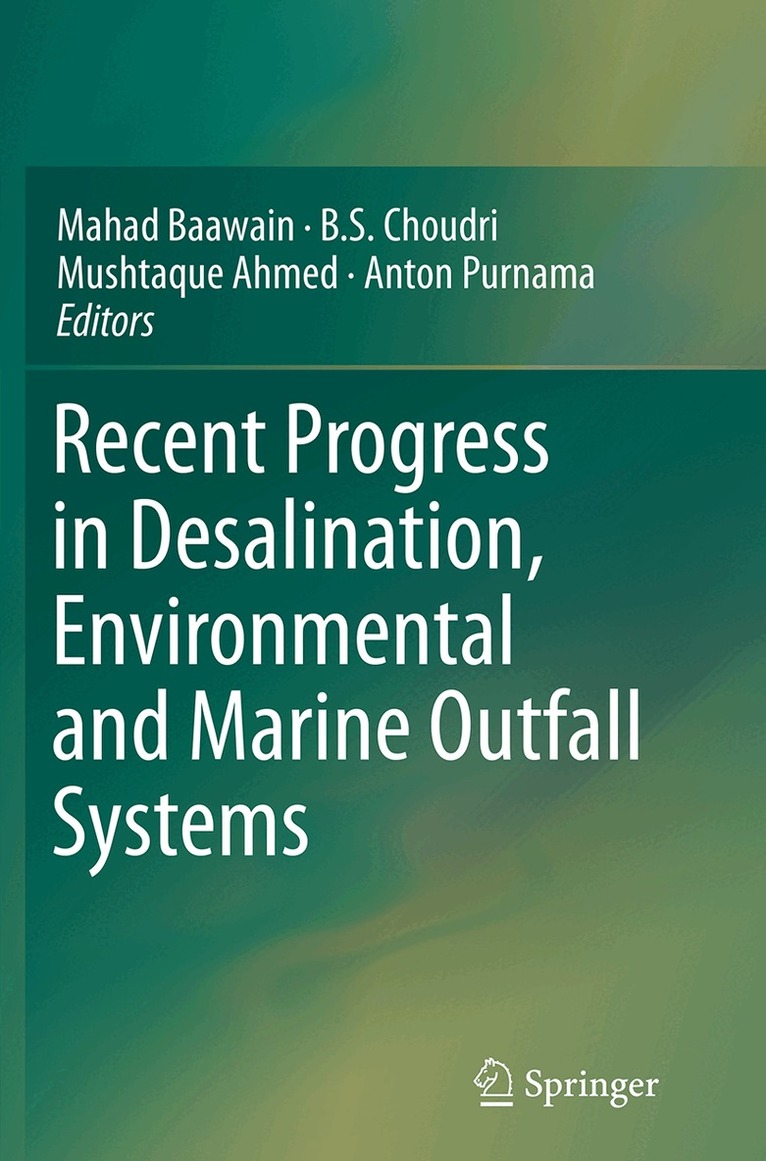
This book collects current scientific information on advanced technologies and management practices associated with the desalination industry in the Middle East and elsewhere around the world. The book opens with introductory chapter which briefly recounts the history of desalination, and describes the current state of development in the field.Part I: Desalination Systems includes ten chapters which describe a variety of techniques and designs intended not only to minimize the impact of desalination, but also to save energy and use natural resources to maximize the output of integrated desalination systems. Among the highlights are a chapter on the use of ceramic membrane technology for sustainable oil water production; a case study on the use of solar heating systems in desalination technology in Oman; discussion of fouling and its effect on design and performance of desalination systems; a review of shore approaches and sea-lines with case studies from Australia and Germany; and a discussion of the integration of desalination technology with renewable energy for climate change abatement in the Middle East and North Africa region.Part II: Environmental Systems includes among others a chapter on regulating the use of water resources and desalination technology on a regional scale reducing the carbon footprint of desalination, with examples from Australia; a description of desalination for irrigation in the Souss Massa region in the south of Morocco; a study of the impact of the coastal intake environment on operating conditions of thermal desalination plants in the United Arab Emirates; a discussion of hydrodynamic and thermal dispersion modeling of the effluent in a coastal channel, with a case study from Oman; and a mathematical model study of effluent disposal from a desalination plant in the marine environment at Tuticorin in India.The book aims to inspire developments in desalination technologies which are specifically aimed atreducing energy consumption and cost, and minimizing environmental impact.
1 064 kr
Skickas inom 10-15 vardagar
This book collects current scientific information on advanced technologies and management practices associated with the desalination industry in the Middle East and elsewhere around the world. The book opens with introductory chapter which briefly recounts the history of desalination, and describes the current state of development in the field.Part I: Desalination Systems includes ten chapters which describe a variety of techniques and designs intended not only to minimize the impact of desalination, but also to save energy and use natural resources to maximize the output of integrated desalination systems. Among the highlights are a chapter on the use of ceramic membrane technology for sustainable oil water production; a case study on the use of solar heating systems in desalination technology in Oman; discussion of fouling and its effect on design and performance of desalination systems; a review of shore approaches and sea-lines with case studies from Australia and Germany; and a discussion of the integration of desalination technology with renewable energy for climate change abatement in the Middle East and North Africa region.Part II: Environmental Systems includes among others a chapter on regulating the use of water resources and desalination technology on a regional scale reducing the carbon footprint of desalination, with examples from Australia; a description of desalination for irrigation in the Souss Massa region in the south of Morocco; a study of the impact of the coastal intake environment on operating conditions of thermal desalination plants in the United Arab Emirates; a discussion of hydrodynamic and thermal dispersion modeling of the effluent in a coastal channel, with a case study from Oman; and a mathematical model study of effluent disposal from a desalination plant in the marine environment at Tuticorin in India.The book aims to inspire developments in desalination technologies which are specifically aimed atreducing energy consumption and cost, and minimizing environmental impact.
Environmental Cost and Face of Agriculture in the Gulf Cooperation Council Countries
Fostering Agriculture in the Context of Climate Change
Häftad, Engelska, 2016
1 170 kr
Skickas inom 10-15 vardagar
This volume presents the outcome of an Agriculture Workshop organized by the Gulf Research Centre Cambridge (GRCC) and held at Cambridge University, UK during the Gulf Research Meeting 11-14 July 2012. Co-directed by the editors, the workshop, entitled “Environmental Cost and Changing Face of Agriculture in the Gulf States” was attended by participants from Australia, Bahrain, India, Kuwait, Oman, Saudi Arabia, Turkey, UAE, UK and Morocco. These scientists, educators, researchers, policy makers and managers share their experience in agriculture in the Gulf States, with the aim of helping to improve agriculture production and thus bridge the gap between local production and the food import.The papers gathered here were presented at the workshop and have all passed through rigorous peer review by renowned scientists. The diverse papers present various aspects of agriculture production in the evolving face of climate change and dwindling water resources in the region. The book covers topics such as the prospects of agriculture in a changing climate; the potential of climate-smart agriculture; the impact of food prices, income and income distribution on food security; improved efficiency in water use; challenges in using treated wastewater in agriculture; investment in foreign agriculture and agricultural research and development. The papers span the nations of the Gulf Cooperation Council, with specific case studies set in Oman, Bahrain and Kuwait.