Mustafa Mahamid – författare
1 798 kr
Skickas inom 3-6 vardagar
Publisher's Note: Products purchased from Third Party sellers are not guaranteed by the publisher for quality, authenticity, or access to any online entitlements included with the product.
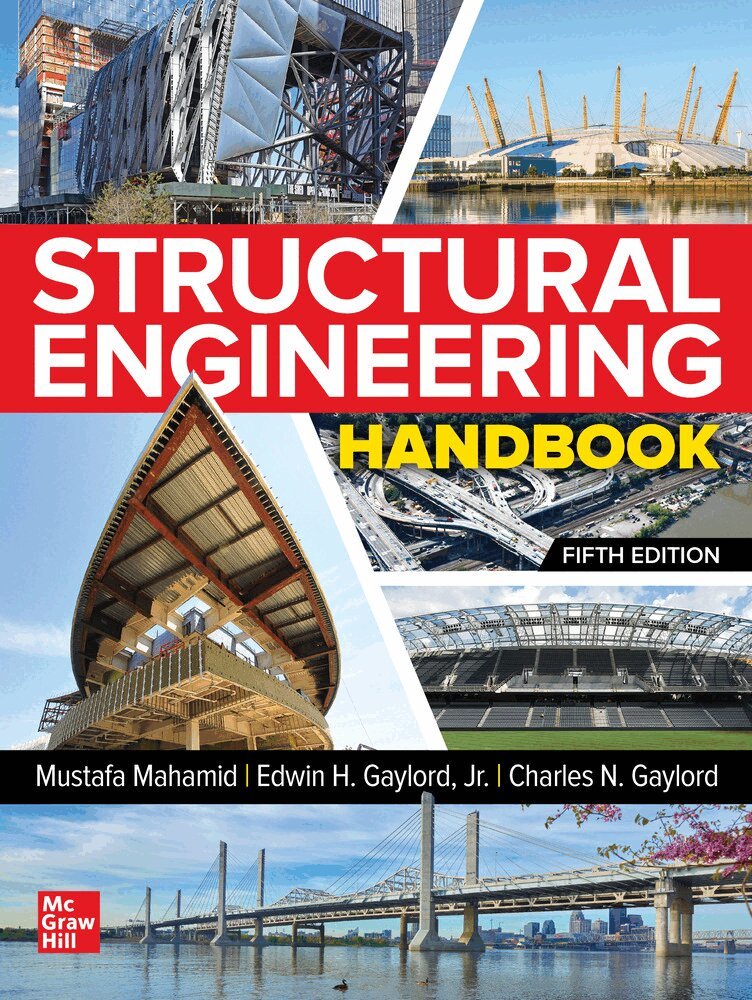
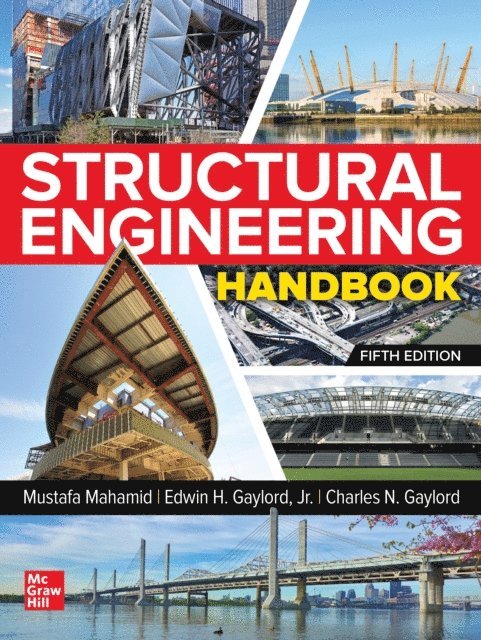
The industry-standard guide to structural engineering—fully updated for the latest advances and regulations
For 50 years, this internationally renowned handbook has been the go-to reference for structural engineering specifications, codes, technologies, and procedures. Featuring contributions from a variety of experts, the book has been revised to align with the codes that govern structural design and materials, including IBC, ASCE 7, ASCE 37, ACI, AISC, AASHTO, NDS, and TMS. Concise, practical, and user-friendly, this one-of-a-kind resource contains real-world examples and detailed descriptions of today’s design methods.
Structural Engineering Handbook, Fifth Edition, covers:
• Computer applications in structural engineering• Earthquake engineering• Fatigue, brittle fracture, and lamellar tearing• Soil mechanics and foundations• Design of steel structural and composite members• Plastic design of steel frames• Design of cold-formed steel structural members• Design of aluminum structural members• Design of reinforced- and prestressed-concrete structural members• Masonry construction and timber structures• Arches and rigid frames• Bridges and girder boxes• Building design and considerations• Industrial and tall buildings• Thin-shell concrete structures• Special structures and nonbuilding structures2 134 kr
Läs direkt efter köp
Publisher''s Note: Products purchased from Third Party sellers are not guaranteed by the publisher for quality, authenticity, or access to any online entitlements included with the product.
The industry-standard guide to structural engineering—fully updated for the latest advances and regulations
For 50 years, this internationally renowned handbook has been the go-to reference for structural engineering specifications, codes, technologies, and procedures. Featuring contributions from a variety of experts, the book has been revised to align with the codes that govern structural design and materials, including IBC, ASCE 7, ASCE 37, ACI, AISC, AASHTO, NDS, and TMS. Concise, practical, and user-friendly, this one-of-a-kind resource contains real-world examples and detailed descriptions of today’s design methods.
Structural Engineering Handbook, Fifth Edition, covers:
• Computer applications in structural engineering• Earthquake engineering• Fatigue, brittle fracture, and lamellar tearing• Soil mechanics and foundations• Design of steel structural and composite members• Plastic design of steel frames• Design of cold-formed steel structural members• Design of aluminum structural members• Design of reinforced- and prestressed-concrete structural members• Masonry construction and timber structures• Arches and rigid frames• Bridges and girder boxes• Building design and considerations• Industrial and tall buildings• Thin-shell concrete structures• Special structures and nonbuilding structures1 316 kr
Skickas
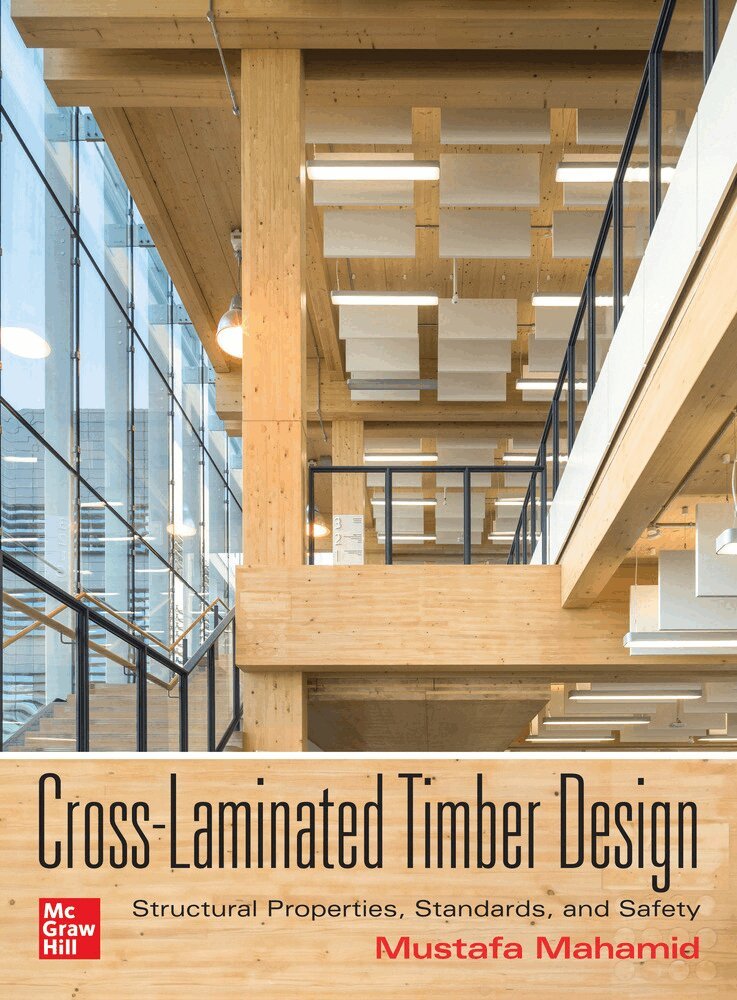
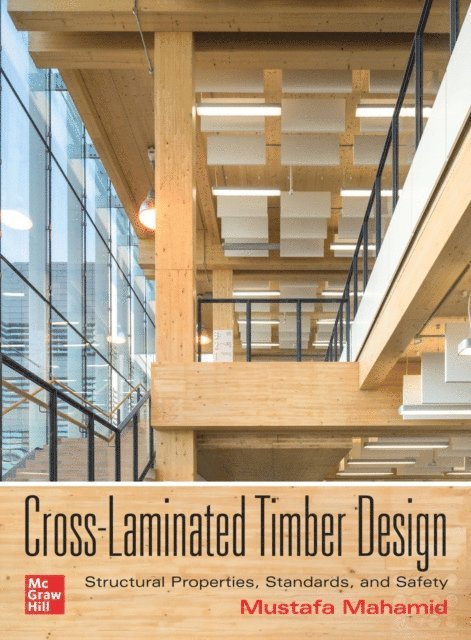
Publisher's Note: Products purchased from Third Party sellers are not guaranteed by the publisher for quality, authenticity, or access to any online entitlements included with the product.Master the practice of designing structures with cross-laminated timber
This comprehensive guide explains the design standards, safety protocols, and codes and regulations engineers need to know to use cross-laminated timber as a structural building material. Featuring contributions from experts in the field, Cross-Laminated Timber Design: Structural Properties, Standards, and Safety introduces the material properties of CLT and goes on to cover the recommended lateral and vertical design techniques. You will get clear explanations of all relevant NDS, ASCE 7, and IBC provisions along with real-world examples and case studies. Sustainability and environmental issues are discussed in full detail.
Coverage includes:
• An introduction to cross-laminated timber• Product standards for cross-laminated timber• Structural design—gravity• Structural design—lateral• Structural connections• Building envelope design with cross-laminated timber• Acoustics for CLT projects• Fire for CLT projects• Environmental aspects of CLT as a construction material• Sustainability of cross-laminated timber1 414 kr
Läs direkt efter köp
Publisher''s Note: Products purchased from Third Party sellers are not guaranteed by the publisher for quality, authenticity, or access to any online entitlements included with the product.Master the practice of designing structures with cross-laminated timber
This comprehensive guide explains the design standards, safety protocols, and codes and regulations engineers need to know to use cross-laminated timber as a structural building material. Featuring contributions from experts in the field, Cross-Laminated Timber Design: Structural Properties, Standards, and Safety introduces the material properties of CLT and goes on to cover the recommended lateral and vertical design techniques. You will get clear explanations of all relevant NDS, ASCE 7, and IBC provisions along with real-world examples and case studies. Sustainability and environmental issues are discussed in full detail.
Coverage includes:
• An introduction to cross-laminated timber• Product standards for cross-laminated timber• Structural design—gravity• Structural design—lateral• Structural connections• Building envelope design with cross-laminated timber• Acoustics for CLT projects• Fire for CLT projects• Environmental aspects of CLT as a construction material• Sustainability of cross-laminated timber1 161 kr
Skickas inom 3-6 vardagar
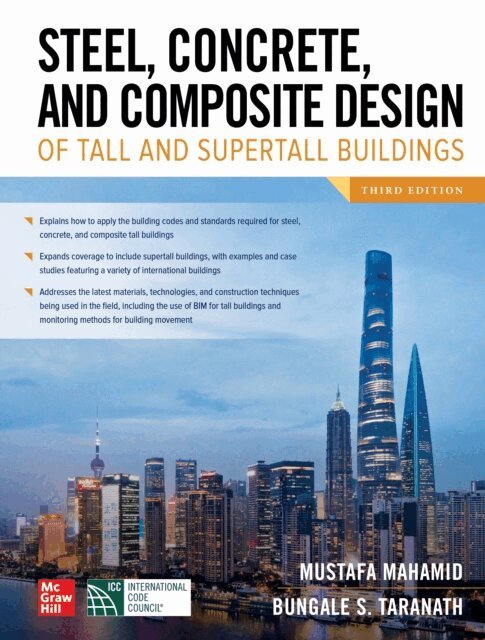
An essential guide to designing tall and super tall buildings―thoroughly revised for the latest standards and advances
This fully updated guide clearly explains the structural systems, codes, and calculations used in the design and construction of tall and supertall buildings. This new edition has been reconceived to provide more practical and applied information to help you understand the design procedures and code provisions involved. The book discusses the latest versions of relevant codes and standards, including the 2018 IBC, ASCE 7-16, ACI 318, and AISC 360 & 341. Readers will learn how to correctly apply these building codes and standards.
Steel, Concrete, and Composite Design of Tall and Supertall Buildings, Third Edition addresses the latest materials, technologies, and construction techniques being used in the field, including the use of BIM for tall buildings and monitoring methods for building movement. Brand-new case studies in this edition encompass a variety of tall and supertall buildings from North America, Asia, and Europe that illustrate real-world applications.
Chapters cover:
Wind EffectsSeismic effectsLateral Systems for Steel BuildingsLateral Systems for Concrete BuildingsLateral Systems for Composite ConstructionGravity Systems for Steel BuildingsGravity Systems for Concrete BuildingsComposite Gravity SystemsAnalysis TechniquesPerformance-Based DesignSpecial TopicsThis practical reference is ideal for engineering students, consulting engineers, architects, engineers employed by federal, state, and local governments, and educators.
1 551 kr
Läs direkt efter köp
An essential guide to designing tall and super tall buildings―thoroughly revised for the latest standards and advances
This fully updated guide clearly explains the structural systems, codes, and calculations used in the design and construction of tall and supertall buildings. This new edition has been reconceived to provide more practical and applied information to help you understand the design procedures and code provisions involved. The book discusses the latest versions of relevant codes and standards, including the 2018 IBC, ASCE 7-16, ACI 318, and AISC 360 & 341. Readers will learn how to correctly apply these building codes and standards.
Steel, Concrete, and Composite Design of Tall and Supertall Buildings, Third Edition addresses the latest materials, technologies, and construction techniques being used in the field, including the use of BIM for tall buildings and monitoring methods for building movement. Brand-new case studies in this edition encompass a variety of tall and supertall buildings from North America, Asia, and Europe that illustrate real-world applications.
Chapters cover:
Wind EffectsSeismic effectsLateral Systems for Steel BuildingsLateral Systems for Concrete BuildingsLateral Systems for Composite ConstructionGravity Systems for Steel BuildingsGravity Systems for Concrete BuildingsComposite Gravity SystemsAnalysis TechniquesPerformance-Based DesignSpecial TopicsThis practical reference is ideal for engineering students, consulting engineers, architects, engineers employed by federal, state, and local governments, and educators.
1 120 kr
Skickas inom 5-8 vardagar
1 267 kr
Läs direkt efter köp
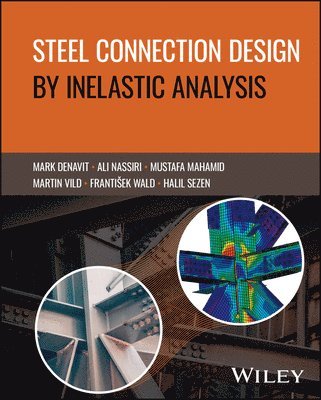
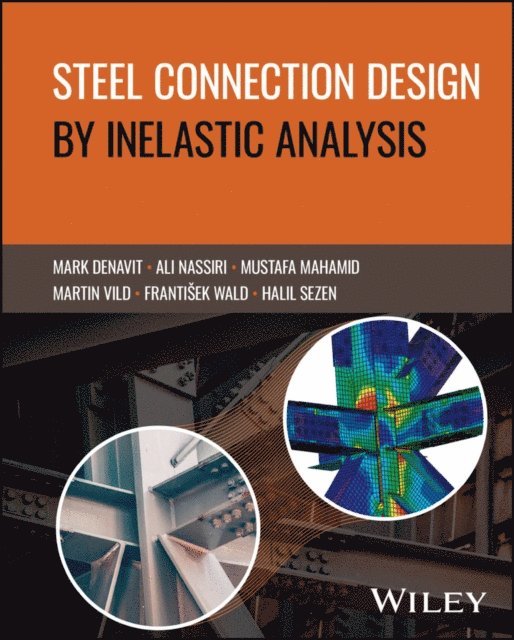
Comprehensive resource on the finite element method in structural steel connection design through verification with AISC 360 provisions
Steel Connection Design by Inelastic Analysis covers the use of the finite element method in structural steel connection design. Verification with AISC 360 provisions is presented, focusing on the Component-Based Finite Element Method (CBFEM), a novel approach that provides the global behavior and verification of resistance for the design of structural steel connections. This method is essential for fast and practical design and evaluation of connections with different levels of geometry and complexity.
Detailed modeling and verification examples with references to AISC and other relevant publications are included throughout the text, along with roughly 250 illustrations to aid in reader comprehension.
Readers of this text will benefit from understanding at least the basics of structural design, ideally through civil, structural, or mechanical engineering programs of study.
Written by a team of six highly qualified authors, Steel Connection Design by Inelastic Analysis includes information on:
T-stub connections, single plate shear connections, bracket plate connections, beam over column connections, and end-plate moment connectionsBolted wide flange splice connections, temporary splice connections, and chevron brace connection in a braced frame Brace connections at beam-column connection in a braced frame and double angle simple beam-to-column connectionsSemi-rigid beam-to-column connections, covering code design calculations and comparisons, IDEA StatiCa analysis, and ABAQUS analysisSteel Connection Design by Inelastic Analysis is an authoritative reference on the subject for structural engineers, Engineers of Record (EORs), fabrications specialists, and connection designers involved in the structural design of steel connections in the United States or any territory using AISC 360 as the primary design code.
1 298 kr
Läs direkt efter köp
Comprehensive resource on the finite element method in structural steel connection design through verification with AISC 360 provisions
Steel Connection Design by Inelastic Analysis covers the use of the finite element method in structural steel connection design. Verification with AISC 360 provisions is presented, focusing on the Component-Based Finite Element Method (CBFEM), a novel approach that provides the global behavior and verification of resistance for the design of structural steel connections. This method is essential for fast and practical design and evaluation of connections with different levels of geometry and complexity.
Detailed modeling and verification examples with references to AISC and other relevant publications are included throughout the text, along with roughly 250 illustrations to aid in reader comprehension.
Readers of this text will benefit from understanding at least the basics of structural design, ideally through civil, structural, or mechanical engineering programs of study.
Written by a team of six highly qualified authors, Steel Connection Design by Inelastic Analysis includes information on:
T-stub connections, single plate shear connections, bracket plate connections, beam over column connections, and end-plate moment connectionsBolted wide flange splice connections, temporary splice connections, and chevron brace connection in a braced frame Brace connections at beam-column connection in a braced frame and double angle simple beam-to-column connectionsSemi-rigid beam-to-column connections, covering code design calculations and comparisons, IDEA StatiCa analysis, and ABAQUS analysisSteel Connection Design by Inelastic Analysis is an authoritative reference on the subject for structural engineers, Engineers of Record (EORs), fabrications specialists, and connection designers involved in the structural design of steel connections in the United States or any territory using AISC 360 as the primary design code.