Mustapha K. Nabli - Böcker
Visar alla böcker från författaren Mustapha K. Nabli. Handla med fri frakt och snabb leverans.
6 produkter
6 produkter
984 kr
Skickas inom 3-6 vardagar
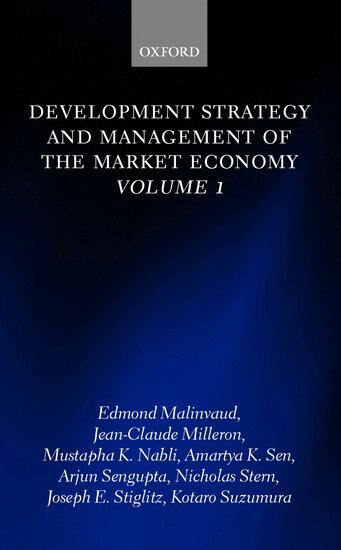
Around the world, the 1990s have seen greater attention being given to the role of markets as an instrument of economic development. Responding to new thinking and changed economic circumstances, governments perceptions of their own role in the management of their economies have shifted. As a result, many have withdrawn from direct involvement in certain sectors of the economy and have reduced their intervention and control in others. The reorientation has been most dramatic in the former centrally planned economies, but governments in developing countries, as well as in advanced countries where markets are already pre-eminent, have profoundly reconsidered their development role and the means of fulfilling it. In this process, it has been recognised that, left entirely to their own devices, markets may be either inadequate or inappropriate for a country's overall economic and social development. Government has a vital role to play even in facilitating the effective functioning of markets--to ensure the necessary infrastructure is in place, to sustain macroeconomic stability, to provide a framework for effective interaction with the international economy. It also has a responsibility to correct the market's inclinations in certain directions, in particular to provide a fuller perspective on the future, to give direction in critical sectors and, importantly, to fulfil a number of social objectives. The challenges lie in identifying policies and selecting instruments that enable the government to fulfil these roles complementing the contribution of markets. In this era of transition and experimentation in economic management, the Department of Economic and Social Information and Policy Analysis of the United Nations convened a group of economists to distil their thinking and experience on the changing role of government in the development process. The first volume in this two volume set contains the views of the members of the group on critical dimensions of the management of market economies. The second volume contains some of the companion papers that were prepared as a compliment to the work of the group.
1 640 kr
Skickas inom 10-15 vardagar
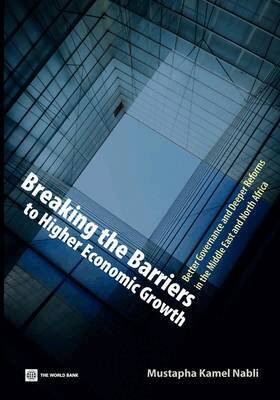
Breaking the Barriers to Higher Economic Growth
Better Governance and Deeper Reforms in the Middle East and North Africa
Häftad, Engelska, 2008
432 kr
Skickas inom 10-15 vardagar
The world's attention to the countries of the Middle East and North Africa (MENA) region has often been dominated by headline issues: conflict, sanctions, political turmoil, and rising oil prices. Little of this international attention has considered the broad range of development challenges facing this diverse group of countries. Breaking the Barriers reflects the collected thinking of the World Bank's Office of the Chief Economist for the MENA Region on the long-term development challenges facing the region and the reform priorities and strategies for effectively meeting these challenges. It is a comprehensive reform agenda to "break the barriers" to higher economic growth, to ensure sufficient jobs can be created for the region's rapidly growing labor force. At its core, it requires the region's public sector-dominated economies to move to private sector-driven economies, from closed economies to more open economies, and from oil-dominated and volatile economies to more stable and diversified economies. This book examines some of these reforms and the complex issues surrounding their successful implementation. In order for the countries of the MENA region to successfully implement the reforms needed for higher growth and job creation, they will also need to address the fundamental weaknesses in governance throughout the region.
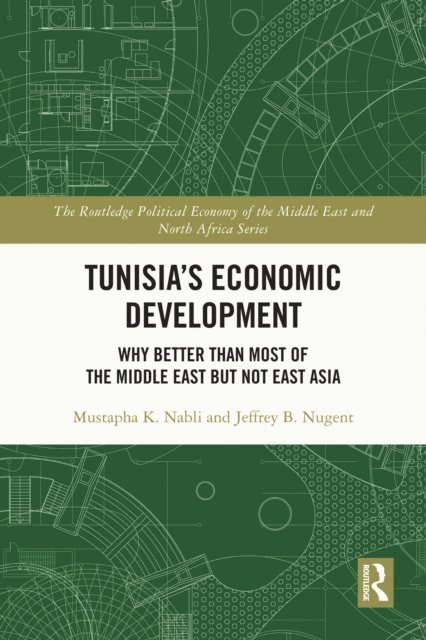
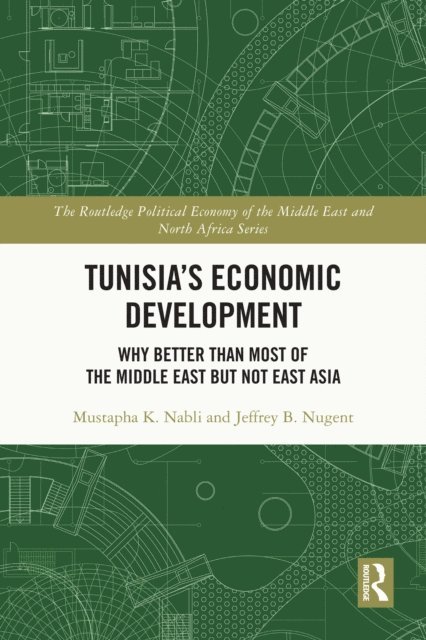
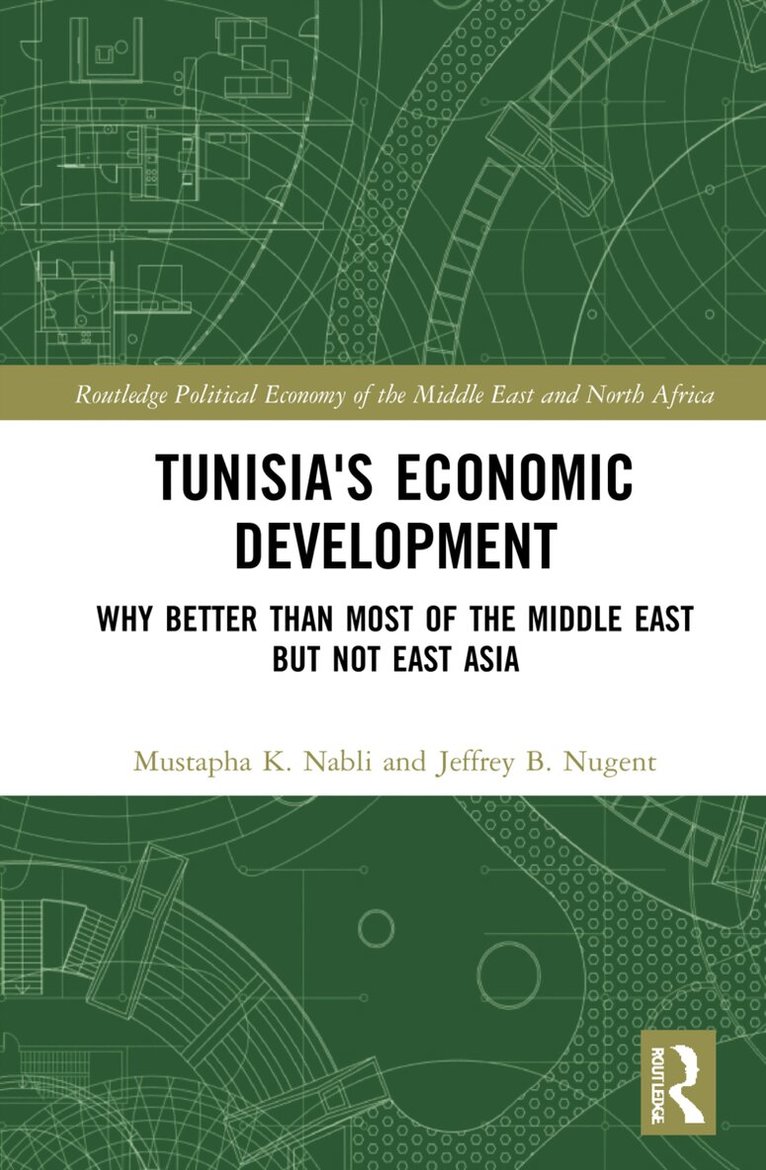
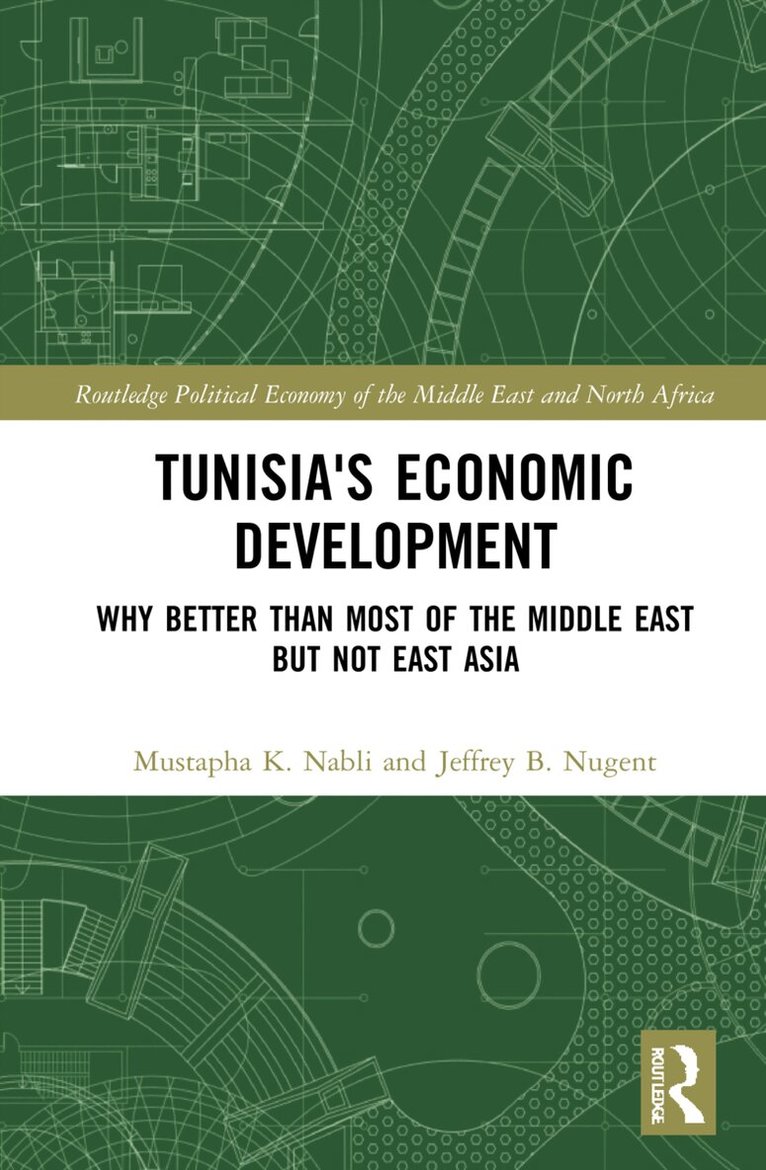
Tunisia's Economic Development
Why Better than Most of the Middle East but Not East Asia
Inbunden, Engelska, 2022
2 375 kr
Skickas inom 10-15 vardagar
This book identifies the differences in growth and development, and the various factors lying behind them, across both Middle East and North African (MENA) and East Asian countries over the 1960‒2020 period. It considers a very wide range of factors, compares initial situations, institutions, and government policies, the dynamic responses to changing circumstances, and discusses the inability of the governments of the MENA region to achieve not only political reform, but also the kinds of economic reform that would allow their citizens to prosper in an increasingly globalized world. The book focuses on Tunisia. Since its independence in 1956 until 2010, Tunisia had considerable success relative to many other MENA countries, but was somewhat less successful relative to East Asian countries. Since 2010, however, while transitioning away from autocracy to democracy, it has been in rather serious economic decline. The book highlights how both the factors identified as enabling Tunisia’s initial success and those leading to its subsequent decline can provide many useful insights for improving the management of economic development across the whole MENA region and perhaps also to developing countries throughout the world.
Tunisia's Economic Development
Why Better than Most of the Middle East but Not East Asia
Häftad, Engelska, 2024
575 kr
Skickas inom 10-15 vardagar
This book identifies the differences in growth and development, and the various factors lying behind them, across both Middle East and North African (MENA) and East Asian countries over the 1960‒2020 period. It considers a very wide range of factors, compares initial situations, institutions, and government policies, the dynamic responses to changing circumstances, and discusses the inability of the governments of the MENA region to achieve not only political reform, but also the kinds of economic reform that would allow their citizens to prosper in an increasingly globalized world. The book focuses on Tunisia. Since its independence in 1956 until 2010, Tunisia had considerable success relative to many other MENA countries, but was somewhat less successful relative to East Asian countries. Since 2010, however, while transitioning away from autocracy to democracy, it has been in rather serious economic decline. The book highlights how both the factors identified as enabling Tunisia’s initial success and those leading to its subsequent decline can provide many useful insights for improving the management of economic development across the whole MENA region and perhaps also to developing countries throughout the world.
1 640 kr
Skickas inom 10-15 vardagar