Myung-Hwan Whangbo – författare
Visar alla böcker från författaren Myung-Hwan Whangbo. Handla med fri frakt och snabb leverans.
4 produkter
4 produkter
Inbunden, Engelska, 2013
1 977 kr
Skickas inom 5-8 vardagar
Explains the underlying structure that unites all disciplinesin chemistry Now in its second edition, this book explores organic,organometallic, inorganic, solid state, and materials chemistry,demonstrating how common molecular orbital situations arisethroughout the whole chemical spectrum. The authors explore therelationships that enable readers to grasp the theory thatunderlies and connects traditional fields of study withinchemistry, thereby providing a conceptual framework with which tothink about chemical structure and reactivity problems. Orbital Interactions in Chemistry begins by developingmodels and reviewing molecular orbital theory. Next, the bookexplores orbitals in the organic-main group as well as in solids.Lastly, the book examines orbital interaction patterns that occurin inorganic-organometallic fields as well as clusterchemistry, surface chemistry, and magnetism in solids. This Second Edition has been thoroughly revised andupdated with new discoveries and computational tools since thepublication of the first edition more than twenty-five years ago.Among the new content, readers will find:* Two new chapters dedicated to surface science and magneticproperties* Additional examples of quantum calculations, focusing oninorganic and organometallic chemistry* Expanded treatment of group theory* New results from photoelectron spectroscopy Each section ends with a set of problems, enabling readers totest their grasp of new concepts as they progress through the text.Solutions are available on the book's ftp site. Orbital Interactions in Chemistry is written for bothresearchers and students in organic, inorganic, solid state,materials, and computational chemistry. All readers will discoverthe underlying structure that unites all disciplines inchemistry.
E-bok
PDF, Engelska, 20132 213 kr
Läs direkt efter köp
Explains the underlying structure that unites all disciplinesin chemistry Now in its second edition, this book explores organic,organometallic, inorganic, solid state, and materials chemistry,demonstrating how common molecular orbital situations arisethroughout the whole chemical spectrum. The authors explore therelationships that enable readers to grasp the theory thatunderlies and connects traditional fields of study withinchemistry, thereby providing a conceptual framework with which tothink about chemical structure and reactivity problems. Orbital Interactions in Chemistry begins by developingmodels and reviewing molecular orbital theory. Next, the bookexplores orbitals in the organic-main group as well as in solids.Lastly, the book examines orbital interaction patterns that occurin inorganic-organometallic fields as well as clusterchemistry, surface chemistry, and magnetism in solids. This Second Edition has been thoroughly revised andupdated with new discoveries and computational tools since thepublication of the first edition more than twenty-five years ago.Among the new content, readers will find: * Two new chapters dedicated to surface science and magneticproperties * Additional examples of quantum calculations, focusing oninorganic and organometallic chemistry * Expanded treatment of group theory * New results from photoelectron spectroscopy Each section ends with a set of problems, enabling readers totest their grasp of new concepts as they progress through the text.Solutions are available on the book''s ftp site. Orbital Interactions in Chemistry is written for bothresearchers and students in organic, inorganic, solid state,materials, and computational chemistry. All readers will discoverthe underlying structure that unites all disciplines inchemistry.
E-bok
Engelska, 20132 213 kr
Läs direkt efter köp
Explains the underlying structure that unites all disciplinesin chemistry Now in its second edition, this book explores organic,organometallic, inorganic, solid state, and materials chemistry,demonstrating how common molecular orbital situations arisethroughout the whole chemical spectrum. The authors explore therelationships that enable readers to grasp the theory thatunderlies and connects traditional fields of study withinchemistry, thereby providing a conceptual framework with which tothink about chemical structure and reactivity problems. Orbital Interactions in Chemistry begins by developingmodels and reviewing molecular orbital theory. Next, the bookexplores orbitals in the organic-main group as well as in solids.Lastly, the book examines orbital interaction patterns that occurin inorganic-organometallic fields as well as clusterchemistry, surface chemistry, and magnetism in solids. This Second Edition has been thoroughly revised andupdated with new discoveries and computational tools since thepublication of the first edition more than twenty-five years ago.Among the new content, readers will find: * Two new chapters dedicated to surface science and magneticproperties * Additional examples of quantum calculations, focusing oninorganic and organometallic chemistry * Expanded treatment of group theory * New results from photoelectron spectroscopy Each section ends with a set of problems, enabling readers totest their grasp of new concepts as they progress through the text.Solutions are available on the book''s ftp site. Orbital Interactions in Chemistry is written for bothresearchers and students in organic, inorganic, solid state,materials, and computational chemistry. All readers will discoverthe underlying structure that unites all disciplines inchemistry.
E-bok
PDF, Engelska, 20081 786 kr
Läs direkt efter köp
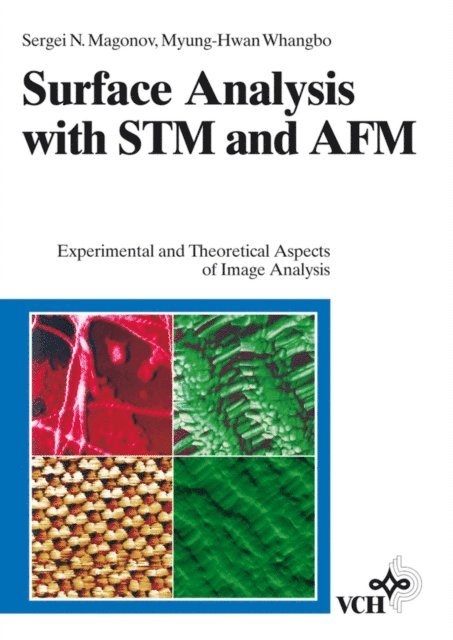
Scanning tunneling microscopy (STM) and atomic force microscopy (AFM) are powerful tools for surface examination. In the past, many STM and AFM studies led to erroneous conclusions due to lack of proper theoretical considerations and of an understanding of how image patterns are affected by measurement conditions. For this book, two world experts, one on theoretical analysis and the other on experimental characterization, have joined forces to bring together essential components of STM and AFM studies: The practical aspects of STM, the image simulation by surface electron density plot calculations, and the qualitative evaluation of tip-force induced surface corrugations. Practical examples are taken from: * inorganic layered materials * organic conductors * organic adsorbates at liquid-solid interfaces * self-assembled amphiphiles * polymers This book will be an invaluable reference work for researchers active in STM and AMF as well as for newcomers to the field.