Analysis of Manufacturing Enterprises presents a unified and systematic treatment of manufacturing enterprises. These enterprises are networks of companies working in partnership. Such networks are a common occurrence in auto, grocery, apparel, computer and other industries; and competition is among enterprises rather than between individual companies. Thus, for these enterprises (global or local) to succeed, there is a need for systematically designing the enterprise-wide value delivery processes such as the order-to-delivery process, supply chain process, and new product development process. This calls for developing systematic analysis methodologies for evaluating the performance of value delivering processes. Analysis of Manufacturing Enterprises fills this vital need. The first part of the book focuses on foundations of manufacturing enterprises: the generic value delivery process, their performance measures and redesign to meet specifications on lead time and defect levels. The second part provides a clear and comprehensive discussion on new product development, order to delivery, and supply chain processes, which are core processes of a manufacturing enterprise. Analysis of Manufacturing Enterprises is an excellent resource for researchers and professionals in the field of manufacturing engineering.
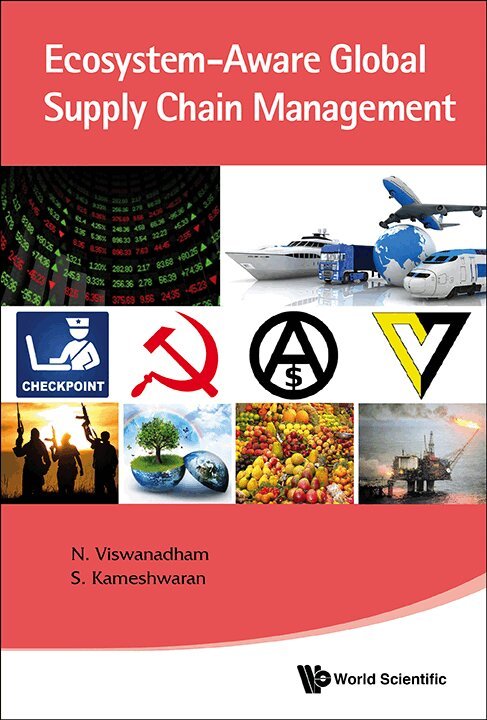
Over the last two decades, several textbooks, research papers, and best practice cases have been published on supply chain management. However, globalization has created dispersed supply chains which are vulnerable and dependent on entities and factors that are exogenous to the supply chain. Resource scarcity, environmental regulations, government policies, political unrest, economic instability, and natural disasters are a few examples of how non-supply chain factors influence the way supply chains are managed. These exogenous factors are not just risk sources but can also be venues for innovation and growth.This book presents the notion of supply chain ecosystem to holistically model all the factors that interact with the supply chain and influence the flow of goods, information, and finance. Through a number of real-life case studies, the authors use the ecosystem framework to study the governance, risk, innovation, and performance issues in supply chain management, and also to redesign the management techniques for global supply chains. In doing so, this book makes a unique contribution to the theory and practice of supply chain networks.