Nabil Matar – författare
Visar alla böcker från författaren Nabil Matar. Handla med fri frakt och snabb leverans.
18 produkter
18 produkter
Inbunden, Engelska, 2011
1 459 kr
Skickas inom 3-6 vardagar
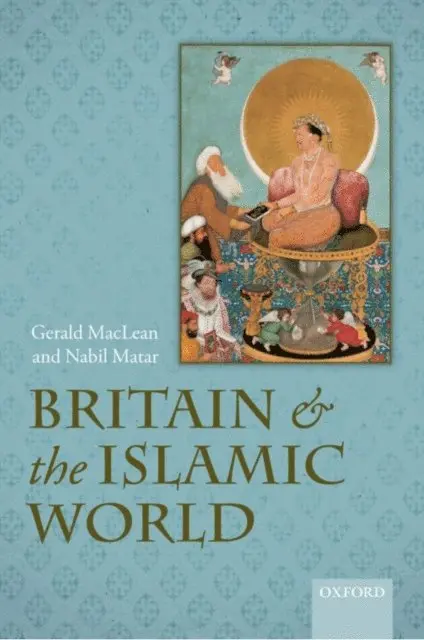
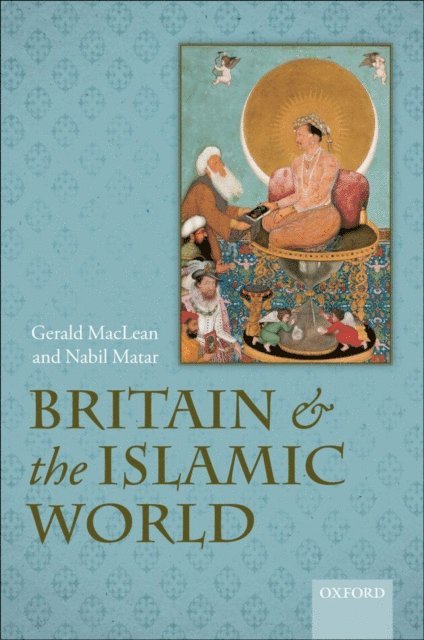
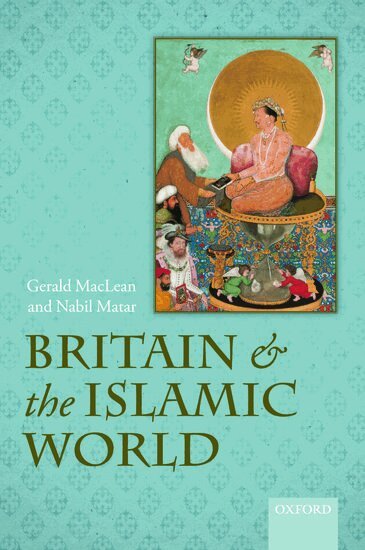
Before they had an empire in the East, the British travelled into the Islamic world to pursue trade and to form strategic alliances against the Catholic powers of France and Spain. First-hand encounters with Muslims, Jews, Greek Orthodox, and other religious communities living together under tolerant Islamic rule changed forever the way Britons thought about Islam, just as the goods they imported from Islamic countries changed forever the way they lived. Britain and the Islamic World tells the story of how, for a century and a half, merchants and diplomats travelled from Morocco to Istanbul, from Aleppo to Isfahan, and from Hormuz to Surat, and discovered a world that was more fascinating than fearful.Gerald MacLean and Nabil Matar examine the place of Islam and Muslims in English thought, and how British monarchs dealt with supremely powerful Muslim rulers. They document the importance of diplomatic and mercantile encounters, show how the writings of captives spread unreliable information about Islam and Muslims, and investigate observations by travellers and clergymen who reported meetings with Jews, eastern Christians, Armenians, and Shi'ites. They also trace how trade and the exchange of material goods with the Islamic world shaped how people in Britain lived their lives and thought about themselves.
Inbunden, Engelska, 1999
2 132 kr
Skickas inom 3-6 vardagar
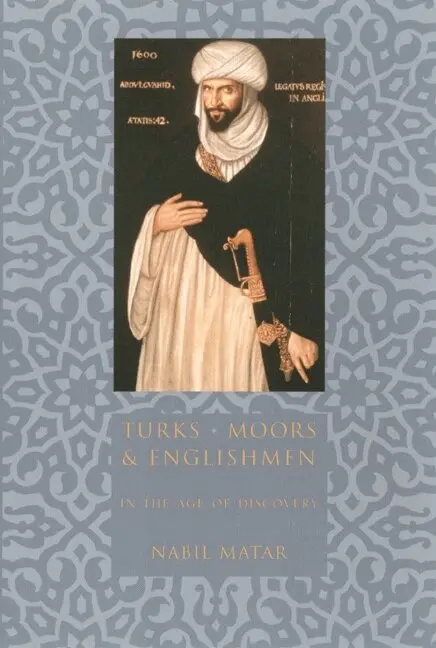
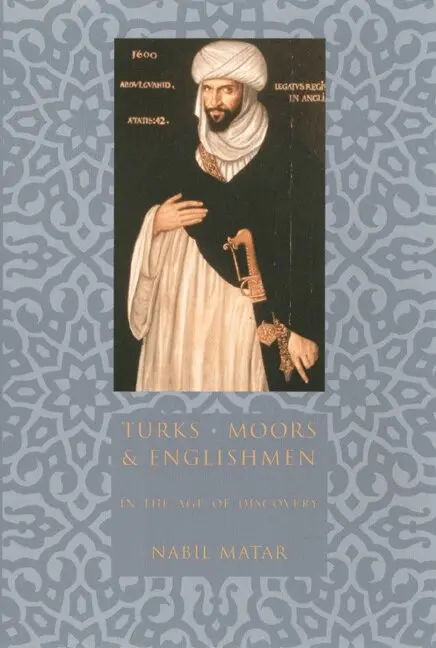
During the early modern period, hundreds of Turks and Moors traded in English and Welsh ports, dazzled English society with exotic cuisine and Arabian horses, and worked small jobs in London, while the "Barbary Corsairs" raided coastal towns and, if captured, lingered in Plymouth jails or stood trial in Southampton courtrooms. In turn, Britons fought in Muslim armies, traded and settled in Moroccan or Tunisian harbor towns, joined the international community of pirates in Mediterranean and Atlantic outposts, served in Algerian households and ships, and endured captivity from Salee to Alexandria and from Fez to Mocha. In Turks, Moors, and Englishmen, Nabil Matar vividly presents new data about Anglo-Islamic social and historical interactions. Rather than looking exclusively at literary works, which tended to present unidimensional stereotypes of Muslims-Shakespeare's "superstitious Moor" or Goffe's "raging Turke," to name only two-Matar delves into hitherto unexamined English prison depositions, captives' memoirs, government documents, and Arabic chronicles and histories.The result is a significant alternative to the prevailing discourse on Islam, which nearly always centers around ethnocentrism and attempts at dominance over the non-Western world, and an astonishing revelation about the realities of exchange and familiarity between England and Muslim society in the Elizabethan and early Stuart periods. Concurrent with England's engagement and "discovery" of the Muslims was the "discovery" of the American Indians. In an original analysis, Matar shows how Hakluyt and Purchas taught their readers not only about America but about the Muslim dominions, too; how there were more reasons for Britons to venture eastward than westward; and how, in the period under study, more Englishmen lived in North Africa than in North America. Although Matar notes the sharp political and colonial differences between the English encounter with the Muslims and their encounter with the Indians, he shows how Elizabethan and Stuart writers articulated Muslim in terms of Indian, and Indian in terms of Muslim.By superimposing the sexual constructions of the Indians onto the Muslims, and by applying to them the ideology of holy war which had legitimated the destruction of the Indians, English writers prepared the groundwork for orientalism and for the eighteenth- and nineteenth-century conquest of Mediterranean Islam. Matar's detailed research provides a new direction in the study of England's geographic imagination. It also illuminates the subtleties and interchangeability of stereotype, racism, and demonization that must be taken into account in any responsible depiction of English history.
Häftad, Engelska, 2000
290 kr
Skickas inom 5-8 vardagar
During the early modern period, hundreds of Turks and Moors traded in English and Welsh ports, dazzled English society with exotic cuisine and Arabian horses, and worked small jobs in London, while the "Barbary Corsairs" raided coastal towns and, if captured, lingered in Plymouth jails or stood trial in Southampton courtrooms. In turn, Britons fought in Muslim armies, traded and settled in Moroccan or Tunisian harbor towns, joined the international community of pirates in Mediterranean and Atlantic outposts, served in Algerian households and ships, and endured captivity from Salee to Alexandria and from Fez to Mocha. In Turks, Moors, and Englishmen, Nabil Matar vividly presents new data about Anglo-Islamic social and historical interactions. Rather than looking exclusively at literary works, which tended to present unidimensional stereotypes of Muslims-Shakespeare's "superstitious Moor" or Goffe's "raging Turke," to name only two-Matar delves into hitherto unexamined English prison depositions, captives' memoirs, government documents, and Arabic chronicles and histories.The result is a significant alternative to the prevailing discourse on Islam, which nearly always centers around ethnocentrism and attempts at dominance over the non-Western world, and an astonishing revelation about the realities of exchange and familiarity between England and Muslim society in the Elizabethan and early Stuart periods. Concurrent with England's engagement and "discovery" of the Muslims was the "discovery" of the American Indians. In an original analysis, Matar shows how Hakluyt and Purchas taught their readers not only about America but about the Muslim dominions, too; how there were more reasons for Britons to venture eastward than westward; and how, in the period under study, more Englishmen lived in North Africa than in North America. Although Matar notes the sharp political and colonial differences between the English encounter with the Muslims and their encounter with the Indians, he shows how Elizabethan and Stuart writers articulated Muslim in terms of Indian, and Indian in terms of Muslim.By superimposing the sexual constructions of the Indians onto the Muslims, and by applying to them the ideology of holy war which had legitimated the destruction of the Indians, English writers prepared the groundwork for orientalism and for the eighteenth- and nineteenth-century conquest of Mediterranean Islam. Matar's detailed research provides a new direction in the study of England's geographic imagination. It also illuminates the subtleties and interchangeability of stereotype, racism, and demonization that must be taken into account in any responsible depiction of English history.
Inbunden, Engelska, 2008
547 kr
Skickas inom 5-8 vardagar
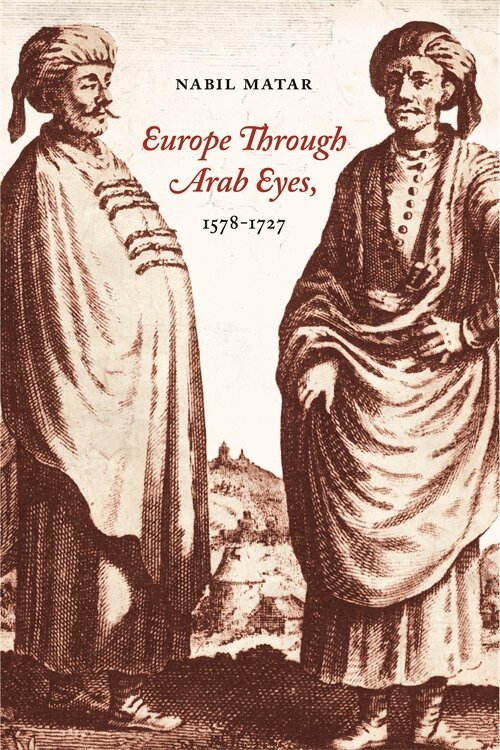
Traveling to archives in Tunisia, Morocco, France, and England, with visits to Egypt, Jordan, Lebanon, and Spain, Nabil Matar assembles a rare history of Europe's rise to power as seen through the eyes of those who were later subjugated by it. Many historians of the Middle East believe Arabs and Muslims had no interest in Europe during this period of Western discovery and empire, but in fact these groups were very much engaged with the naval and industrial development, politics, and trade of European Christendom. Beginning in 1578 with a major Moroccan victory over a Portuguese invading army, Matar surveys this early modern period, in which Europeans and Arabs often shared common political, commercial, and military goals. Matar concentrates on how Muslim captives, ransomers, traders, envoys, travelers, and rulers pursued those goals while transmitting to the nonprint cultures of North Africa their knowledge of the peoples and societies of Spain, France, Britain, Holland, Italy, and Malta.From the first non-European description of Queen Elizabeth I to early accounts of Florence and Pisa in Arabic, from Tunisian descriptions of the Morisco expulsion in 1609 to the letters of a Moroccan Armenian ambassador in London, the translations of the book's second half draw on the popular and elite sources that were available to Arabs in the early modern period. Letters from male and female captives in Europe, chronicles of European naval attacks and the taqayid (newspaper) reports on Muslim resistance, and descriptions of opera and quinine appear here in English for the first time. Matar notes that the Arabs of the Maghrib and the Mashriq were eager to engage Christendom, despite wars and rivalries, and hoped to establish routes of trade and alliances through treaties and royal marriages. However, the rise of an intolerant and exclusionary Christianity and the explosion of European military technology brought these advances to an end. In conclusion, Matar details the decline of Arab-Islamic power and the rise of Britain and France.
Inbunden, Engelska, 2013
1 004 kr
Skickas inom 3-6 vardagar
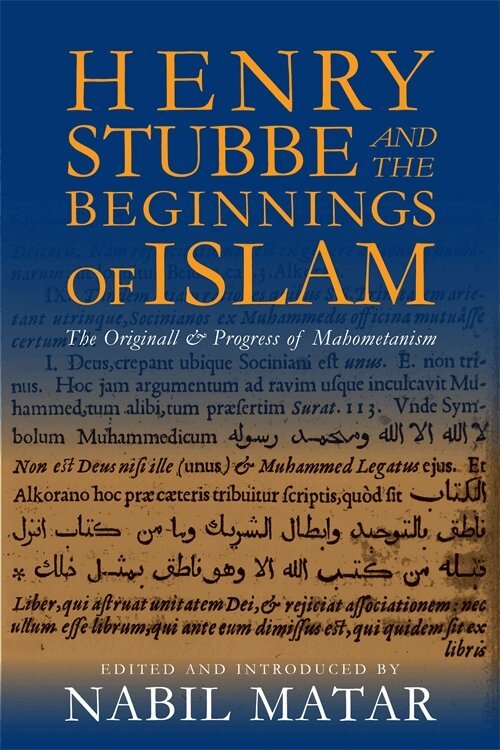
Henry Stubbe (1632-1676) was an extraordinary English scholar who challenged his contemporaries by writing about Islam as a monotheistic revelation in continuity with Judaism and Christianity. His major work, The Originall & Progress of Mahometanism, was the first English text to document the Prophet Muhammad's life positively, celebrate the Qur'an as a divine revelation, and praise the Muslim toleration of Christians, undermining a long legacy of European prejudice and hostility. Nabil Matar, a leading scholar of Islamic-British relations, standardizes Stubbe's text and situates it within England's theological and intellectual climate in the seventeenth century. He shows how, to draw a historical portrait of Muhammad, Stubbe embraced travelogues, Latin commentaries, studies on Jewish customs and Scripture, and, most important, Arabic chronicles, many written by medieval Christian Arabs who had lived in the midst of the Islamic polity. No European writer before or for a long time after Stubbe produced anything similar to what he wrote about Muhammad the "great Prophet," Ali the "gallant" advocate, and the "standing miracle" of the Qur'an.Stubbe's book therefore makes a unique contribution to the study of the representation of Islam in Western thought.
Inbunden, Engelska, 2002
2 459 kr
Skickas inom 10-15 vardagar
In the Lands of the Christians presents original translations from Arabic of four Christian and Muslim writers who visited Western Europe and America in the seventeenth century. These essays contain careful descriptions of the regions, societies, customs, and religions these intrepid travelers encountered in their journeys. Here you will find the complete travel narrative of the first Arab to visit South and Central America in 1688, the first English translation of the ambassadorial report by Mohammad bin Abd al-Wahab al-Ghassani who traveled through Spain in 1690, translations of letters by the Morrocan ambassador to France describing his relationship with his hosts and his impressions of the land, and Morisco author Ahmad bin Qasim's account of his voyage from Holland to France in 1610.
Häftad, Engelska, 2002
830 kr
Skickas inom 10-15 vardagar
In the Lands of the Christians presents original translations from Arabic of four Christian and Muslim writers who visited Western Europe and America in the seventeenth century. These essays contain careful descriptions of the regions, societies, customs, and religions these intrepid travelers encountered in their journeys. Here you will find the complete travel narrative of the first Arab to visit South and Central America in 1688, the first English translation of the ambassadorial report by Mohammad bin Abd al-Wahab al-Ghassani who traveled through Spain in 1690, translations of letters by the Morrocan ambassador to France describing his relationship with his hosts and his impressions of the land, and Morisco author Ahmad bin Qasim's account of his voyage from Holland to France in 1610.
Häftad, Engelska, 2008
578 kr
Skickas inom 7-10 vardagar
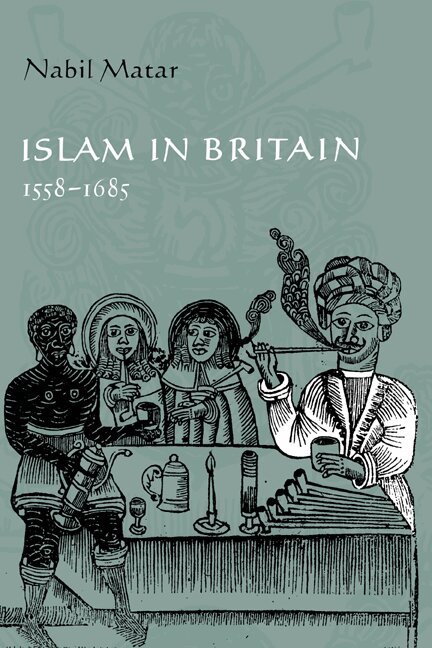
This book examines the impact of Islam on Britain between 1558 and 1685. Professor Matar provides a perspective on the transformation of British thought and society by demonstrating how influential Islam was in the formation of early modern British culture. Christian-Muslim interaction was not, as is often thought, primarily adversarial; rather, there was extensive cultural, intellectual and missionary engagement with Islam in Britain. The author documents conversion both to and from Islam, and surveys reactions to these conversions. He examines the impact of the Qur'an and Sufism, not to mention coffee, on British culture, and cites extensive interaction of Britons with Islam through travel, in London coffee houses, in church, among converts to and from Islam, in sermons and in plays. Finally, he focuses on the theological portrait of Muslims in conversionist and eschatological writings.
Inbunden, Engelska, 1998
1 292 kr
Skickas inom 7-10 vardagar
This book examines the impact of Islam on Britain between 1558 and 1685. Professor Matar provides a perspective on the transformation of British thought and society by demonstrating how influential Islam was in the formation of early modern British culture. Christian-Muslim interaction was not, as is often thought, primarily adversarial; rather, there was extensive cultural, intellectual and missionary engagement with Islam in Britain. The author documents conversion both to and from Islam, and surveys reactions to these conversions. He examines the impact of the Qur'an and Sufism, not to mention coffee, on British culture, and cites extensive interaction of Britons with Islam through travel, in London coffee houses, in church, among converts to and from Islam, in sermons and in plays. Finally, he focuses on the theological portrait of Muslims in conversionist and eschatological writings.
Häftad, Engelska, 2005
272 kr
Skickas inom 10-15 vardagar
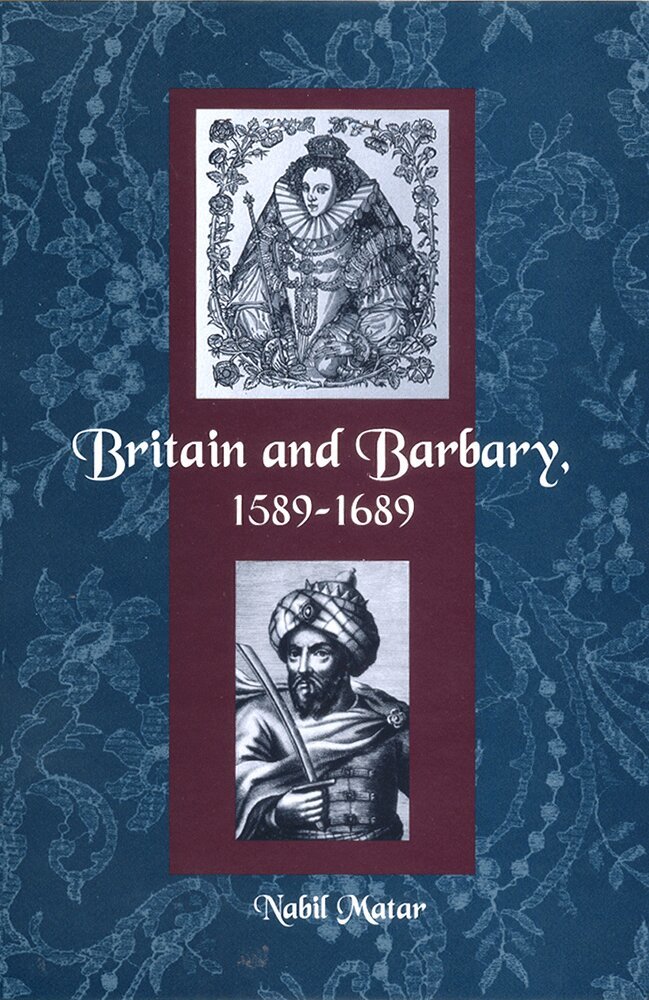
Following an incisive re-appraisal of “The Moor on the Elizabethan Stage”–vital reading for anyone interested in the plays of Shakespeare and his contemporaries – Professor Matar offers a groundbreaking study of Britain's response to Barbary in matters of state and stage from 1589-1689. This is an exceptional final volume to an inestimable trilogy."--Patrick Spottiswoode, Shakespeare's Globe "Unique for its command of English and Islamic primary sources and for its grasp of literary, cultural, and political history, 'Britain and Barbary, 1589 - 1689' marks another indispensable contribution by Nabil Matar to our understanding of the relationship between Britain and Islam in the early modern period. Written with unusual clarity, Matar's book organizes a wealth of fascinating detail within a narrative that informs our understanding and challenges preconceptions. While firmly grounded in the literature and history of the sixteenth and seventeenth centuries, the book has much to offer any reader who seeks to develop a better understanding of the multi-faceted history of Christian Europe and Islamic North Africa."--Jack D'Amico, Canisius College Matar examines the influence of Mediterranean piracy and diplomacy on early modern British history and identity. Drawing on published and unpublished literary, commercial, and epistolary sources, he situates British maritime activity and national politics, especially in relation to the Civil War, within the international context of Anglo-Magharibi encounters. Before there was the British encounter with America, there was the much more complex and destabilizing encounter with Islam in North Africa. Focusing on specific case studies, Matar examines the impact of early visits of Moroccan officials on English playwrights such as Peele, Shakespeare, and Heywood; the captivity of thousands of British sailors in North Africa and its domestic consequences in the first women’s protest movement in English history; the captivity of British women in Barbary, especially the English sultana Balqees; the absorption of thousands of "moors" into the British slave trade; and the aftermath of the colonization and desertion of Tangier. Matar shows that when Barbary was militarily and diplomatically powerful, its relations with and impact on Britain were extensive.
Häftad, Engelska, 2017
758 kr
Skickas inom 10-15 vardagar
This book provides translated selections from the writings of Muhammad Ibn Othman al-Miknasi (d. 1799). The only writings by an Arab-Muslim in the pre-modern period that present a comparative perspective, his travelogues provide unique insight with in to Christendom and Islam. Translating excerpts from his three travelogues, this book tells the story of al-Miknasi’s travels from 1779-1788. As an ambassador, al-Miknasi was privy to court life, government offices and religious buildings, and he provides detailed accounts of cities, people, customs, ransom negotiations, historical events and political institutions. Including descriptions of Europeans, Arabs, Turks, Christians (both European and Eastern), Muslims, Jews, and (American) Indians in the last quarter of the eighteenth century, An Arab Ambassador in the Mediterranean World explores how the most travelled Muslim writer of the pre-modern period saw the world: from Spain to Arabia and from Morocco to Turkey, with second-hand information about the New World.Supplemented with extensive notes detailing the historic and political relevance of the translations, this book is of interest to researchers and scholars of Mediterranean History, Ottoman Studies and Muslim-Christian relations.
Inbunden, Engelska, 2015
2 273 kr
Skickas inom 10-15 vardagar
This book provides translated selections from the writings of Muhammad Ibn Othman al-Miknasi (d. 1799). The only writings by an Arab-Muslim in the pre-modern period that present a comparative perspective, his travelogues provide unique insight with in to Christendom and Islam. Translating excerpts from his three travelogues, this book tells the story of al-Miknasi’s travels from 1779-1788. As an ambassador, al-Miknasi was privy to court life, government offices and religious buildings, and he provides detailed accounts of cities, people, customs, ransom negotiations, historical events and political institutions. Including descriptions of Europeans, Arabs, Turks, Christians (both European and Eastern), Muslims, Jews, and (American) Indians in the last quarter of the eighteenth century, An Arab Ambassador in the Mediterranean World explores how the most travelled Muslim writer of the pre-modern period saw the world: from Spain to Arabia and from Morocco to Turkey, with second-hand information about the New World.Supplemented with extensive notes detailing the historic and political relevance of the translations, this book is of interest to researchers and scholars of Mediterranean History, Ottoman Studies and Muslim-Christian relations.
Inbunden, Engelska, 2018
1 649 kr
Skickas inom 7-10 vardagar
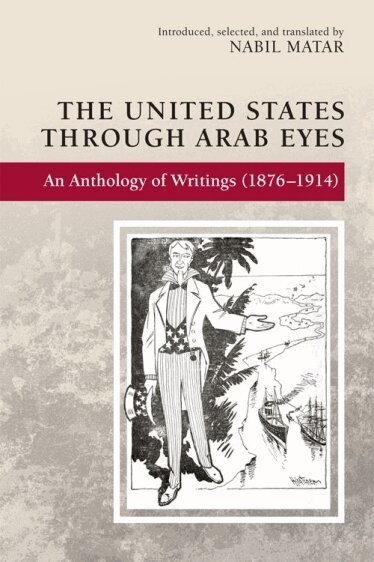
The first Arab immigrants to New York or Alaska or San Francisco were ‘small’ men and women, preoccupied with eking a living at the same time as confronting the challenges of settling in a new country. They had to come to terms with new race communities such as Indians, Chinese and Blacks, the changing role of women, and the Americanisation of their identity. Their writings about these experiences – from travellers and emigrants, rich and poor, men and women – took the form of travelogues and newspaper essays, daily diaries and adventure narratives, autobiographies and histories, full-length books published in the Ottoman Press in Lebanon and journal articles in Arabic newspapers printed in Philadelphia, Boston, and New York. Together they show the transnational perspective of immigrants as they reflected on and described the United States for the very first time.
Häftad, Engelska, 2018
379 kr
Skickas inom 7-10 vardagar
The first Arab immigrants to New York or Alaska or San Francisco were ‘small’ men and women, preoccupied with eking a living at the same time as confronting the challenges of settling in a new country. They had to come to terms with new race communities such as Indians, Chinese and Blacks, the changing role of women, and the Americanisation of their identity. Their writings about these experiences – from travellers and emigrants, rich and poor, men and women – took the form of travelogues and newspaper essays, daily diaries and adventure narratives, autobiographies and histories, full-length books published in the Ottoman Press in Lebanon and journal articles in Arabic newspapers printed in Philadelphia, Boston, and New York. Together they show the transnational perspective of immigrants as they reflected on and described the United States for the very first time.
Inbunden, Engelska, 2026
1 413 kr
Kommande
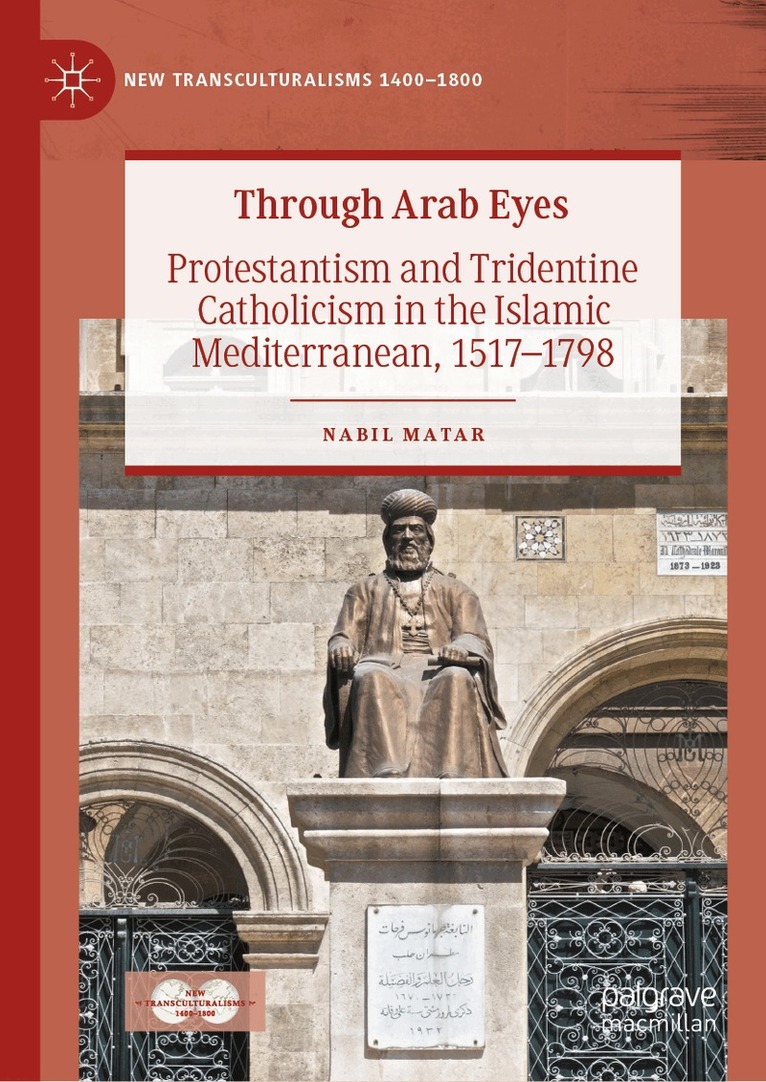
The first book based exclusively on Arabic sources in the study of the early modern religious encounters between Western Europe and the Islamic Mediterranean, this volume elucidates the impact of the Protestant and Catholic reformations on the Islamic Mediterranean from Morocco to Bilad al-Sham. Drawing on the vast collection of Arabic Christian manuscripts and Arabic books printed in Europe from the Ottoman conquest to the Napoleonic invasion, it provides an account of the Christian culture of Arabicity as reflected in Christian Arab pilgrimages, multiple calendars, and the role of the Arabic language in the construction of Christian identity. Through contemporaneous debates, disputations, autobiographies, correspondence, and histories, it analyzes the missionary efforts to convert Eastern Christians, Jews, Muslims, and Druzes to the new Christianities of Western Europe and the resulting consequences on the Arab East, thereby calling attention to the differences in the ideologies of conversion between Christianity and Islam.
Del 18 - JOSEPH C. MILLER MEMORIAL LECTURES SERIES
Vol. 18: Arabic Accounts of Mediterranean Captivity, 1517-1798
Häftad, Engelska
170 kr
Skickas inom 3-6 vardagar
Del 28 - Atlantic World
British Captives from the Mediterranean to the Atlantic, 1563-1760
Inbunden, Engelska, 2014
2 372 kr
Skickas inom 5-8 vardagar
British Captives from the Mediterranean to the Atlantic, 1563-1760 provides the first study of British captives in the North African Atlantic and Mediterranean, from the reign of Elizabeth I to George II. Based on extensive archival research in the United Kingdom, Nabil Matar furnishes the names of all captives while examining the problems that historians face in determining the numbers of early modern Britons in captivity.Matar also describes the roles which the monarchy, parliament, trading companies, and churches played (or did not play) in ransoming captives. He questions the emphasis on religious polarization in piracy and shows how much financial constraints, royal indifference, and corruption delayed the return of captives. As rivarly between Britain and France from 1688 on dominated the western Mediterranean and Atlantic, Matar concludes by showing how captives became the casus belli that justified European expansion.
Del 176 - Islamic History and Civilization
Mediterranean Captivity through Arab Eyes, 1517-1798
Inbunden, Engelska, 2020
2 225 kr
Skickas inom 5-8 vardagar
The post-Lepanto Mediterranean was the scene of “small wars,” to use Fernand Braudel’s phrase, which resulted in acts of piracy and captivity. Thousands upon thousands of Europeans, Arabs, and Turks were seized into bagnios stretching from Cadiz to Valletta and from Salé to Tripoli. After returning to their homelands, dozens from England and France, Germany and Spain, Malta and Italy wrote about their captivities. Their accounts were printed, distributed, translated, and plagiarized, making captivity a key subject in Europe’s Mediterranean history. While Europeans wrote extensively about their ordeals, the Arabs wrote little because their religious culture militated against such writings, which would be construed as expressing disaffection with the will of God. Nor were there detailed records and registers of captives – their names, places of origin, and ransom prices – similar to what was kept in the European archives. Contrary, however, to what some historians have claimed, there was a distinct Arabic narrative of captivity that survives in anecdotes, recollections, reports, miracles, letters, fatawa, exempla and short biographies in both verse and prose. Cumulatively, these sources constitute the Arabic qiṣṣas al-asrā, or stories of the captives, in the native language and idiom of the men and women of the early modern Mediterranean.