Nachiappan Chockalingam - Böcker
1 452 kr
Skickas inom 7-10 vardagar
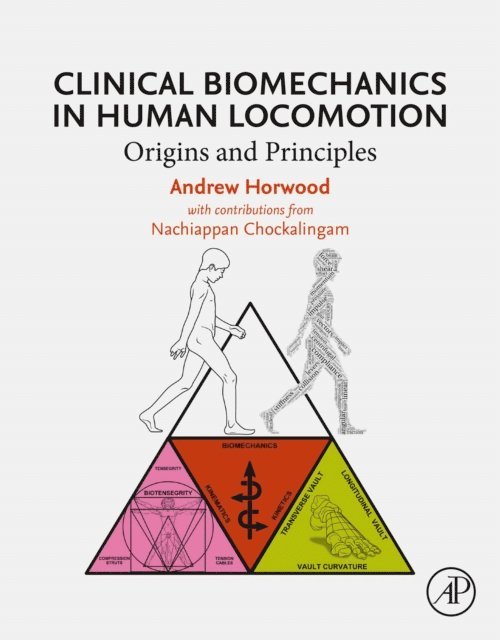
Origins and Principles of Clinical Biomechanics in Human Locomotion discusses key concepts of how biomechanics links to the development of pathology through mechanical laws, anatomy, physiology and health. It provides fundamental principles and practical data, and guidance of how to apply these in the clinical biomechanics field. Coverage includes: major joint movement, muscle action around joints, physiology and patho-physiology of bone, muscle and neurologic disorders. This reference is ideal for teaching students in biomechanics, orthopedics and physiotherapy. It should also be of interest to product development engineers, rehabilitation engineers, those working in prosthetics and orthotics, physiotherapists and occupational therapists.
The authors explore the simple laws of motion as applied to anatomy and physiology, in order to help readers understand human pathology within the human lower limb and mobility. They then go on to look at materials science concerns within this field, such as engineering stresses and strains, principles and types of material properties and the shaping of structural properties. Readers will also find within this book information on tissue science, force generation, biological sciences, evolution in biomechanics, human gait, functional units of the lower limb and foot, and finally pathomechanical principles; all as applied to clinical biomechanics.
Bridges the void between research biomechanics and clinically applied biomechanics Links human locomotive biomechanics to medicine, physiology and evolutionary anatomy and medicine Prepares students, bioengineers and clinicians for the reality of utilizing biomechanical principles in clinical practice, while informing researchers of the environment limits that most clinical biomechanics practice occurs in1 954 kr
Skickas inom 7-10 vardagar
Clinical Biomechanics in Human Locomotion: Gait and Pathomechanical Principles explores the clinical management of gait-disturbing or gait-induced pathologies and biomechanical variances during gait between individuals. The book discusses what is required to make terrestrial human locomotion safe and what causes pathology within a context of high locomotive and morphological variability. The interaction of genetics, epigenetics, developmental biology and physiology under the influence of locomotive biomechanics and metabolic energetics drives evolution.
Such biological pressures on survival are essential in understanding the locomotive biomechanics of modern humans. In addition, lifestyle, including gait speed adaptability established during the growth influences of anatomical development is also considered.
Links human locomotive biomechanics to medicine, physiology, evolutionary anatomy and medicine Prepares students, bioengineers and clinicians for the reality of utilizing biomechanical principles in clinical practice while also informing researchers of environmental limits Includes further concepts in gait mechanics such as lower limb length, gait speed and how to calculate locomotive costs1 717 kr
Skickas inom 3-6 vardagar