Nadia Bernaz – författare
Visar alla böcker från författaren Nadia Bernaz. Handla med fri frakt och snabb leverans.
12 produkter
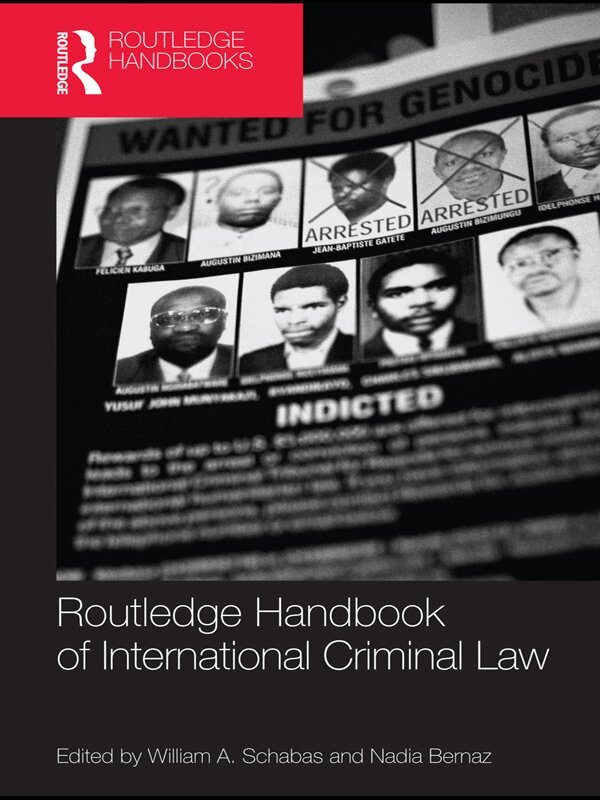
Routledge Handbook of International Criminal Law
Av William A. Schabas, Nadia Bernaz
Häftad, 2012
958 kr
Lägg i varukorg
International criminal law has developed extraordinarily quickly over the last decade, with the creation of ad hoc tribunals in the former Yugoslavia and Rwanda, and the establishment of a permanent International Criminal Court. This book provides a timely and comprehensive survey of emerging and …
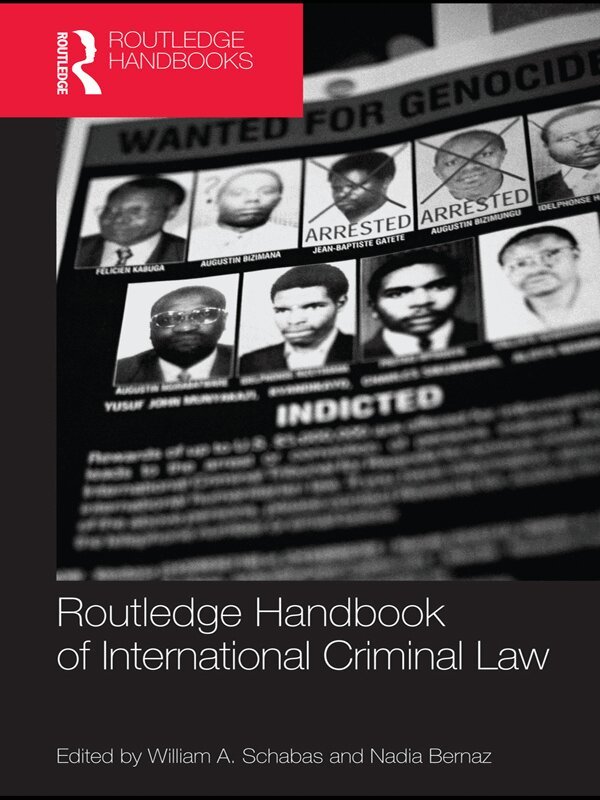
Routledge Handbook of International Criminal Law
Av William A. Schabas, Nadia Bernaz
Inbunden, 2010
3491 kr
Lägg i varukorg
International criminal law has developed extraordinarily quickly over the last decade, with the creation of ad hoc tribunals in the former Yugoslavia and Rwanda, and the establishment of a permanent International Criminal Court. This book provides a timely and comprehensive survey of emerging and …
Politics of the Death Penalty in Countries in Transition
Av Madoka Futamura, Nadia Bernaz
Inbunden, 2013
2312 kr
Lägg i varukorg
The increase in the number of countries that have abolished the death penalty since the end of the Second World War shows a steady trend towards worldwide abolition of capital punishment. This book focuses on the political and legal issues raised by the death penalty in "countries in transition", …
Politics of the Death Penalty in Countries in Transition
Av Nadia Bernaz, Madoka Futamura
E-bok, 2013
813 kr
Lägg i varukorg
The increase in the number of countries that have abolished the death penalty since the end of the Second World War shows a steady trend towards worldwide abolition of capital punishment. This book focuses on the political and legal issues raised by the death penalty in "countries in transition", …
Politics of the Death Penalty in Countries in Transition
Av Nadia Bernaz, Madoka Futamura
E-bok, 2013
795 kr
Lägg i varukorg
The increase in the number of countries that have abolished the death penalty since the end of the Second World War shows a steady trend towards worldwide abolition of capital punishment. This book focuses on the political and legal issues raised by the death penalty in "countries in transition", …
Routledge Handbook of International Criminal Law
Av William A. Schabas, Nadia Bernaz
E-bok, 2010
1131 kr
Lägg i varukorg
International criminal law has developed extraordinarily quickly over the last decade, with the creation of ad hoc tribunals in the former Yugoslavia and Rwanda, and the establishment of a permanent International Criminal Court. This book provides a timely and comprehensive survey of emerging and …
Routledge Handbook of International Criminal Law
Av William A. Schabas, Nadia Bernaz
E-bok, 2010
1131 kr
Lägg i varukorg
International criminal law has developed extraordinarily quickly over the last decade, with the creation of ad hoc tribunals in the former Yugoslavia and Rwanda, and the establishment of a permanent International Criminal Court. This book provides a timely and comprehensive survey of emerging and …
Politics of the Death Penalty in Countries in Transition
Av Madoka Futamura, Nadia Bernaz
Häftad, 2015
690 kr
Lägg i varukorg
The increase in the number of countries that have abolished the death penalty since the end of the Second World War shows a steady trend towards worldwide abolition of capital punishment. This book focuses on the political and legal issues raised by the death penalty in "countries in transition", …
Business and Human Rights
History, Law and Policy - Bridging the Accountability Gap
Av Nadia Bernaz
Inbunden, 2016
2526 kr
Lägg i varukorg
Business corporations can and do violate human rights all over the world, and they are often not held to account. Emblematic cases and situations such as the state of the Niger Delta and the collapse of the Rana Plaza factory are examples of corporate human rights abuses which are not adequately …
Business and Human Rights
History, Law and Policy - Bridging the Accountability Gap
Av Nadia Bernaz
Häftad, 2016
797 kr
Lägg i varukorg
Business corporations can and do violate human rights all over the world, and they are often not held to account. Emblematic cases and situations such as the state of the Niger Delta and the collapse of the Rana Plaza factory are examples of corporate human rights abuses which are not adequately …
Business and Human Rights
History, Law and Policy - Bridging the Accountability Gap
Av Nadia Bernaz
E-bok, 2016
940 kr
Lägg i varukorg
Business corporations can and do violate human rights all over the world, and they are often not held to account. Emblematic cases and situations such as the state of the Niger Delta and the collapse of the Rana Plaza factory are examples of corporate human rights abuses which are not adequately …
Business and Human Rights
History, Law and Policy - Bridging the Accountability Gap
Av Nadia Bernaz
E-bok, 2016
940 kr
Lägg i varukorg
Business corporations can and do violate human rights all over the world, and they are often not held to account. Emblematic cases and situations such as the state of the Niger Delta and the collapse of the Rana Plaza factory are examples of corporate human rights abuses which are not adequately …