Nadia Verrelli – författare
Visar alla böcker från författaren Nadia Verrelli. Handla med fri frakt och snabb leverans.
7 produkter
7 produkter
Inbunden, Engelska, 2021
759 kr
Skickas inom 5-8 vardagar
An RCMP sting caught Nicole Doucet (Ryan) trying to hire a hitman to kill her ex-husband. It was supposed to be an open-and-shut case. It wasn't.No Legal Way Out details the judicial process, media coverage, and legal implications of R v Ryan. Appealed up to the Supreme Court of Canada, Doucet's initial acquittal – on the basis of duress in the context of abuse – was overturned, but a stay of proceedings meant that she could not be tried again. The court castigated the RCMP for not protecting her, prompting a one-sided investigation that ultimately exonerated the force and garnered substantial critical media attention for Doucet.R v Ryan limited the legal options for women seeking to escape abuse and had a profoundly negative impact on public perceptions of domestic violence. This unabashedly feminist analysis explains why the court, the police, and the media let down all women trapped by intimate partner terrorism.
Häftad, Engelska, 2021
345 kr
Skickas inom 5-8 vardagar
An RCMP sting caught Nicole Doucet (Ryan) trying to hire a hitman to kill her ex-husband. It was supposed to be an open-and-shut case. It wasn't.No Legal Way Out details the judicial process, media coverage, and legal implications of R v Ryan. Appealed up to the Supreme Court of Canada, Doucet's initial acquittal – on the basis of duress in the context of abuse – was overturned, but a stay of proceedings meant that she could not be tried again. The court castigated the RCMP for not protecting her, prompting a one-sided investigation that ultimately exonerated the force and garnered substantial critical media attention for Doucet.R v Ryan limited the legal options for women seeking to escape abuse and had a profoundly negative impact on public perceptions of domestic violence. This unabashedly feminist analysis explains why the court, the police, and the media let down all women trapped by intimate partner terrorism.
Häftad, Engelska, 2015
486 kr
Skickas inom 5-8 vardagar
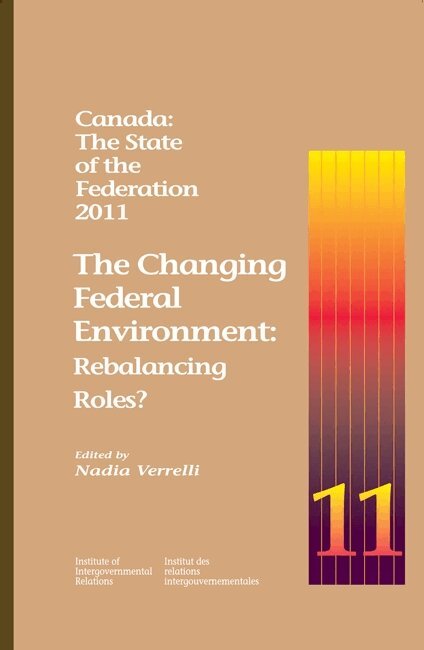
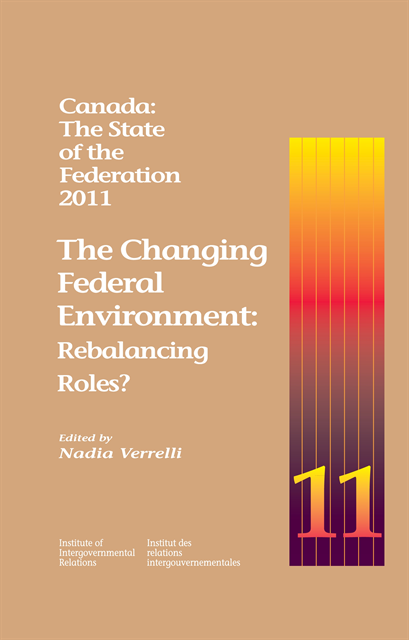
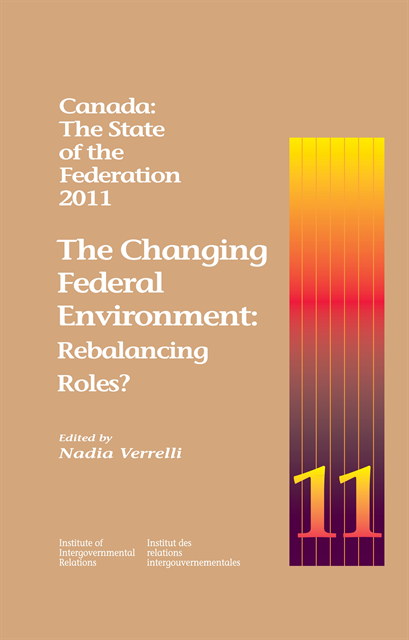
In this edition of Canada: State of the Federation, contributors consider whether and to what degree the relationship between the central government and the provincial and territorial governments has changed in the past decade. The authors address three overarching questions. First, is the power base changing in Canada? If so, how are governments responding? Second, what are the implications of the changing environment for the relationships between governments? And third, are there underlying forces – such as economic or technological change, or demands for citizen engagement – that are pushing some provinces and regions to become more assertive in the global environment? The papers are organized into four categories: those that identify and analyze the changing federal environment; those concerned with the implications of the 2011 federal election; those that deal with health policy and economic federalism; and those that explore the growing importance of the North and the changing dynamics among the provinces and the federal government. Among the topics discussed are the impact of a majority government based on a West-Ontario coalition, with Quebec represented primarily by the Opposition, the implications of the trade-off between health care spending and the public financing of other essential public goods, and second-generation trade agreements, such as the Canada-European Union Comprehensive Trade Agreement.
E-bok
Engelska, 2015374 kr
Läs direkt efter köp
In this edition of Canada: State of the Federation, contributors consider whether and to what degree the relationship between the central government and the provincial and territorial governments has changed in the past decade. The authors address three overarching questions. First, is the power base changing in Canada? If so, how are governments responding? Second, what are the implications of the changing environment for the relationships between governments? And third, are there underlying forces – such as economic or technological change, or demands for citizen engagement – that are pushing some provinces and regions to become more assertive in the global environment? The papers are organized into four categories: those that identify and analyze the changing federal environment; those concerned with the implications of the 2011 federal election; those that deal with health policy and economic federalism; and those that explore the growing importance of the North and the changing dynamics among the provinces and the federal government. Among the topics discussed are the impact of a majority government based on a West-Ontario coalition, with Quebec represented primarily by the Opposition, the implications of the trade-off between health care spending and the public financing of other essential public goods, and second-generation trade agreements, such as the Canada-European Union Comprehensive Trade Agreement.
E-bok
PDF, Engelska, 2015374 kr
Läs direkt efter köp
In this edition of Canada: State of the Federation, contributors consider whether and to what degree the relationship between the central government and the provincial and territorial governments has changed in the past decade. The authors address three overarching questions. First, is the power base changing in Canada? If so, how are governments responding? Second, what are the implications of the changing environment for the relationships between governments? And third, are there underlying forces – such as economic or technological change, or demands for citizen engagement – that are pushing some provinces and regions to become more assertive in the global environment? The papers are organized into four categories: those that identify and analyze the changing federal environment; those concerned with the implications of the 2011 federal election; those that deal with health policy and economic federalism; and those that explore the growing importance of the North and the changing dynamics among the provinces and the federal government. Among the topics discussed are the impact of a majority government based on a West-Ontario coalition, with Quebec represented primarily by the Opposition, the implications of the trade-off between health care spending and the public financing of other essential public goods, and second-generation trade agreements, such as the Canada-European Union Comprehensive Trade Agreement.
E-bok
Engelska, 2013344 kr
Läs direkt efter köp
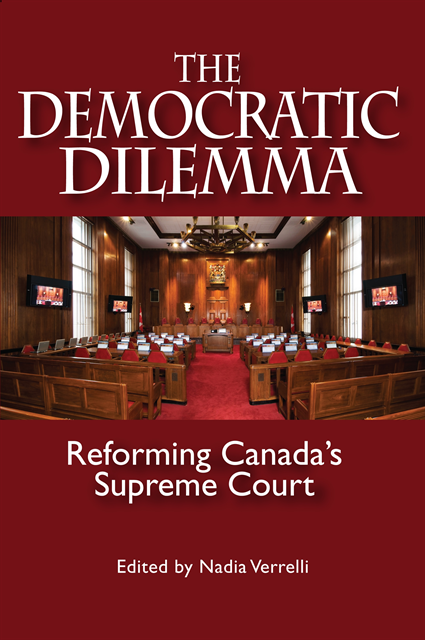
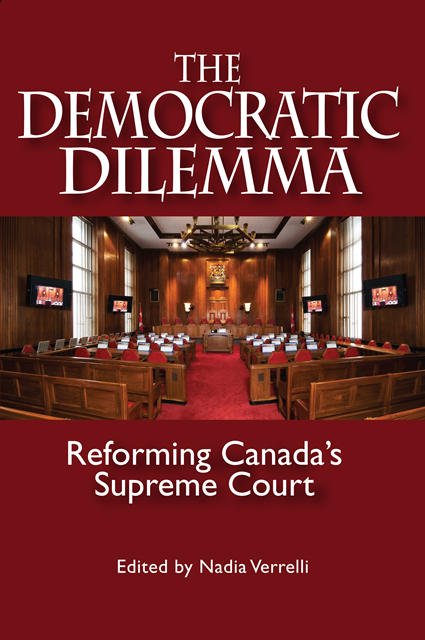
The process used to select judges of the Supreme Court of Canada has provoked criticism from the start. Some observers argue the process - where the prime minister has unfettered discretion - suffers from a democratic deficit, but there is also disagreement regarding alternative methods of selection. The Democratic Dilemma: Reforming Canada''s Supreme Court explores the institutional features of the Court, whether the existing process used to select judges ought to be reformed, the overall legitimacy of the Court, as well as the selection and appointment processes of Supreme Court justices in other liberal democracies. This book will be of special interest to students and scholars of Canadian federalism, the judiciary, and comparative supreme courts. The Democratic Dilemma: Reforming Canada''s Supreme Court is the second volume in the Institute of Intergovernmental Relations'' Democratic Dilemma series. The first, The Democratic Dilemma: Reforming the Canadian Senate is edited by Jennifer Smith. Contributors include Arthur Benz (Technische Universität Darmstadt, Germany), Jorge O. Bercholc (Institute of Social and Legal Research Ambrosio L. Gioja), Eugénie Brouillet (Université Laval), Erin Crandall (McGill University), Neil Cruickshank (Algoma University), F.C. DeCoste (University of Alberta), Yonatan Fessha (University of the Western Cape, South Africa), Peter W. Hogg (Blake, Cassels & Graydon LLP), Eike-Christian Hornig (Technische Universität Darmstadt, Germany), Allan C. Hutchinson York University), Achim Hurrelmann (Carleton University), Andrée Lajoie (Université de Montréal), Martin Manolov (Human Resources and Skills Development Canada), Aman McLeod (Rutgers University), Peter McCormick (University of Lethbridge), Peter Oliver (University of Ottawa), Yves Tanguay (CRIDAQ), Alan Trench (solicitor, England and Wales), and Nadia Verrelli (Algoma University and Queen''s University).
E-bok
PDF, Engelska, 2013344 kr
Läs direkt efter köp
The process used to select judges of the Supreme Court of Canada has provoked criticism from the start. Some observers argue the process - where the prime minister has unfettered discretion - suffers from a democratic deficit, but there is also disagreement regarding alternative methods of selection. The Democratic Dilemma: Reforming Canada''s Supreme Court explores the institutional features of the Court, whether the existing process used to select judges ought to be reformed, the overall legitimacy of the Court, as well as the selection and appointment processes of Supreme Court justices in other liberal democracies. This book will be of special interest to students and scholars of Canadian federalism, the judiciary, and comparative supreme courts. The Democratic Dilemma: Reforming Canada''s Supreme Court is the second volume in the Institute of Intergovernmental Relations'' Democratic Dilemma series. The first, The Democratic Dilemma: Reforming the Canadian Senate is edited by Jennifer Smith. Contributors include Arthur Benz (Technische Universität Darmstadt, Germany), Jorge O. Bercholc (Institute of Social and Legal Research Ambrosio L. Gioja), Eugénie Brouillet (Université Laval), Erin Crandall (McGill University), Neil Cruickshank (Algoma University), F.C. DeCoste (University of Alberta), Yonatan Fessha (University of the Western Cape, South Africa), Peter W. Hogg (Blake, Cassels & Graydon LLP), Eike-Christian Hornig (Technische Universität Darmstadt, Germany), Allan C. Hutchinson York University), Achim Hurrelmann (Carleton University), Andrée Lajoie (Université de Montréal), Martin Manolov (Human Resources and Skills Development Canada), Aman McLeod (Rutgers University), Peter McCormick (University of Lethbridge), Peter Oliver (University of Ottawa), Yves Tanguay (CRIDAQ), Alan Trench (solicitor, England and Wales), and Nadia Verrelli (Algoma University and Queen''s University).