Nadia Zasanska – författare
Visar alla böcker från författaren . Handla med fri frakt och snabb leverans.
5 produkter
5 produkter
Inbunden, Engelska, 2024
2 231 kr
Skickas inom 10-15 vardagar
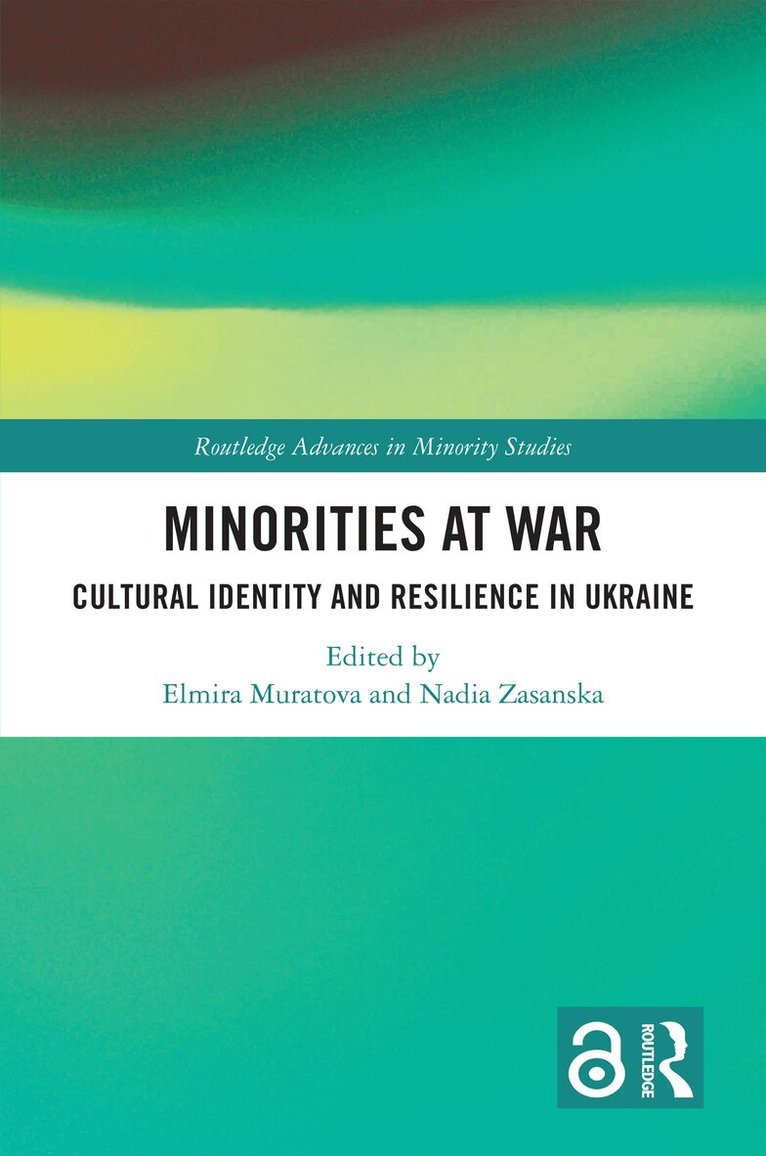
This collection focuses on Ukraine’s ethno-cultural minorities who in recent years have undergone forced displacement, emigration, the destruction of familiar ways of life, and a transformation of identity and language behaviour. The book examines the impact of Russia’s war against Ukraine, which began with the annexation of Crimea and the war in Donbas in 2014. It shows what happens to the cultural identities of minority groups and considers the mechanisms and components of their resilience in times of crisis. Key themes addressed include minorities’ collective memory and coping strategies, mobilisation and humanitarianism, forced displacement, and the preservation of identity. While most works on the Russo-Ukrainian war focus on the international context and the causes of the war and its humanitarian consequences for the population of Ukraine and the region as a whole, this book seeks to mainstream the issue of ethno-cultural minorities, which is often neglected in the coverage of this type of conflict. The book will be of interest to academics, researchers and policy-makers working in the areas of Law, Political Science, Anthropology, Human Geography, Religious Studies and War and Peace Studies.Chapter 6 of this book is freely available as a downloadable Open Access PDF at http://www.taylorfrancis.com under a Creative Commons Attribution (CC-BY) 4.0 license.Chapter 11 of this book is freely available as a downloadable Open Access PDF at http://www.taylorfrancis.com under a Creative Commons Attribution-Non Commercial-No Derivatives (CC-BY-NC-ND) 4.0 license.
Häftad, Engelska, 2026
683 kr
Skickas inom 10-15 vardagar
This collection focuses on Ukraine’s ethno-cultural minorities who in recent years have undergone forced displacement, emigration, the destruction of familiar ways of life, and a transformation of identity and language behaviour. The book examines the impact of Russia’s war against Ukraine, which began with the annexation of Crimea and the war in Donbas in 2014. It shows what happens to the cultural identities of minority groups and considers the mechanisms and components of their resilience in times of crisis. Key themes addressed include minorities’ collective memory and coping strategies, mobilisation and humanitarianism, forced displacement, and the preservation of identity. While most works on the Russo-Ukrainian war focus on the international context and the causes of the war and its humanitarian consequences for the population of Ukraine and the region as a whole, this book seeks to mainstream the issue of ethno-cultural minorities, which is often neglected in the coverage of this type of conflict. The book will be of interest to academics, researchers and policy-makers working in the areas of Law, Political Science, Anthropology, Human Geography, Religious Studies and War and Peace Studies.Chapter 6 of this book is freely available as a downloadable Open Access PDF at http://www.taylorfrancis.com under a Creative Commons Attribution (CC-BY) 4.0 license.Chapter 11 of this book is freely available as a downloadable Open Access PDF at http://www.taylorfrancis.com under a Creative Commons Attribution-Non Commercial-No Derivatives (CC-BY-NC-ND) 4.0 license.
E-bok
PDF, Engelska, 2024665 kr
Läs direkt efter köp
This collection focuses on Ukraine’s ethno-cultural minorities who in recent years have undergone forced displacement, emigration, the destruction of familiar ways of life, and a transformation of identity and language behaviour. The book examines the impact of Russia’s war against Ukraine, which began with the annexation of Crimea and the war in Donbas in 2014. It shows what happens to the cultural identities of minority groups and considers the mechanisms and components of their resilience in times of crisis. Key themes addressed include minorities’ collective memory and coping strategies, mobilisation and humanitarianism, forced displacement, and the preservation of identity. While most works on the Russo-Ukrainian war focus on the international context and the causes of the war and its humanitarian consequences for the population of Ukraine and the region as a whole, this book seeks to mainstream the issue of ethno-cultural minorities, which is often neglected in the coverage of this type of conflict. The book will be of interest to academics, researchers and policy-makers working in the areas of Law, Political Science, Anthropology, Human Geography, Religious Studies and War and Peace Studies.
E-bok
Engelska, 2024665 kr
Läs direkt efter köp
This collection focuses on Ukraine’s ethno-cultural minorities who in recent years have undergone forced displacement, emigration, the destruction of familiar ways of life, and a transformation of identity and language behaviour. The book examines the impact of Russia’s war against Ukraine, which began with the annexation of Crimea and the war in Donbas in 2014. It shows what happens to the cultural identities of minority groups and considers the mechanisms and components of their resilience in times of crisis. Key themes addressed include minorities’ collective memory and coping strategies, mobilisation and humanitarianism, forced displacement, and the preservation of identity. While most works on the Russo-Ukrainian war focus on the international context and the causes of the war and its humanitarian consequences for the population of Ukraine and the region as a whole, this book seeks to mainstream the issue of ethno-cultural minorities, which is often neglected in the coverage of this type of conflict. The book will be of interest to academics, researchers and policy-makers working in the areas of Law, Political Science, Anthropology, Human Geography, Religious Studies and War and Peace Studies.
Del 176 - Edition Politik
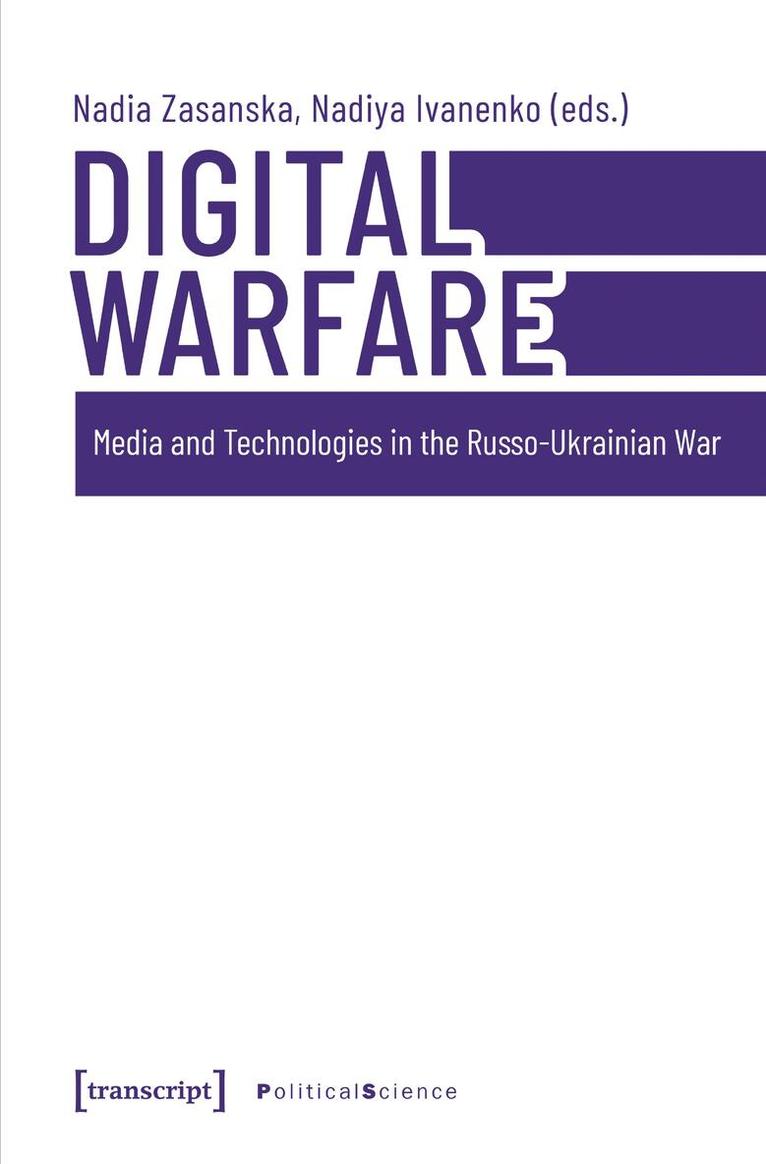
Digital Warfare
Media and Technologies in the Russo-Ukrainian War
Häftad, Engelska, 2025
735 kr
Skickas
Digital media and technologies remain unpredictable when we approach them as actors in armed conflicts. Artificial intelligence, drones, information leaks, hacking, propaganda and fakes become part of war reality. The contributors to this volume prompt us to focus on the virtual fronts of the Russo-Ukrainian War, examining the agency of an individual, community and society in the digitalized war reality. This collection illustrates how digital spaces empower society to stay resilient, resist Russia’s aggression and defend democratic values in times of adversity and severe trials.