Nadine M. Weidman – författare
Visar alla böcker från författaren Nadine M. Weidman. Handla med fri frakt och snabb leverans.
4 produkter
4 produkter
Häftad, Engelska, 2006
478 kr
Skickas inom 7-10 vardagar
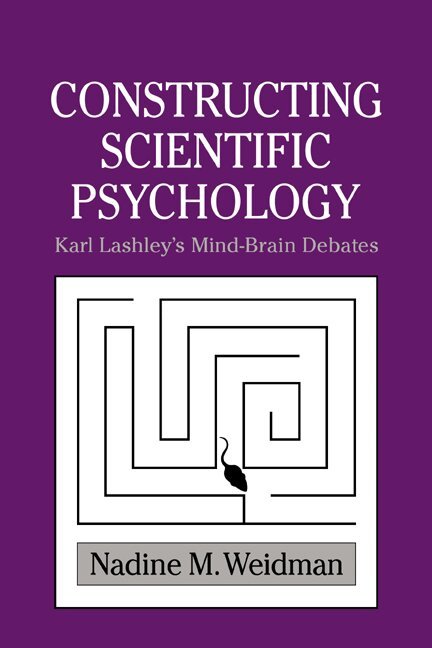
Constructing Scientific Psychology, published in 1999, was the first full-scale interpretation of the life and work of the major American neuropsychologist Karl Lashley. It sets Lashley's research at the heart of two controversies that polarized the American life and human sciences in the first half of the twentieth century. These concerned the relationship between 'mind' and 'brain' and the relative roles of 'nature' and 'nurture' in shaping behaviour and intelligence. The book explodes the myth of Lashley's neuropsychology as a fact-driven, 'pure' science by arguing that a belief in the power of heredity and a nativist and deeply conservative racial ideology informed every aspect of his theory and practice.
Inbunden, Engelska, 1999
1 205 kr
Skickas inom 7-10 vardagar
Constructing Scientific Psychology, published in 1999, was the first full-scale interpretation of the life and work of the major American neuropsychologist Karl Lashley. It sets Lashley's research at the heart of two controversies that polarized the American life and human sciences in the first half of the twentieth century. These concerned the relationship between 'mind' and 'brain' and the relative roles of 'nature' and 'nurture' in shaping behaviour and intelligence. The book explodes the myth of Lashley's neuropsychology as a fact-driven, 'pure' science by arguing that a belief in the power of heredity and a nativist and deeply conservative racial ideology informed every aspect of his theory and practice.
Häftad, Engelska, 2005
487 kr
Skickas inom 5-8 vardagar
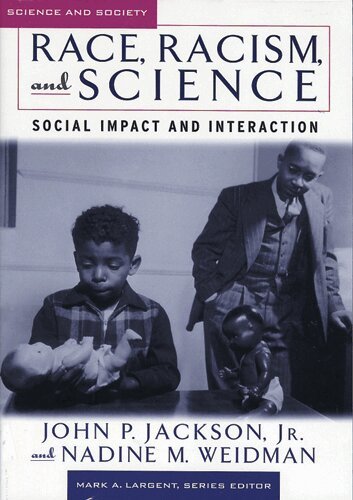
Since the eighteenth century when natural historians created the idea of distinct racial categories, scientific findings on race have been a double-edged sword. For some antiracists, science holds the promise of one day providing indisputable evidence to help eradicate racism. On the other hand, science has been enlisted to promote racist beliefs ranging from a justification of slavery in the eighteenth century to the infamous twentieth-century book, The Bell Curve,whose authors argued that racial differences in intelligence resulted in lower test scores for African Americans.This well-organized, readable textbook takes the reader through a chronological account of how and why racial categories were created and how the study of “race” evolved in multiple academic disciplines, including genetics, psychology, sociology, and anthropology. In a bibliographic essay at the conclusion of each of the book’s seven sections, the authors recommend primary texts that will further the reader’s understanding of each topic. Heavily illustrated and enlivened with sidebar biographies, this text is ideal for classroom use.
E-bok
PDF, Engelska, 2004975 kr
Läs direkt efter köp
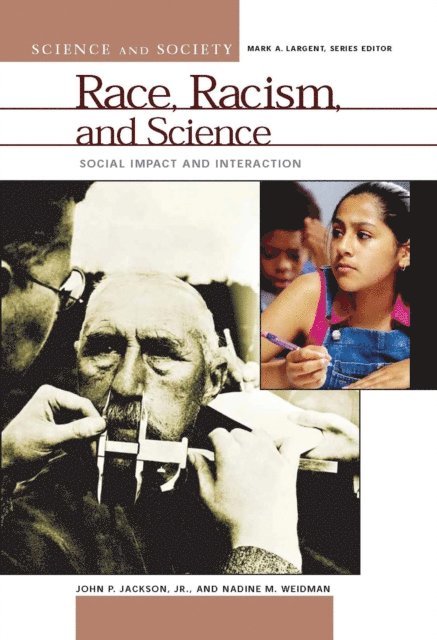
A provocative overview of the history of the race concept in European and American science, based on current research that shows how race and science grew together in Western thought.What, historically, has the term 'race' meant? What is the relationship between the scientific study of race and racism? Race, Racism, and Science: Social Impact and Interaction explores these questions as it recaps the history of race-centered research from its origins in the late 1700s to Darwin's influential work on natural selection to the present. It is a compelling introduction to the way race science initially gained acceptance and how race studies both reflect and shape their times.Readers will see how scientific and pseudoscientific explanations of racial differences (social Darwinism, eugenics, craniometry, scientific racism) provided intellectual cover for inhuman acts, and how Ashley Montagu, Richard Lewontin, and other 20th-century antiracists fought to refute the scientific support of bigotry.