Najma Mohamed - Böcker
Visar alla böcker från författaren Najma Mohamed. Handla med fri frakt och snabb leverans.
3 produkter
3 produkter
635 kr
Skickas inom 10-15 vardagar
South Africa’s transition to a greener economy features prominently in the long-term development vision of the country, and is an integral part of the country’s national climate change response strategy. Despite significant gains in socio-economic development since its transition to democracy, the country continues to face the triple challenges of rising unemployment, income inequality and poverty – amid a slowdown in economic growth. Sustainability transitions offer new ways of shifting the trajectory of South Africa’s resource-intensive economy towards low-carbon pathways linked to the country’s transformative development agenda. Calls for inclusive approaches to greening the South African economy, which addresses the most vulnerable in society and ensures that the benefits of sustainability innovations reach all South Africans, are becoming more pronounced as sustainable development policy reforms are being implemented. The question that should be placed centre stage in South Africa’s sustainability discourse is whether notions of justice and inclusivity are being sufficiently addressed in the design and implementation of policy and programme interventions.This book explores South Africa’s sustainability transition through reflections on critical policy, economic, technological, social and environmental drivers. It provides a synthesis of theoretical insights, including new models and concepts, and praxis through illustrations from South Africa’s growing landscape of sustainable development policies and programmes. Finally, it assesses whether these transition pathways are beginning to reconfigure the system-level structures hindering the country’s goal of ‘ensuring environmental sustainability and an equitable transition to a low-carbon economy’.
2 150 kr
Skickas inom 10-15 vardagar
South Africa’s transition to a greener economy features prominently in the long-term development vision of the country, and is an integral part of the country’s national climate change response strategy. Despite significant gains in socio-economic development since its transition to democracy, the country continues to face the triple challenges of rising unemployment, income inequality and poverty – amid a slowdown in economic growth. Sustainability transitions offer new ways of shifting the trajectory of South Africa’s resource-intensive economy towards low-carbon pathways linked to the country’s transformative development agenda. Calls for inclusive approaches to greening the South African economy, which addresses the most vulnerable in society and ensures that the benefits of sustainability innovations reach all South Africans, are becoming more pronounced as sustainable development policy reforms are being implemented. The question that should be placed centre stage in South Africa’s sustainability discourse is whether notions of justice and inclusivity are being sufficiently addressed in the design and implementation of policy and programme interventions.This book explores South Africa’s sustainability transition through reflections on critical policy, economic, technological, social and environmental drivers. It provides a synthesis of theoretical insights, including new models and concepts, and praxis through illustrations from South Africa’s growing landscape of sustainable development policies and programmes. Finally, it assesses whether these transition pathways are beginning to reconfigure the system-level structures hindering the country’s goal of ‘ensuring environmental sustainability and an equitable transition to a low-carbon economy’.
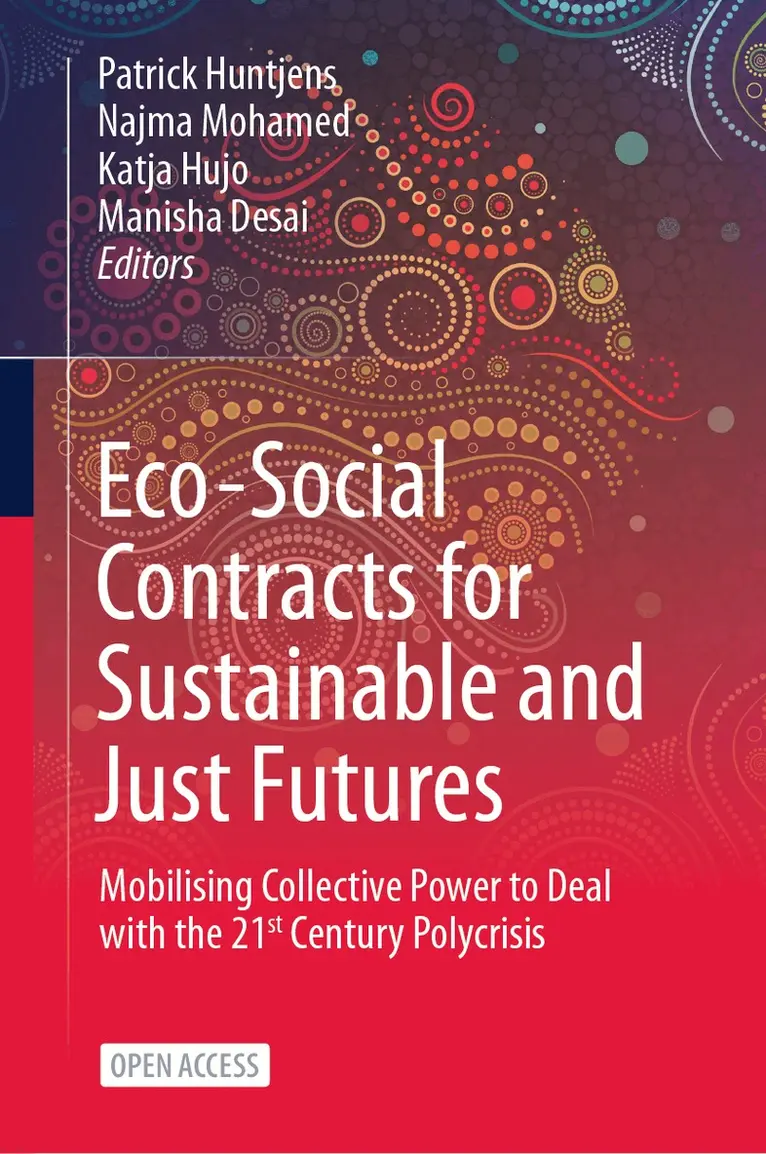
Eco-Social Contracts for Sustainable and Just Futures
Mobilising Collective Power to Deal with the 21st Century Polycrisis
Inbunden, Engelska, 2026
536 kr
Skickas inom 10-15 vardagar
This open access groundbreaking volume introduces eco-social contracts as a bold and actionable vision for addressing the major, interconnected crises of our time—climate change, biodiversity loss, rising inequality, and the erosion of public trust and democratic legitimacy. At its heart lies a fundamental realization that can no longer be ignored: the social contract has been broken for billions of people, and with it, the bonds between people, planet, and power must be rewoven. Increasingly recognized by the UN, global assessments such as the IPBES Transformative Change Assessment, and by a growing international community of civil society leaders, youth movements, and NGOs, eco-social contracts call for renewed solidarity, systemic equity across generations and communities, inclusive governance, and a fundamental transformation of economic systems.They challenge dominant economic paradigms and present a holistic and compelling alternative—one that rebalances our relationships with nature, institutions, and one another. This book captures that momentum, blending visionary thinking and grounded inspiration with hard-won lessons on unlocking and mobilising collective agency.Grounded in diverse knowledge systems—from Indigenous cosmologies and feminist and care-based economics to regenerative development and post-growth thought—it brings together contributions from leading scholars, practitioners, artists, and activists across the globe. Bridging theory and practice, it offers vital insights into how regenerative, inclusive, and just futures can be co-created.For changemakers, students, and all those seeking hope, direction, and clarity in a time of global uncertainty, this book is both a call to action and a guide for transformation—inviting readers to imagine and co-create sustainable and just futures our hearts know are possible. Selected EndorsementsInger Andersen – Executive Director, UNEP: “This volume is a progressive and constructive contribution to building societies in harmony with nature.”Mary Robinson – The Elders, and Former President of Ireland and UN High Commissioner: “This book makes clear that a new eco-social contract must be built on structural justice, intergenerational equity, and inclusive governance.”Jayati Ghosh - Club of Rome, and UN High-Level Advisory Board on Economic and Social Affairs: “An incredibly timely and significant book that could not be more relevant for our current planetary emergency. Some light in the seeming darkness!”Kumi Naidoo – President, Fossil Fuel Non-Proliferation Treaty Initiative: “This book convincingly shows why and how we must transition from systems that devalue life to economies that cherish well-being and shared prosperity.”Karen O’Brien – Co-Chair, IPBES Transformative Change Assessment: “This book shows how we can recognize ourselves as agents of change. When we do, new realities become thinkable and actionable.”Daan Zieren, Chair Youth Climate Movement (The Netherlands), part of the We Are Tomorrow Global Partnership (WAT-GP): “Young people feel the urgency of the climate crisis, but they lack the perspective of a structural solution. For a shared vision of the future, we need new forms of involvement. The eco-social contract offers an inspiring example of how we can build a sustainable future together."