
Nan-Yao Su – författare
Visar alla böcker från författaren . Handla med fri frakt och snabb leverans.
4 produkter
4 produkter
Inbunden, Engelska, 2023
2 207 kr
Skickas inom 5-8 vardagar
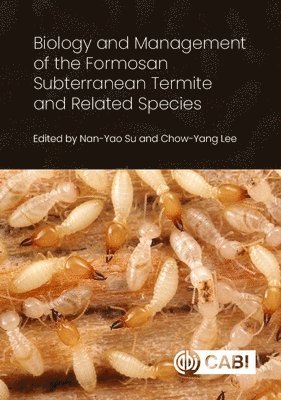
The Formosan subterranean termite, Coptotermes formosanus, is the most destructive and invasive termite species globally. It is also the only termite species listed in the world's 100 worst invasive alien species of the Global Invasive Species Database. Annually, its infestation costs more than $4 billion in control and damage repairs in the USA alone. This book is the first comprehensive resource drawing on all the literature on C. formosanus since Tokuichi Shiraki first described the species in 1909. The book covers the worldwide distribution of this species, its biogeography, and how it has dispersed from its native range in southern China and Taiwan to different parts of the world. It describes its present taxonomic status and discusses the species' biology, ecology, foraging behavior, physiology, chemical ecology and its association with symbionts. From a practical standpoint, the authors address all of the various management options for this species, such as baits, soil termiticides, wood preservatives, inspection and detection technologies, and Integrated Pest Management (IPM) approaches. Lastly, there are chapters dedicated to another important destructive species, Coptotermes gestroi (the Asian subterranean termite), and the recently discovered C. formosanus/C. gestroi hybrids. This important book is an essential and valuable reference for researchers, graduate students, pest management professionals, chemical manufacturer personnel, building and property managers, and others. It provides readers with a comprehensive understanding of the biology and management of the Formosan subterranean termite and the Asian subterranean termite.
E-bok
PDF, Engelska, 20232 259 kr
Läs direkt efter köp
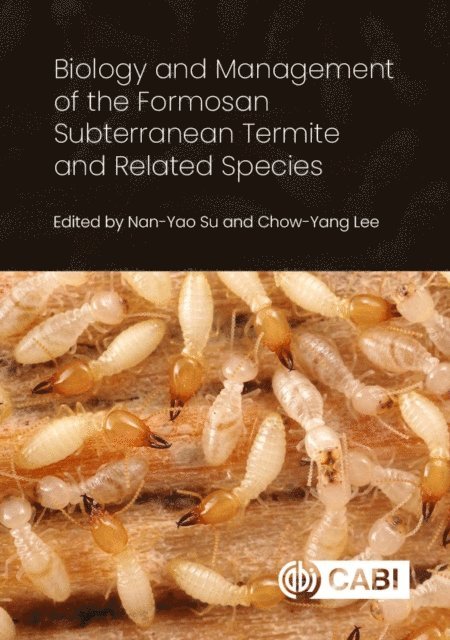
The Formosan subterranean termite, Coptotermes formosanus, is the most destructive and invasive termite species globally. It is also the only termite species listed in the world's 100 worst invasive alien species of the Global Invasive Species Database. Annually, its infestation costs more than $4 billion in control and damage repairs in the USA alone. This book is the first comprehensive resource drawing on all the literature on C. formosanus since Tokuichi Shiraki first described the species in 1909. The book covers the worldwide distribution of this species, its biogeography, and how it has dispersed from its native range in southern China and Taiwan to different parts of the world. It describes its present taxonomic status and discusses the species' biology, ecology, foraging behavior, physiology, chemical ecology and its association with symbionts. From a practical standpoint, the authors address all of the various management options for this species, such as baits, soil termiticides, wood preservatives, inspection and detection technologies, and Integrated Pest Management (IPM) approaches. Lastly, there are chapters dedicated to another important destructive species, Coptotermes gestroi (the Asian subterranean termite), and the recently discovered C. formosanus/C. gestroi hybrids. This important book is an essential and valuable reference for researchers, graduate students, pest management professionals, chemical manufacturer personnel, building and property managers, and others. It provides readers with a comprehensive understanding of the biology and management of the Formosan subterranean termite and the Asian subterranean termite.
2 259 kr
Läs direkt efter köp
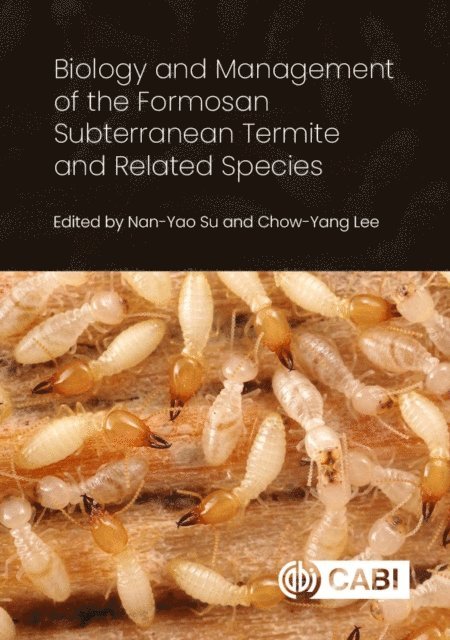
The Formosan subterranean termite, Coptotermes formosanus, is the most destructive and invasive termite species globally. It is also the only termite species listed in the world's 100 worst invasive alien species of the Global Invasive Species Database. Annually, its infestation costs more than $4 billion in control and damage repairs in the USA alone. This book is the first comprehensive resource drawing on all the literature on C. formosanus since Tokuichi Shiraki first described the species in 1909. The book covers the worldwide distribution of this species, its biogeography, and how it has dispersed from its native range in southern China and Taiwan to different parts of the world. It describes its present taxonomic status and discusses the species' biology, ecology, foraging behavior, physiology, chemical ecology and its association with symbionts. From a practical standpoint, the authors address all of the various management options for this species, such as baits, soil termiticides, wood preservatives, inspection and detection technologies, and Integrated Pest Management (IPM) approaches. Lastly, there are chapters dedicated to another important destructive species, Coptotermes gestroi (the Asian subterranean termite), and the recently discovered C. formosanus/C. gestroi hybrids. This important book is an essential and valuable reference for researchers, graduate students, pest management professionals, chemical manufacturer personnel, building and property managers, and others. It provides readers with a comprehensive understanding of the biology and management of the Formosan subterranean termite and the Asian subterranean termite.

E-bok
Engelska, 2026123 kr
Läs direkt efter köp
Middle Kingdom Lost: From the Invention of Gunpowder to the Nanjing Massacre explores one of history's great paradoxes: if China invented gunpowder, firearms, the compass, and many other technologies centuries before the West, how did foreign powers later defeat China using those same innovations? Tracing the development of gunpowder weapons from Tang China to World War II, Nan-Yao Su examines the institutional divergence that separated China, Europe, and Japan. Gunpowder originated in China and spread across Eurasia through the Mongol Empire. In Europe, the Black Death, Renaissance, Scientific Revolution, and intense interstate warfare fostered continuous military and technological innovation. In China, a centralized imperial system increasingly prioritized stability over military competition. Japan, after centuries of warfare, rapidly modernized during the Meiji era and successfully adopted Western institutions and technology. The result was a widening military gap that culminated in China's defeats during the Opium Wars, the First Sino-Japanese War, and ultimately the Nanjing Massacre. This book argues that China's decline was not caused by cultural inferiority, but by centuries of institutional divergence.