Nancy Bradley Warren - Böcker
Visar alla böcker från författaren Nancy Bradley Warren. Handla med fri frakt och snabb leverans.
5 produkter
5 produkter
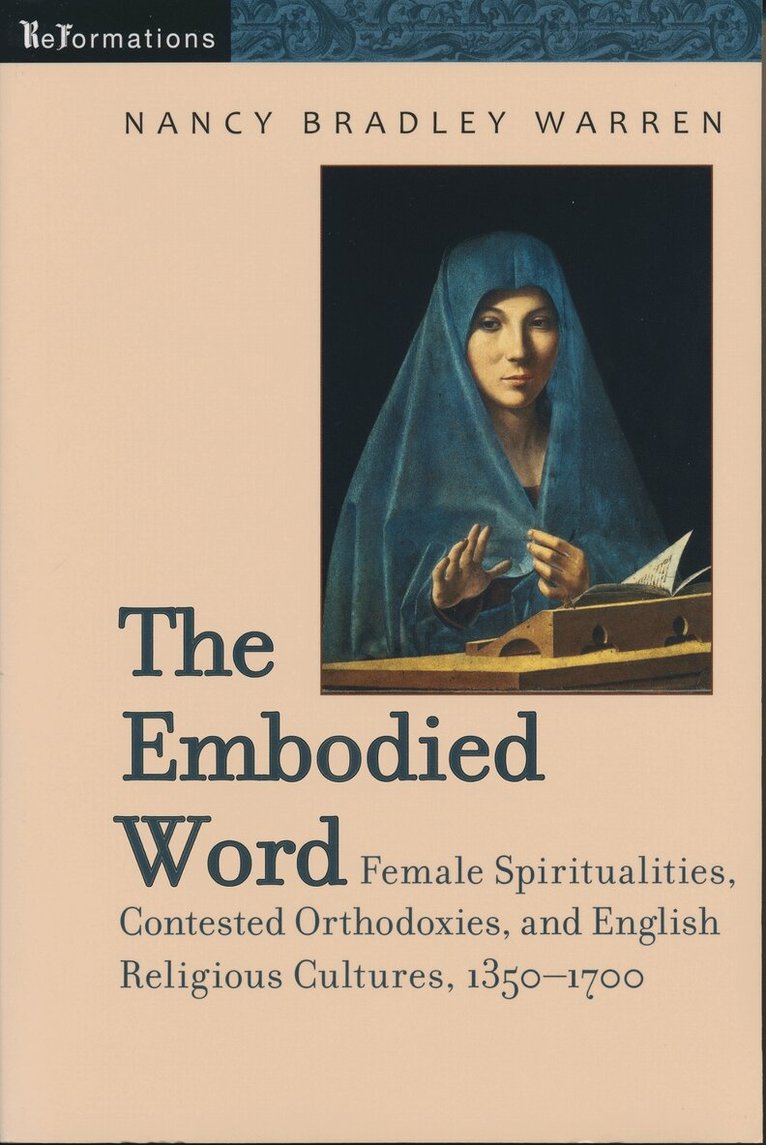
Embodied Word
Female Spiritualities, Contested Orthodoxies, and English Religious Cultures, 1350-1700
Häftad, Engelska, 2010
422 kr
Skickas inom 10-15 vardagar
In The Embodied Word: Female Spiritualities, Contested Orthodoxies, and English Religious Cultures, 1350-1700, Nancy Bradley Warren expands on the topic of female spirituality, first explored in her book Women of God and Arms, to encompass broad issues of religion, gender, and historical periodization. Through her analyses of the variety of ways in which medieval spirituality was deliberately and actively carried forward to the early modern period, Warren underscores both continuities and revisions that challenge conventional distinctions between medieval and early modern culture. The early modern writings of Julian of Norwich are an illustrative starting point for Warren's challenge to established views of English religious cultures. In a single chapter, Warren follows the textual and devotional practices of Julian as they influence two English Benedictine nuns in exile, and then Grace Mildmay, a seventeenth-century Protestant gentry woman, "to shed light on the ways in which individual encounters of the divine, especially gendered bodily encounters expressed textually, signify for others both personally and socio-historically." In subsequent chapters, Warren discusses St. Birgitta of Sweden's Imitatio Christi in the context of the importance of Spain and Spanish women in shaping a distinctive form of early modern Englishness strongly aligned with medieval religious culture; juxtaposes the fifteenth-century mystic Margery Kempe with the life and writings of Anna Trapnel, a seventeenth-century Baptist; and treats Catherine of Siena together with the Protestant Anne Askew and Lollard and Recusant women. In the final chapters she focuses on the interplay of gender and textuality in women's textual representations of themselves and in works written by men who used the traditions of female spirituality in the service of competing orthodoxies.
1 235 kr
Skickas inom 10-15 vardagar
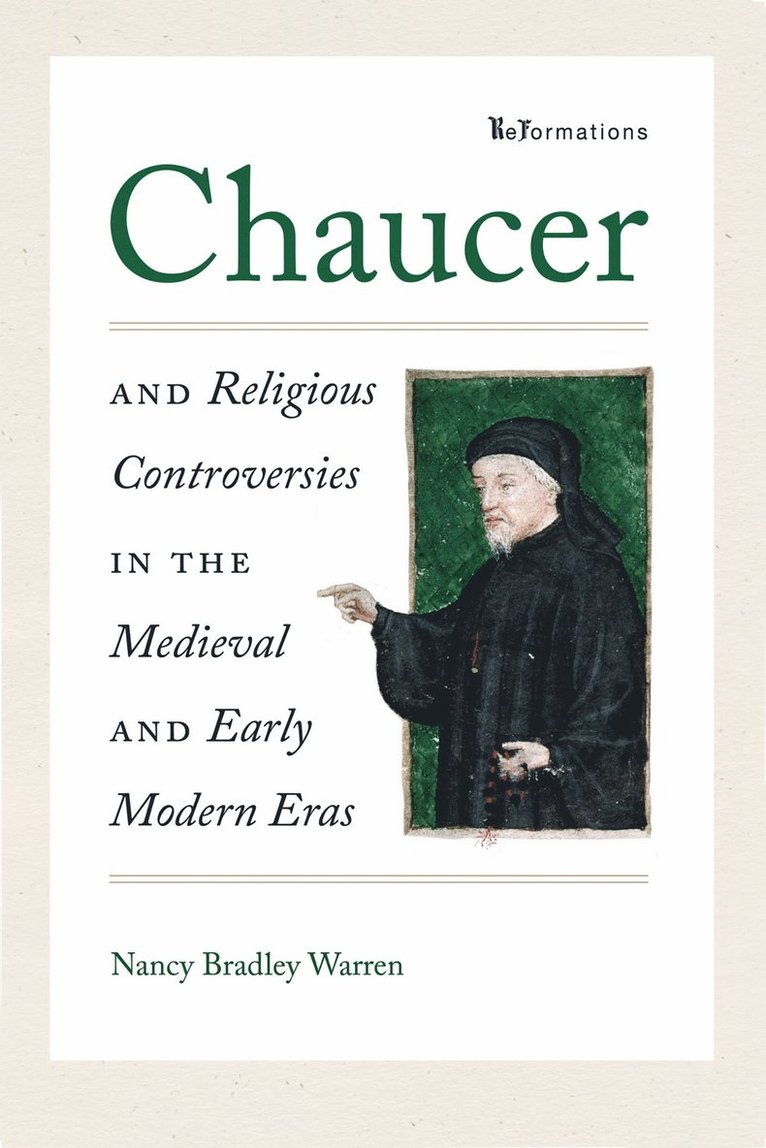
Chaucer and Religious Controversies in the Medieval and Early Modern Eras adopts a comparative, boundary-crossing approach to consider one of the most canonical of literary figures, Geoffrey Chaucer. The idea that Chaucer is an international writer raises no eyebrows. Similarly, a claim that Chaucer's writings participate in English confessional controversies in his own day and afterward provokes no surprise. This book breaks new ground by considering Chaucer's Continental interests as they inform his participation in religious debates concerning such subjects as female spirituality and Lollardy. Similarly, this project explores the little-studied ways in which those who took religious vows, especially nuns, engaged with works by Chaucer and in the Chaucerian tradition. Furthermore, while the early modern "Protestant Chaucer" is a familiar figure, this book explores the creation and circulation of an early modern "Catholic Chaucer" that has not received much attention. This study seeks to fill gaps in Chaucer scholarship by situating Chaucer and the Chaucerian tradition in an international textual environment of religious controversy spanning four centuries and crossing both the English Channel and the Atlantic Ocean. This book presents a nuanced analysis of the high stakes religiopolitical struggle inherent in the creation of the canon of English literature, a struggle that participates in the complex processes of national identity formation in Europe and the New World alike.
545 kr
Skickas inom 10-15 vardagar
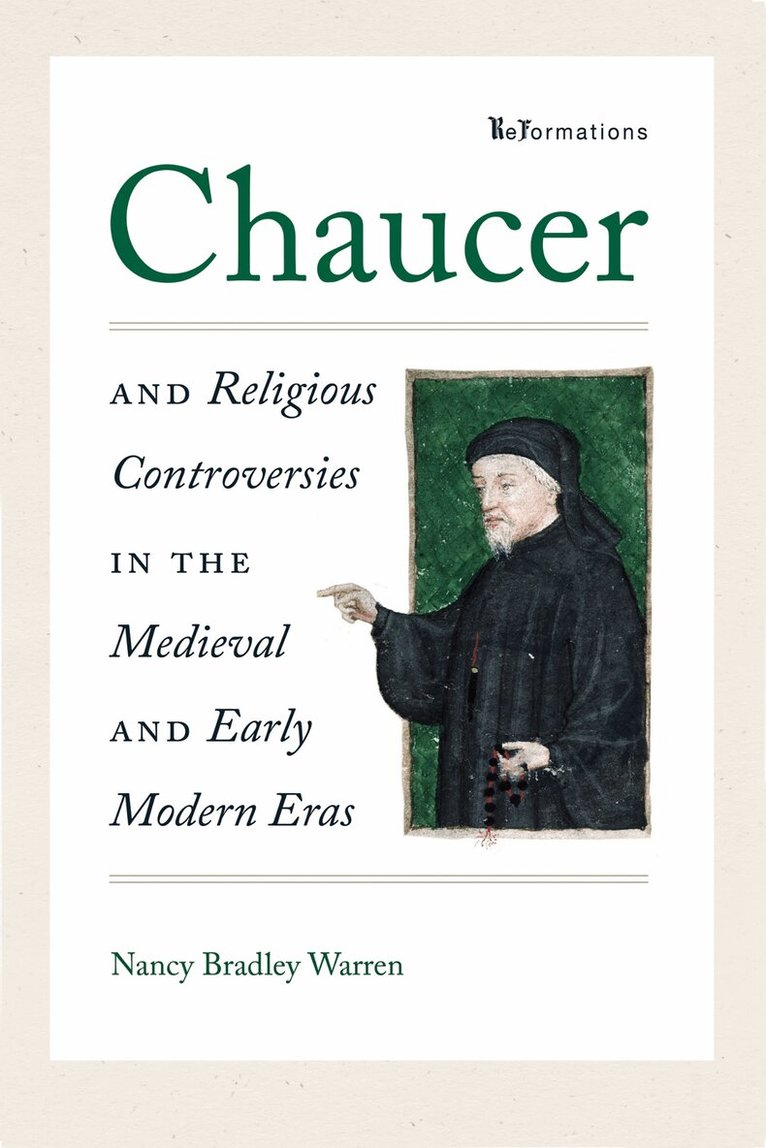
Chaucer and Religious Controversies in the Medieval and Early Modern Eras adopts a comparative, boundary-crossing approach to consider one of the most canonical of literary figures, Geoffrey Chaucer. The idea that Chaucer is an international writer raises no eyebrows. Similarly, a claim that Chaucer's writings participate in English confessional controversies in his own day and afterward provokes no surprise. This book breaks new ground by considering Chaucer's Continental interests as they inform his participation in religious debates concerning such subjects as female spirituality and Lollardy. Similarly, this project explores the little-studied ways in which those who took religious vows, especially nuns, engaged with works by Chaucer and in the Chaucerian tradition. Furthermore, while the early modern "Protestant Chaucer" is a familiar figure, this book explores the creation and circulation of an early modern "Catholic Chaucer" that has not received much attention. This study seeks to fill gaps in Chaucer scholarship by situating Chaucer and the Chaucerian tradition in an international textual environment of religious controversy spanning four centuries and crossing both the English Channel and the Atlantic Ocean. This book presents a nuanced analysis of the high stakes religiopolitical struggle inherent in the creation of the canon of English literature, a struggle that participates in the complex processes of national identity formation in Europe and the New World alike.
807 kr
Skickas inom 10-15 vardagar
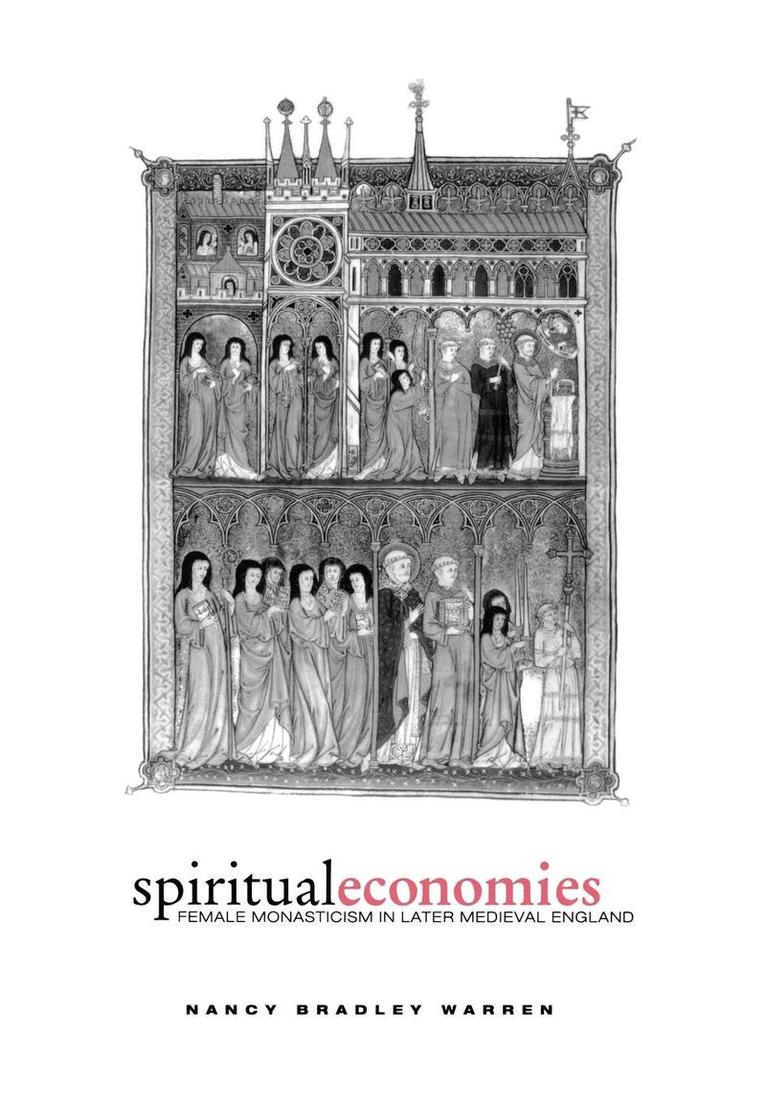
From its creation in the early fourteenth century to its dissolution in the sixteenth, the nunnery at Dartford was among the richest in England. Although obliged to support not only its own community but also a priory of Dominican friars at King's Langley, Dartford prospered. Records attest to the business skill of the Dartford nuns, as they managed the house's numerous holdings of land and property, together with the rents and services owed them. That the Dartford nuns were capable businesswomen is not surprising, since the house was also a center of female education.For Nancy Bradley Warren, the story of Dartford exemplifies the vibrancy of nuns' material and spiritual lives in later medieval England. Revising the long-held view that fourteenth- and fifteenth-century English nunneries were impoverished both financially and religiously, Warren clarifies that the women in female monastic communities like Dartford were not woefully incompetent at managing their affairs. Instead, she reveals the complex role of female monasticism in diverse systems of production and exchange. Like the nuns at Dartford, women religious in late medieval England were enmeshed in material, symbolic, political, and spiritual economies that were at times in harmony and at other times in conflict with each other.Building on emerging cross-disciplinary trends in feminist scholarship on medieval religion, Warren extends ongoing debates about textual and economic constructions of women's identities to the rarely considered evidence of monastic theory and practice. To this end, Spiritual Economies emphasizes that the cloister was not impermeable. As worldly forces such as economic trends and political conflicts affected life in the nunneries, so too did religious practices have political impact. In breaking down the convent wall, Warren also succeeds in breaching the boundaries separating the material and the symbolic, the religious and the secular, the literary and the historical. She turns to a wide range of sources-from legislative texts, court records, and financial accounts to devotional treatises and political propaganda-to explore the centrality of female monasticism to the flowering of female spirituality and to the later Middle Ages at large.
807 kr
Skickas inom 10-15 vardagar
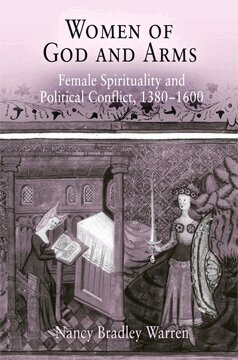
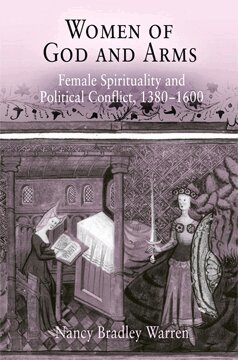
The religious and political spheres of the later medieval and early modern periods were tightly and indisputably interwoven, as illustrated by the papal schism, the Hundred Years War, the Reconquest of Spain, and the English Reformation. In these events as well as in the larger religiopolitical systems in which they unfolded, female saints, devout lay women, and monastic women played central roles. In Women of God and Arms, Nancy Bradley Warren explores the political dimensions of the religious practices of women ranging from St. Colette of Corbie to Isabel of Castile to English nuns exiled during the reign of Elizabeth I.Just as religious and political systems were bound up with one another, so too were the internal and external politics of England and several continental realms. Blood and marriage connected the English dynasties of Lancaster and York with those of France, Burgundy, Flanders, and Castile, creating tangled networks of alliances and animosities. In addition to being linked through ties of kinship, these realms were joined by frequent textual and cultural exchanges.Warren draws upon a wide variety of sources-hagiography, chronicles, monastic records, devotional treatises, military manuals, political propaganda, and texts traditionally designated as literary-as she examines the ways manifestations of female spirituality operated at the intersections of civic, international, and ecclesiastical politics. Her exploration breaches boundaries separating the medieval and the early modern, the religious and the secular, the material and the symbolic, the literary and the historical, as it sheds new light on well-known figures such as Joan of Arc, Isabel of Castile, and Elizabeth I.