Nancy Cartwright - Böcker
Visar alla böcker från författaren Nancy Cartwright. Handla med fri frakt och snabb leverans.
19 produkter
19 produkter
564 kr
In this sequence of philosophical essays about natural science, Nancy Cartwright argues that fundamental explanatory laws, the deepest and most admired successes of modern physics, do not in fact describe the regularities that exist in nature. Yet she is not `anti-realist'. Rather, she draws a novel distinction, arguing that theoretical entities, and the complex and localized laws that describe them, can be interpreted realistically, but that the simple unifying laws of basic theory cannot.
659 kr
Skickas inom 5-8 vardagar
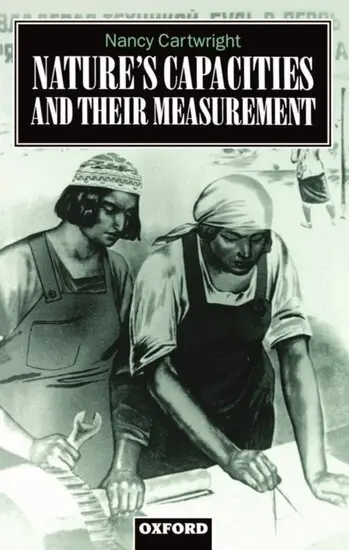
This book argues for the place of capacities within an grounds of meaning, not method. Yet it is questions of method that should concern the modern empiricist: can capacities be measured? Cartwright argues that they are measured if anything is. Stanford University's Gravity-Probe-B will measure capacities in a cryogenic dewar deep in space. More mundanely, we use probabilities to measure capacities, and the assumptions required to ensure that probabilities are a reliable instrument are investigated in the opening chapters of this book, where the early methods of econometrics set a model. The last chapter applies lessons about probabilities and capacities to quantum mechanics and the Bell inequalities. The central thesis throughout is that capacities not only can be admitted by empiricists, but indeed must be - otherwise the empirical methods of modern science will make no sense.
530 kr
Skickas
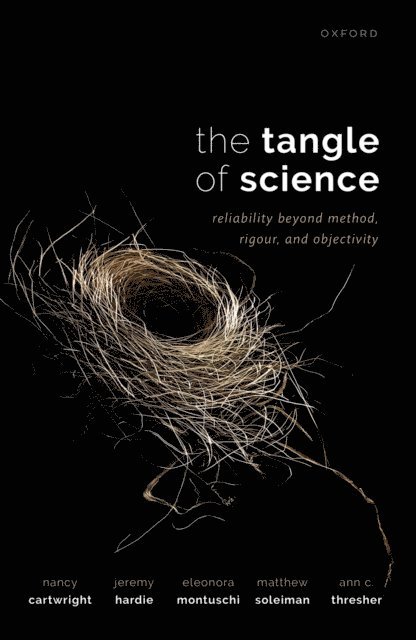
Science is remarkably reliable. It puts people on the moon, performs laser eye surgery, tells us about ancient civilizations and species, and predicts the future of our climate. What underwrites this reliability? This book argues that the standard answers--the scientific method, rigour, and objectivity--are insufficient for the job. Here we propose a new model of science which places its products front and centre. In The Tangle of Science we show how any reliable piece of science is underpinned by a vast, diverse, and thick network of other scientific products. In doing so we bring back into focus areas of science that have been long neglected, emphasizing how every product, from the screws that hold the space shuttle together, to ways of measuring the consumer price index, to Einstein's theory of general relativity, work together to support results we can trust.
1 757 kr
Skickas inom 5-8 vardagar
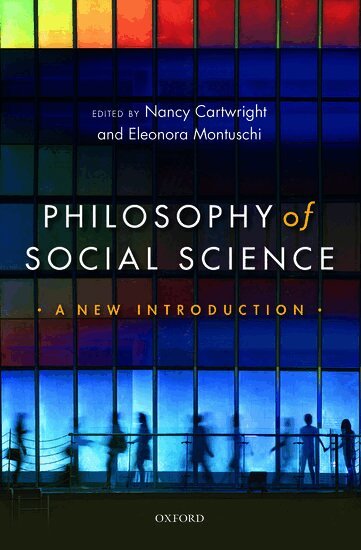
This is a much-needed new introduction to a field that has been transformed in recent years by exciting new subjects, ideas, and methods. It is designed both for students with central interests in philosophy and those planning to concentrate on the social sciences, and it presupposes no particular background in either domain. From the wide range of topics at the forefront of debate in philosophy of social science, the editors have chosen those which are representative of the most important and interesting contemporary work. A team of distinguished experts explore key aspects of the field such as social ontology (what are the things that social science studies?), objectivity, formal methods, measurement, and causal inference. Also included are chapters focused on notable subjects of social science research, such as well-being and climate change. Philosophy of Social Science provides a clear, accessible, and up-to-date guide to this fascinating field.
383 kr
Skickas inom 5-8 vardagar
This is a much-needed new introduction to a field that has been transformed in recent years by exciting new subjects, ideas, and methods. It is designed both for students with central interests in philosophy and those planning to concentrate on the social sciences, and it presupposes no particular background in either domain. From the wide range of topics at the forefront of debate in philosophy of social science, the editors have chosen those which are representative of the most important and interesting contemporary work. A team of distinguished experts explore key aspects of the field such as social ontology (what are the things that social science studies?), objectivity, formal methods, measurement, and causal inference. Also included are chapters focused on notable subjects of social science research, such as well-being and climate change. Philosophy of Social Science provides a clear, accessible, and up-to-date guide to this fascinating field.
1 318 kr
Skickas inom 5-8 vardagar
Over the last twenty or so years, it has become standard to require policy makers to base their recommendations on evidence. That is now uncontroversial to the point of triviality--of course, policy should be based on the facts. But are the methods that policy makers rely on to gather and analyze evidence the right ones? In Evidence-Based Policy, Nancy Cartwright, an eminent scholar, and Jeremy Hardie, who has had a long and successful career in both business and the economy, explain that the dominant methods which are in use now--broadly speaking, methods that imitate standard practices in medicine like randomized control trials--do not work. They fail, Cartwright and Hardie contend, because they do not enhance our ability to predict if policies will be effective.The prevailing methods fall short not just because social science, which operates within the domain of real-world politics and deals with people, differs so much from the natural science milieu of the lab. Rather, there are principled reasons why the advice for crafting and implementing policy now on offer will lead to bad results. Current guides in use tend to rank scientific methods according to the degree of trustworthiness of the evidence they produce. That is valuable in certain respects, but such approaches offer little advice about how to think about putting such evidence to use. Evidence-Based Policy focuses on showing policymakers how to effectively use evidence. It also explains what types of information are most necessary for making reliable policy, and offers lessons on how to organize that information.
278 kr
Skickas inom 5-8 vardagar
Over the last twenty or so years, it has become standard to require policy makers to base their recommendations on evidence. That is now uncontroversial to the point of triviality--of course, policy should be based on the facts. But are the methods that policy makers rely on to gather and analyze evidence the right ones? In Evidence-Based Policy, Nancy Cartwright, an eminent scholar, and Jeremy Hardie, who has had a long and successful career in both business and the economy, explain that the dominant methods which are in use now--broadly speaking, methods that imitate standard practices in medicine like randomized control trials--do not work. They fail, Cartwright and Hardie contend, because they do not enhance our ability to predict if policies will be effective.The prevailing methods fall short not just because social science, which operates within the domain of real-world politics and deals with people, differs so much from the natural science milieu of the lab. Rather, there are principled reasons why the advice for crafting and implementing policy now on offer will lead to bad results. Current guides in use tend to rank scientific methods according to the degree of trustworthiness of the evidence they produce. That is valuable in certain respects, but such approaches offer little advice about how to think about putting such evidence to use. Evidence-Based Policy focuses on showing policymakers how to effectively use evidence. It also explains what types of information are most necessary for making reliable policy, and offers lessons on how to organize that information.
626 kr
Skickas inom 7-10 vardagar
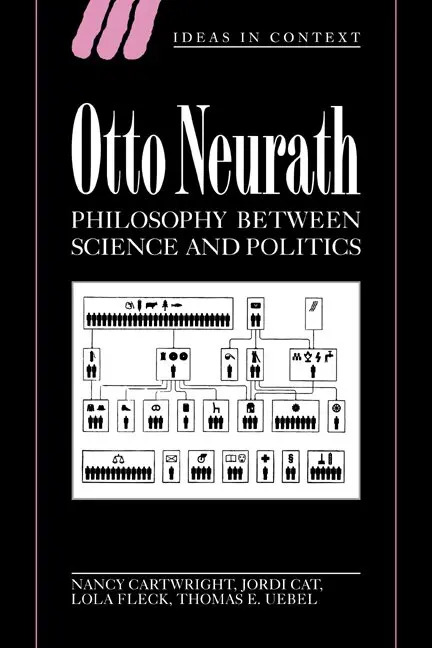
An international team of four authors, led by distinguished philosopher of science, Nancy Cartwright, and leading scholar of the Vienna Circle, Thomas E. Uebel, have produced this lucid and elegant study of a much-neglected figure. The book, which depicts Neurath's science in the political, economic and intellectual milieu in which it was practised, is divided into three sections: Neurath's biographical background and the socio-political context of his economic ideas; the development of his theory of science; and his legacy as illustrated by his contemporaneous involvement in academic and political debates. Coinciding with the renewal of interest in logical positivism, this is a timely publication which will redress a current imbalance in the history and philosophy of science, as well as making a major contribution to our understanding of the intellectual life of Austro-Germany in the inter-war years.
Del 38 - Ideas in Context
Otto Neurath
Philosophy between Science and Politics
Inbunden, Engelska, 1996
1 258 kr
Skickas inom 7-10 vardagar
An international team of four authors, led by distinguished philosopher of science, Nancy Cartwright, and leading scholar of the Vienna Circle, Thomas E. Uebel, have produced this lucid and elegant study of a much-neglected figure. The book, which depicts Neurath's science in the political, economic and intellectual milieu in which it was practised, is divided into three sections: Neurath's biographical background and the socio-political context of his economic ideas; the development of his theory of science; and his legacy as illustrated by his contemporaneous involvement in academic and political debates. Coinciding with the renewal of interest in logical positivism, this is a timely publication which will redress a current imbalance in the history and philosophy of science, as well as making a major contribution to our understanding of the intellectual life of Austro-Germany in the inter-war years.
1 337 kr
Skickas inom 7-10 vardagar
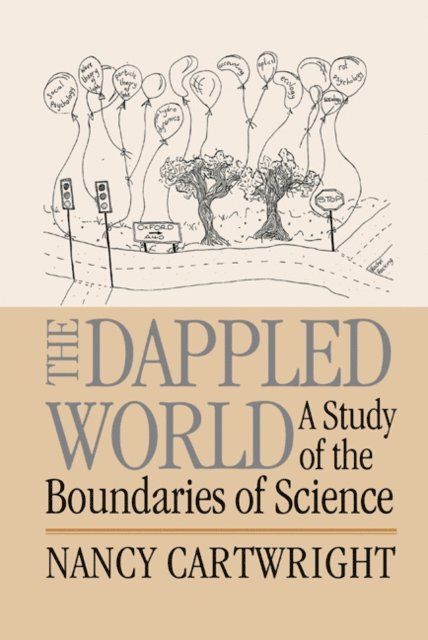
It is often supposed that the spectacular successes of our modern mathematical sciences support a lofty vision of a world completely ordered by one single elegant theory. In this book Nancy Cartwright argues to the contrary. When we draw our image of the world from the way modern science works - as empiricism teaches us we should - we end up with a world where some features are precisely ordered, others are given to rough regularity and still others behave in their own diverse ways. This patchwork makes sense when we realise that laws are very special productions of nature, requiring very special arrangements for their generation. Combining classic and newly written essays on physics and economics, The Dappled World carries important philosophical consequences and offers serious lessons for both the natural and the social sciences.
297 kr
Skickas inom 7-10 vardagar
It is often supposed that the spectacular successes of our modern mathematical sciences support a lofty vision of a world completely ordered by one single elegant theory. In this book Nancy Cartwright argues to the contrary. When we draw our image of the world from the way modern science works - as empiricism teaches us we should - we end up with a world where some features are precisely ordered, others are given to rough regularity and still others behave in their own diverse ways. This patchwork makes sense when we realise that laws are very special productions of nature, requiring very special arrangements for their generation. Combining classic and newly written essays on physics and economics, The Dappled World carries important philosophical consequences and offers serious lessons for both the natural and the social sciences.
360 kr
Skickas inom 7-10 vardagar
Hunting Causes and Using Them argues that causation is not one thing, as commonly assumed, but many. There is a huge variety of causal relations, each with different characterizing features, different methods for discovery and different uses to which it can be put. In this collection of new and previously published essays, Nancy Cartwright provides a critical survey of philosophical and economic literature on causality, with a special focus on the currently fashionable Bayes-nets and invariance methods - and it exposes a huge gap in that literature. Almost every account treats either exclusively how to hunt causes or how to use them. But where is the bridge between? It's no good knowing how to warrant a causal claim if we don't know what we can do with that claim once we have it. This book will interest philosophers, economists and social scientists.
1 034 kr
Skickas inom 7-10 vardagar
Hunting Causes and Using Them argues that causation is not one thing, as commonly assumed, but many. There is a huge variety of causal relations, each with different characterizing features, different methods for discovery and different uses to which it can be put. In this collection of new and previously published essays, Nancy Cartwright provides a critical survey of philosophical and economic literature on causality, with a special focus on the currently fashionable Bayes-nets and invariance methods - and it exposes a huge gap in that literature. Almost every account treats either exclusively how to hunt causes or how to use them. But where is the bridge between? It's no good knowing how to warrant a causal claim if we don't know what we can do with that claim once we have it. This book will interest philosophers, economists and social scientists.
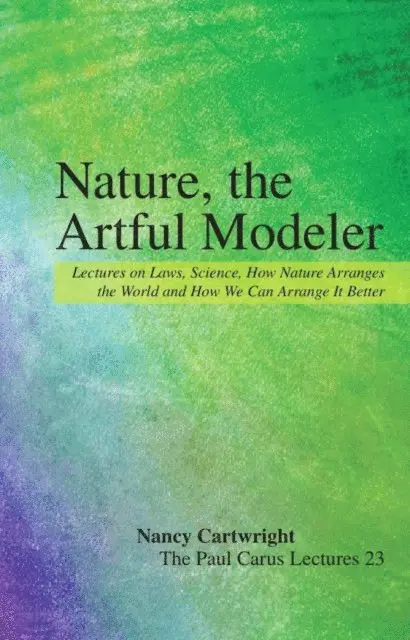
Nature, the Artful Modeler
Lectures on Laws, Science, How Nature Arranges the World and How We Can Arrange It Better
Häftad, Engelska, 2019
213 kr
Skickas inom 5-8 vardagar
How fixed are the happenings in Nature and how are they fixed? These lectures address what our scientific successes at predicting and manipulating the world around us suggest in answer.One—very orthodox—account teaches that the sciences offer general truths that we combine with local facts to derive our expectations about what will happen, either naturally or when we build a device to design, be it a laser, a washing machine, an anti-malarial bed net, or an auction for the airwaves.In these three 2017 Carus Lectures Nancy Cartwright offers a different picture, one in which neither we, nor Nature, have such nice rules to go by. Getting real predictions about real happenings is an engineering enterprise that makes clever use of a great variety of different kinds of knowledge, with few real derivations in sight anywhere. It takes artful modeling. Orthodoxy would have it that how we do it is not reflective of how Nature does it. It is, rather, a consequence of human epistemic limitations. That, Cartwright argues, is to put our reasoning just back to front. We should read our image of what Nature is like from the way our sciences work when they work best in getting us around in it, non plump for a pre-set image of how Nature must work to derive what an ideal science, freed of human failings, would be like. Putting the order of inference right way around implies that like us, Nature too is an artful modeler.Lecture 1 is an exercise in description. It is a study of the practices of science when the sciences intersect with the world and, then, of what that world is most likely like given the successes of these practices. Millikan's famous oil drop experiment, and the range of knowledge pieced together to make it work, are used to illustrate that events in the world do not occur in patterns that can be properly described in so-called "laws of nature." Nevertheless, they yield to artful modeling. Without a huge leap of faith, that, it seems, is the most we can assume about the happenings in Nature. Lecture 2 is an exercise in metaphysics. How could the arrangements of happenings come to be that way? In answer, Cartwright urges an ontology in which powers act together in different ways depending on the arrangements they find themselves in to produce what happens. It is a metaphysics in which possibilia are real because powers and arrangement are permissive—they constrain but often do not dictate outcomes (as we see in contemporary quantum theory). Lecture 3, based on Cartwright's work on evidence-based policy and randomized controlled trials, is an exercise in the philosophy of social technology: How we can put our knowledge of powers and our skills at artful modeling to work to build more decent societies and how we can use our knowledge and skills to evaluate when our attempts are working.The lectures are important because:They offer an original view on the age-old question of scientific realism in which our knowledge is genuine, yet our scientific principles are neither true nor false but are, rather, templates for building good models.Powers are center-stage in metaphysics right now. Back-reading them from the successes of scientific practice, as Lecture 2 does, provides a new perspective on what they are and how they function.There is a loud call nowadays to make philosophy relevant to "real life." That's just what happens in Lecture 3, where Cartwright applies the lesson of Lectures 1 and 2 to argue for a serious rethink of the way that we are urged—and in some places mandated—to use evidence to predict the outcomes of our social policies.

171 kr
Skickas inom 7-10 vardagar
What is science and what can it do? Nancy Cartwright here takes issue with three common images of science: that it amounts to the combination of theory and experiment; that all science is basically reducible to physics; and that science and the natural world which it pictures are deterministic. The author's innovative and thoughtful book draws on examples from the physical, life, and social sciences alike, and focuses on all the products of science - not just experiments or theories - and how they work together. She reveals just what it is that makes science ultimately reliable, and how this reliability is nevertheless still compatible with a view of nature as more responsive to human change than we might think. Her book is a call for greater intellectual humility by and within scientific institutions. It will have strong appeal to anyone who thinks about science and how it is practised in society.
322 kr
Kommande
In this book, Nancy Cartwright, Eileen Munro and John Pemberton introduce a new method for assessing whether plans for how to affect change produced their intended outcome, or whether they are likely to do so in the future. The method offers the prospect of a step-change improvement in the accuracy of policy assessments, based on a new pluralistic theory of causation. This theory, which goes beyond existing ones, synthesises seven tried and tested familiar component accounts so as to license identification and systematisation of a wide range of evidence types. The authors outline well-grounded improvements to methods for policy development and assessment by the systematic use of real-world examples, including notably that of child welfare. Their book will be valuable for the burgeoning audience concerned with the critical issue of how to develop and implement policies that work across domains from welfare to education and economics to medicine.
1 060 kr
Kommande
In this book, Nancy Cartwright, Eileen Munro and John Pemberton introduce a new method for assessing whether plans for how to affect change produced their intended outcome, or whether they are likely to do so in the future. The method offers the prospect of a step-change improvement in the accuracy of policy assessments, based on a new pluralistic theory of causation. This theory, which goes beyond existing ones, synthesises seven tried and tested familiar component accounts so as to license identification and systematisation of a wide range of evidence types. The authors outline well-grounded improvements to methods for policy development and assessment by the systematic use of real-world examples, including notably that of child welfare. Their book will be valuable for the burgeoning audience concerned with the critical issue of how to develop and implement policies that work across domains from welfare to education and economics to medicine.
474 kr
Skickas inom 10-15 vardagar
This book presents a radical new picture of natural order. The Newtonian idea of a cosmos ruled by universal and exceptionless laws has been superseded; replaced by a conception of nature as a realm of diverse powers, potencies, and dispositions, a ‘dappled world’. There is order in nature, but it is more local, diverse, piecemeal, open, and emergent than Newton imagined.In each chapter expert authors expound the historical context of the idea of laws of nature, and explore the diverse sorts of order actually presupposed by work in physics, biology, and the social sciences. They consider how human freedom might be understood, and explore how Newton’s idea of a ‘universal designer’ might be revised, in this new context.They argue that there is not one unified totalizing program of science, aiming at the completion of one closed causal system. We live in an ordered universe, but we need to rethink the classical idea of the ‘laws of nature’ in a more dynamic and creatively diverse way.
1 833 kr
Skickas inom 10-15 vardagar
This book presents a radical new picture of natural order. The Newtonian idea of a cosmos ruled by universal and exceptionless laws has been superseded; replaced by a conception of nature as a realm of diverse powers, potencies, and dispositions, a ‘dappled world’. There is order in nature, but it is more local, diverse, piecemeal, open, and emergent than Newton imagined.In each chapter expert authors expound the historical context of the idea of laws of nature, and explore the diverse sorts of order actually presupposed by work in physics, biology, and the social sciences. They consider how human freedom might be understood, and explore how Newton’s idea of a ‘universal designer’ might be revised, in this new context.They argue that there is not one unified totalizing program of science, aiming at the completion of one closed causal system. We live in an ordered universe, but we need to rethink the classical idea of the ‘laws of nature’ in a more dynamic and creatively diverse way.