Nancy R. Goodman - Böcker
Visar alla böcker från författaren Nancy R. Goodman. Handla med fri frakt och snabb leverans.
7 produkter
7 produkter
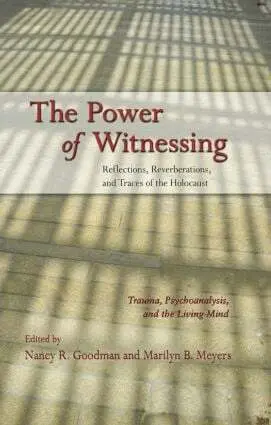
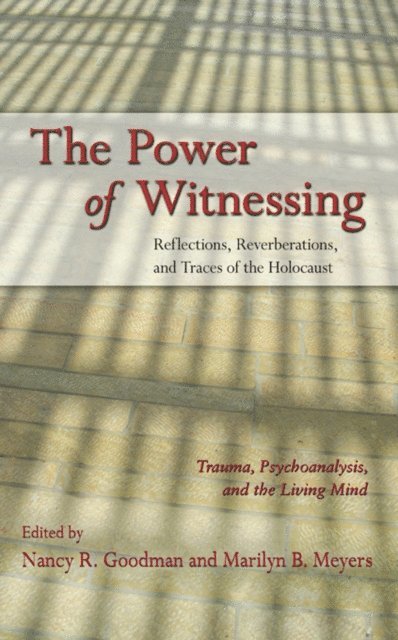
Power of Witnessing
Reflections, Reverberations, and Traces of the Holocaust: Trauma, Psychoanalysis, and the Living Mind
Inbunden, Engelska, 2012
2 028 kr
Skickas inom 10-15 vardagar
Witnessing comes in as many forms as the trauma that gives birth to it. The Holocaust, undeniably one of the greatest traumatic events in recent human history, still resonates into the twenty-first century. The echoes that haunt those who survived continue to reach their children and others who did not share the experience directly. In what ways is this massive trauma processed and understood, both for survivors and future generations?The answer, as deftly illustrated by Nancy Goodman and Marilyn Meyers, lies in the power of witnessing: the act of acknowledging that trauma took place, coupled with the desire to share that knowledge with others to build a space in which to reveal, confront, and symbolize it. As the contributors to this book demonstrate, testimonial writing and memoir, artwork, poetry, documentary, theater, and even the simple recollection of a memory are ways that honor and serve as forms of witnessing. Each chapter is a fusion of narrative and metaphor that exists as evidence of the living mind that emerges amid the dead spaces produced by mass trauma, creating a revelatory, transformational space for the terror of knowing and the possibility for affirmation of hope, courage, and endurance in the face of almost unspeakable evil. Additionally, the power of witnessing is extended from the Holocaust to contemporary instances of mass trauma and to psychoanalytic treatments, proving its efficacy in the dyadic relationship of everyday practice for both patient and analyst.The Holocaust is not an easy subject to approach, but the intimate and personal stories included here add up to an act of witnessing in and of itself, combining the past and the present and placing the trauma in the realm of knowing, sharing, and understanding.Contributors: Harriet Basseches, Elsa Blum, Bridget Conley-Zilkic, Paula Ellman, Susan Elmendorf, George Halasz, Geoffrey Hartman, Renee Hartman, Elaine Neumann Kulp-Shabad, Dori Laub, Clemens Loew, Gail Humphries Mardirosian, Margit Meissner, Henri Parens, Arlene Kramer Richards, Arnold Richards, Sophia Richman, Katalin Roth, Nina Shapiro-Perl, Myra Sklarew, Ervin Staub.
Power of Witnessing
Reflections, Reverberations, and Traces of the Holocaust: Trauma, Psychoanalysis, and the Living Mind
Häftad, Engelska, 2012
704 kr
Skickas inom 10-15 vardagar
Witnessing comes in as many forms as the trauma that gives birth to it. The Holocaust, undeniably one of the greatest traumatic events in recent human history, still resonates into the twenty-first century. The echoes that haunt those who survived continue to reach their children and others who did not share the experience directly. In what ways is this massive trauma processed and understood, both for survivors and future generations?The answer, as deftly illustrated by Nancy Goodman and Marilyn Meyers, lies in the power of witnessing: the act of acknowledging that trauma took place, coupled with the desire to share that knowledge with others to build a space in which to reveal, confront, and symbolize it. As the contributors to this book demonstrate, testimonial writing and memoir, artwork, poetry, documentary, theater, and even the simple recollection of a memory are ways that honor and serve as forms of witnessing. Each chapter is a fusion of narrative and metaphor that exists as evidence of the living mind that emerges amid the dead spaces produced by mass trauma, creating a revelatory, transformational space for the terror of knowing and the possibility for affirmation of hope, courage, and endurance in the face of almost unspeakable evil. Additionally, the power of witnessing is extended from the Holocaust to contemporary instances of mass trauma and to psychoanalytic treatments, proving its efficacy in the dyadic relationship of everyday practice for both patient and analyst.The Holocaust is not an easy subject to approach, but the intimate and personal stories included here add up to an act of witnessing in and of itself, combining the past and the present and placing the trauma in the realm of knowing, sharing, and understanding.Contributors: Harriet Basseches, Elsa Blum, Bridget Conley-Zilkic, Paula Ellman, Susan Elmendorf, George Halasz, Geoffrey Hartman, Renee Hartman, Elaine Neumann Kulp-Shabad, Dori Laub, Clemens Loew, Gail Humphries Mardirosian, Margit Meissner, Henri Parens, Arlene Kramer Richards, Arnold Richards, Sophia Richman, Katalin Roth, Nina Shapiro-Perl, Myra Sklarew, Ervin Staub.
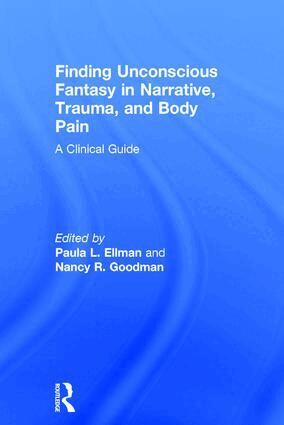
Finding Unconscious Fantasy in Narrative, Trauma, and Body Pain
A Clinical Guide
Inbunden, Engelska, 2017
2 167 kr
Skickas inom 10-15 vardagar
Finding Unconscious Fantasy in Narrative, Trauma, and Body Pain: A Clinical Guide demonstrates that the concept of the unconscious is profoundly relevant for understanding the mind, psychic pain, and traumatic human suffering. Editors Paula L. Ellman and Nancy R. Goodman established this book to discover how symbolization takes place through the "finding of unconscious fantasy" in ways that mend the historic split between trauma and fantasy. Cases present the dramatic encounters between patient and therapist when confronting discovery of the unconscious in the presence of trauma and body pain, along with narrative. Unconscious fantasy has a central role in both clinical and theoretical psychoanalysis. This volume is a guide to the workings of the dyad and the therapeutic action of "finding" unconscious meanings. Staying close to the clinical engagement of analyst and patient shows the transformative nature of the "finding" process as the dyad works with all aspects of the unconscious mind. Finding Unconscious Fantasy in Narrative, Trauma, and Body Pain: A Clinical Guide uses the immediacy of clinical material to show how trauma becomes known in the "here and now" of enactment processes and accompanies the more symbolized narratives of transference and countertransference. This book features contributions from a rich variety of theoretical traditions illustrating working models including Klein, Arlow, and Bion and from leaders in the fields of narrative, trauma, and psychosomatics. Whether working with narrative, trauma or body pain, unconscious fantasy may seem out of reach. Attending to the analyst/ patient process of finding the derivatives of unconscious fantasy offers a potent roadmap for the way psychoanalytic engagement uncovers deep layers of the mind. In focusing on the places of trauma and psychosomatic concreteness, along with narrative, Finding Unconscious Fantasy in Narrative, Trauma, and Body Pain: A Clinical Guide shows the vitality of "finding" unconscious fantasy and its effect in initiating a symbolizing process. Chapters in this book bring to life the sufferings and capacities of individual patients with actual verbatim process material demonstrating how therapists and patients discover and uncover the derivatives of unconscious fantasy. Finding the unconscious meanings in states of trauma, body expressions, and transference/countertransference enactments becomes part of the therapeutic dialogue between therapists and patients unraveling symptoms and allowing transformations. Learning how therapeutic work progresses to uncover unconscious fantasy will benefit all therapists and students of psychoanalysis and psychoanalytic psychotherapy interested to know more about the psychoanalytic dialogue.
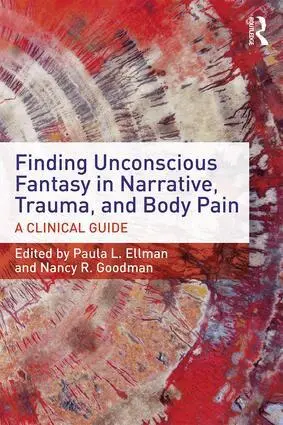
Finding Unconscious Fantasy in Narrative, Trauma, and Body Pain
A Clinical Guide
Häftad, Engelska, 2017
634 kr
Skickas inom 10-15 vardagar
Finding Unconscious Fantasy in Narrative, Trauma, and Body Pain: A Clinical Guide demonstrates that the concept of the unconscious is profoundly relevant for understanding the mind, psychic pain, and traumatic human suffering. Editors Paula L. Ellman and Nancy R. Goodman established this book to discover how symbolization takes place through the "finding of unconscious fantasy" in ways that mend the historic split between trauma and fantasy. Cases present the dramatic encounters between patient and therapist when confronting discovery of the unconscious in the presence of trauma and body pain, along with narrative. Unconscious fantasy has a central role in both clinical and theoretical psychoanalysis. This volume is a guide to the workings of the dyad and the therapeutic action of "finding" unconscious meanings. Staying close to the clinical engagement of analyst and patient shows the transformative nature of the "finding" process as the dyad works with all aspects of the unconscious mind. Finding Unconscious Fantasy in Narrative, Trauma, and Body Pain: A Clinical Guide uses the immediacy of clinical material to show how trauma becomes known in the "here and now" of enactment processes and accompanies the more symbolized narratives of transference and countertransference. This book features contributions from a rich variety of theoretical traditions illustrating working models including Klein, Arlow, and Bion and from leaders in the fields of narrative, trauma, and psychosomatics. Whether working with narrative, trauma or body pain, unconscious fantasy may seem out of reach. Attending to the analyst/ patient process of finding the derivatives of unconscious fantasy offers a potent roadmap for the way psychoanalytic engagement uncovers deep layers of the mind. In focusing on the places of trauma and psychosomatic concreteness, along with narrative, Finding Unconscious Fantasy in Narrative, Trauma, and Body Pain: A Clinical Guide shows the vitality of "finding" unconscious fantasy and its effect in initiating a symbolizing process. Chapters in this book bring to life the sufferings and capacities of individual patients with actual verbatim process material demonstrating how therapists and patients discover and uncover the derivatives of unconscious fantasy. Finding the unconscious meanings in states of trauma, body expressions, and transference/countertransference enactments becomes part of the therapeutic dialogue between therapists and patients unraveling symptoms and allowing transformations. Learning how therapeutic work progresses to uncover unconscious fantasy will benefit all therapists and students of psychoanalysis and psychoanalytic psychotherapy interested to know more about the psychoanalytic dialogue.
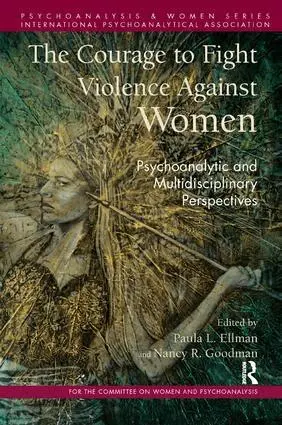
Courage to Fight Violence Against Women
Psychoanalytic and Multidisciplinary Perspectives
Häftad, Engelska, 2017
523 kr
Skickas inom 10-15 vardagar
In recent years there has been a surge in awareness of the many arenas in which violence against women occurs. There is a growing attention to human and sex trafficking and femicide throughout the world. Female genital mutilation along with childhood marriage and rape occur regularly in many societies. Sexual victimization of women in custody is now exposed. College campus violence against women has been a serious problem and only recently acknowledged.In this edited book psychoanalysts show how violence can be seen, known and represented on the world stage and in psychoanalytic treatment. The editors bring psychoanalytic ideas and understanding in an effort to comprehend violence against women. Observing the active witnessing of the contributors to this book elucidates the way trauma is transformed into resilience and healing. Scholars and psychoanalysts from Argentina, Mexico, Peru, the United Kingdom and the United States together address this serious problem along with the consideration of depictions of violence against women in film, art, drama and poetry. With courage, multiple modalities of intervention become possible. Additionally, psychoanalysts develop psychoanalytic commentary of the presentations, bringing the psychoanalytic mind to the larger arena of the many courageous efforts at fighting violence against women.
506 kr
Skickas inom 10-15 vardagar
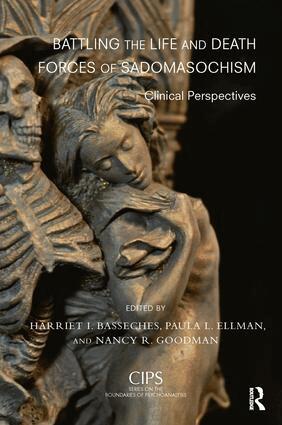
This book examines the forces of sadomasochism in the clinical domain where transference and countertransference reside. Psychoanalysts write in depth about cases where sadomasochism is present for both analysand and analyst. Four cases present the unfolding analytic exchange where life and death forces collide. Each case is accompanied by three discussions illuminating the complex phenomena that often include lifelong perversions and painful narcissistic difficulties. Through the case presentations and discussions, psychoanalytic therapists will find maps for guiding their own work with sadomasochistic processes. Treatments where sadomasochism is prominent abound with dramas containing control and denigration, domination, and submission. Often there is a history of over stimulation and under stimulation from infancy and childhood influencing the formation of object relations and unconscious fantasy.Since Freud first introduced the concepts of component instincts and psychosexual development, psychoanalysts have been exploring sadomasochism in its various forms. The belief that togetherness involves tormenting pain creates a sense of life and death struggle that is imbued with powerful instinctual gratification. Unconscious sexualized scenes of both dyadic and triadic forms carry humiliation and conquest. These analysands employ a variety of defenses, especially disavowal. The analyst's affective responses to the negation and attacks provide an opportunity to recognize conflicts and repetitions, and to move them into a symbolizing process. Contributions to the book come from a variety of psychoanalytic perspectives. Understanding of these sadomasochistic phenomena highlight psychoanalytic thinking about conflict, instinctual life, object relations, trauma, narcissistic vulnerability, primitive states, and perversion.
304 kr
Skickas inom 5-8 vardagar